
Local Government
Town Council Sends Auxiliary Dwelling Unit Proposed Ordinance Back to Planning Commission for Further Review
Amid an update from Tourism Director Lizi Lewis, several housekeeping items presented by Purchasing Manager Michelle Campbell and Finance Director B.J. Wilson respectively, and a request for out-of-town water and septic service, the Town Council at their Monday, September 8 work session turned their attention to unfinished business: the proposed ordinance to amend Town code to reflect new definitions and performance standards for auxiliary dwelling units. Having reviewed this item at their last work session, many of the same views were articulated among council members about the readiness of the ordinance for action at a regular meeting. Finally, the consensus was to send the item back to the Planning Commission for further evaluation.
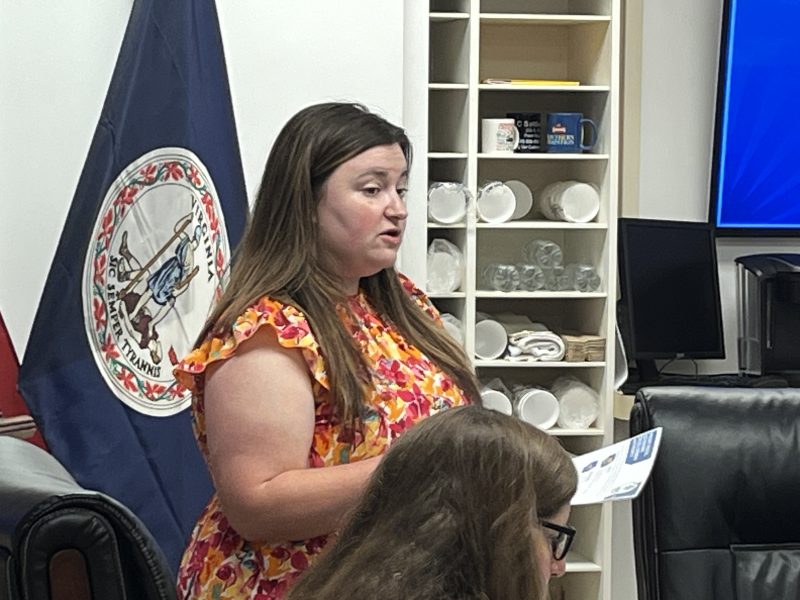
Director of Tourism Lizi Lewis updates the council on matters pertaining to the Front Royal Economic Development Authority.
It is important to distinguish between an auxiliary dwelling unit and an accessory building. The former in the proposed amendment is also known as an in-law unit, a backyard cottage, or a granny flat. The language defines it as: “a secondary, self-contained residential unit located on the same lot as a primary single-family dwelling. It includes independent living facilities such as a kitchen, bathroom, sleeping area, and separate entrance.”

Purchasing Manager Michelle Campbell presents to the council a recommendation for the awarding of construction services for the restoration of the creek bank at the 8th Street Bridge.

The accessory building, on the other hand, would not allow for residential occupancy and would be defined as: “A building or structure that is subordinate to, and located on the same lot as the principal permitted use of the property, of which, the accessory building or accessory structure is used for purposes that are clearly incidental to that of the principal permitted use of the property, and which is not attached by any part of a common wall or roof to the main building, or buildings, if any.” Thus, the first is for residential occupancy and the second is for utility purposes.
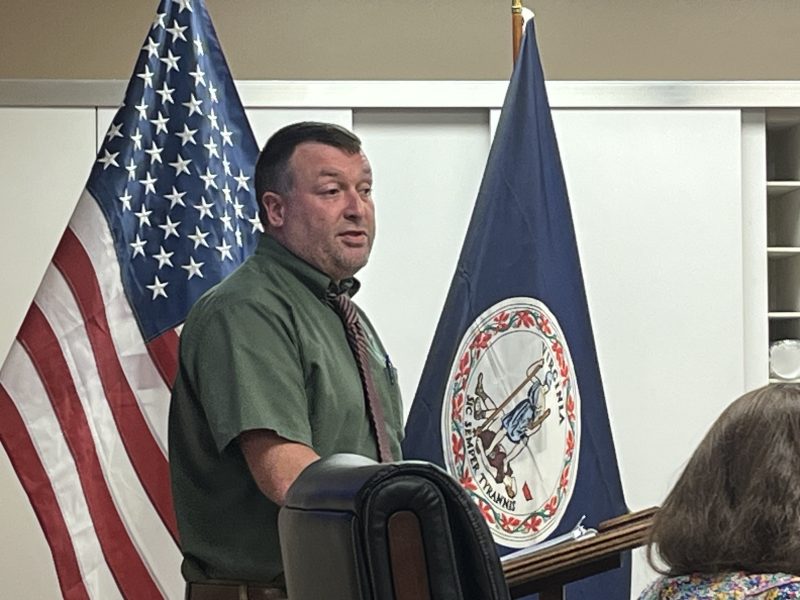
Finance Director B.J. Wilson presents several items to the council, among them the replacement of a refuse truck.
The proposed ordinance would permit the development of ADUs by-right in the R-1, R-1A, R-2, R-3, and PND zoning areas. This is where the item hits a roadblock. Councilman Bruce Rappaport pointed out that the R-1 designation is traditionally a low-density district, and while density would not increase in every case, there would at least be some cases, like a detached ADU, where density would increase. While he is comfortable with by-right development in the other areas, R-1, in his mind, needs to be protected. For that reason, he supported sending the item back to the Planning Commission. While they may have had various reasons of their own, his fellow council members joined him in moving to send the item back for further review.
The ADU is attractive for many reasons. It allows aging family members or returning college students to live affordably while keeping the cost restricted to the homeowner instead of the taxpayer. The property must be owner-occupied, whether the owner chooses to live in the primary dwelling or the ADU itself. Per Rappaport’s point, there might be an appreciable effect for R-1, but generally, this is a low-density approach that does not alter the character of the neighborhood. With standards for floor space, lot coverage, and setbacks, the ordinance would accommodate a returning historical trend




County Supervisors Fill Vacant Planning Commission Seat, Look to Future on Processes and Capital Improvements

America 250: ‘I Only Regret That I Have but One Life to Lose for My Country’

Building Gas Plants More Important Than Dominion Sale, Data Center Politics

Home Inspectors Help Buyers and Sellers Understand a Property’s Condition

Bowling Together: Why Work Is More Than a Paycheck

This Week’s Showtimes at Royal Cinemas as of September 24th

POLICE: 7 Day FRPD Arrest Report 9/21/2026

Blue Ridge Wildlife Center Patient of the Week: Eastern Cottontail

UVA Health Review Examines Real-World Results of Incisionless Liver Tumor Treatment

Maximilian James Donora (1995 – 2026)

Dollars for Dolly Campaign Aims to Turn Small Gifts Into Big Community Impact

Clean Virginia: NextEra’s Utility Takeover Attempts, Alleged Political Moves Relevant to Merger Case

Commentary: If You Enjoy Virginia’s Wildlife, Thank a Hunter or Angler

Spanberger Presses Congress for AI Guardrails as States Forge Ahead

‘Drive Them Into Hell’: Trump Ponders Destruction of Iran at United Nations

National Chicken Month Celebrates a Versatile Source of Protein

Face Paint That Can Read Your Heartbeat

Leisa Wood (1961 – 2026)

GO VOTE: Because Complaining Alone Isn’t a Good Strategy
The Third Most Important Gift Is Laughter

Skates, Treats and Safety: Warren County Sheriff’s Office Foundation Pack October with Community Events

Celebrate Kids Day Returns Sept. 27 With Family Fun, Activities and a New Train Ride

Survey Finds That More Than Half of Virginia Families With Children Face Food Insecurity

Could Virginia’s New Law Allowing 1% Sales Tax for School Construction Need a Fix?
