
Interesting Things to Know
The Lady Who Created Thanksgiving
Thanksgiving has many roots. Pilgrims held harvest feasts, sailors gave thanks after hard voyages, and communities paused to be grateful long before the United States was a nation. But the national holiday we celebrate today owes a special debt to one determined woman: Sarah Josepha Hale.
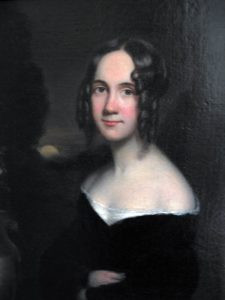
Sarah Josepha Hale
Hale was born in 1788 to parents who believed girls deserved an education. She taught herself by reading whatever she could find and thinking for herself. In the 1820s, she wrote one of the first American anti-slavery novels. By 1828, she was editor of a leading ladies’ magazine, using its pages to promote education, charity, and civic duty. During those years, she also wrote a set of children’s verses that included the rhyme so many kids still learn: “Mary Had a Little Lamb.”
As editor, Hale had a large audience—and she used it. For decades, she ran editorials urging governors and presidents to set aside a national day of thanks each year. Some states held their own Thanksgivings on different dates, but there was no single, shared, coast-to-coast observance. Hale believed a national Thanksgiving would bring families together, soften divisions, and remind people to be grateful—especially in hard times.

Hard times arrived in full during the Civil War. By 1863, the country was torn apart. Tens of thousands were dead, and many families did not know where their loved ones had fallen, or even if they were still alive. It seemed like the worst possible time to talk about feasting and reunion.
Hale thought the opposite. A day of thanks, she argued, could help the nation heal. That year, she wrote to President Abraham Lincoln, asking him to declare a national Thanksgiving on the last Thursday of November. Lincoln agreed. His 1863 proclamation invited Americans to pause, give thanks, and care for those hurt by the war. It was the first national Thanksgiving celebrated on the same day across the country. (Decades later, in 1941, Congress fixed the date as the fourth Thursday in November—the tradition we follow now.)
Hale didn’t invent gratitude, and she didn’t act alone. Ministers, editors, and ordinary citizens had long supported days of thanks. But Hale’s steady campaign—her letters, her editorials, and her belief that a shared holiday could unite a divided people—made the difference. She helped transform scattered local customs into a national tradition.
Her idea of Thanksgiving was about more than turkey and pie. It was about making time for family, remembering blessings, and practicing kindness. She imagined a quieter day, where busy lives slowed down and neighbors looked out for one another.

Hale captured that spirit in her own words to Lincoln:
“Let this day, from this time forth, as long as our Banner of Stars floats on the breeze, be the grand THANKSGIVING HOLIDAY of our nation, when the noise and tumult of worldliness may be exchanged for the laugh of happy children, the glad greetings of family reunion, and the humble gratitude of the Christian heart.” — Sarah Josepha Hale, 1863
More than 150 years later, the meaning holds. Thanksgiving still invites us to pause, gather, and be grateful—and to remember the woman who pressed a president to make it a day for everyone.




Patricia Ann “Patty” Vaught Brown (1961 – 2026)

Warren County Fire and Rescue to Kick Off Fire Prevention Week Oct. 4

Literacy Volunteers Students Earn Publication in Statewide Magazine

Virginia Transportation Board Schedules Fall Meetings, Including Stops in Weyers Cave and Culpeper

VDOT: Warren County Traffic Alert for September 14 – 18, 2026

Shenandoah River State Park Packs September With Fishing, Night Hikes, Pawpaws and More

How 9/11 Changed the Way America Surveils Its Citizens

Virginia General Fund Revenues Up 5.4% Through August

Virginia State Police Report More Than $580,000 in Drug Seizures During Weeklong Operations

The Night British-Held New York Burned

Spanberger Marks 25th Anniversary of 9/11 at Arlington Fire Station

Frustrations, Remorse and Pain Surface on 25th Anniversary of Sept. 11 Attacks

Twenty-Five Years After the Towers Fell
9/11: Honoring Our First Responders and Remembering the Role of Our Teachers

How the US House Could Overturn the Midterm Election Results

Front Royal Marks 25 Years Since 9/11 With Remembrance at the Gazebo

Beth Macy Discusses Sixth District Campaign, Health Care, Farming and Data Centers

Neurofeedback Specialist to Offer Free Community Program at Samuels Public Library

Warren County Wildcats Host Strasburg Under Friday Night Lights – September 11

Seeing, Listening and Supporting Our Seniors
Virginia’s 6th District Deserves Better Representation

David James “Dave” Lyons (1972 – 2026)

Two Killed in Fiery I-81 Crash Near Exit 310 in Frederick County

Business Growth Series: If You’re Not Listening, You’re Losing Customers
