
Local News
A Giant Step for Conservation: National Zoo Celebrates First Asian Elephant Birth in Nearly 25 Years
For the first time in nearly a quarter century, the Smithsonian’s National Zoo and Conservation Biology Institute is celebrating the birth of an Asian elephant calf—an event bringing renewed hope for one of the world’s most endangered species.
The female calf was born overnight on February 2 at 1:15 a.m. to 12-year-old mother Nhi Linh, following a 21-month pregnancy. She is the first Asian elephant born at the National Zoo in almost 25 years and the first calf for Nhi Linh, who arrived in Washington, D.C., in 2022 from the Rotterdam Zoo in the Netherlands. The father is Spike, a 44-year-old male described by keepers as a “gentleman” for his calm, easygoing nature.
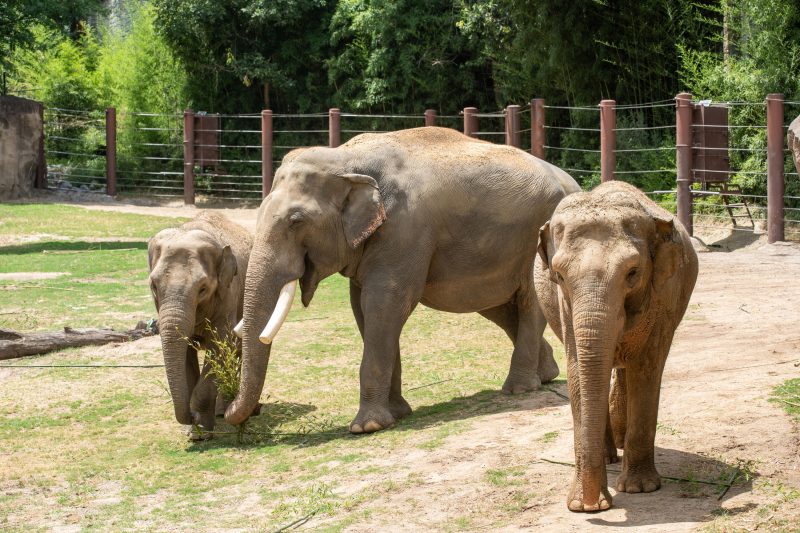
Asian elephants in the Elephant Trails exhibit at the Smithsonian’s National Zoo.
L to R: Nhi-Linh, Spike, Trong Nhi.
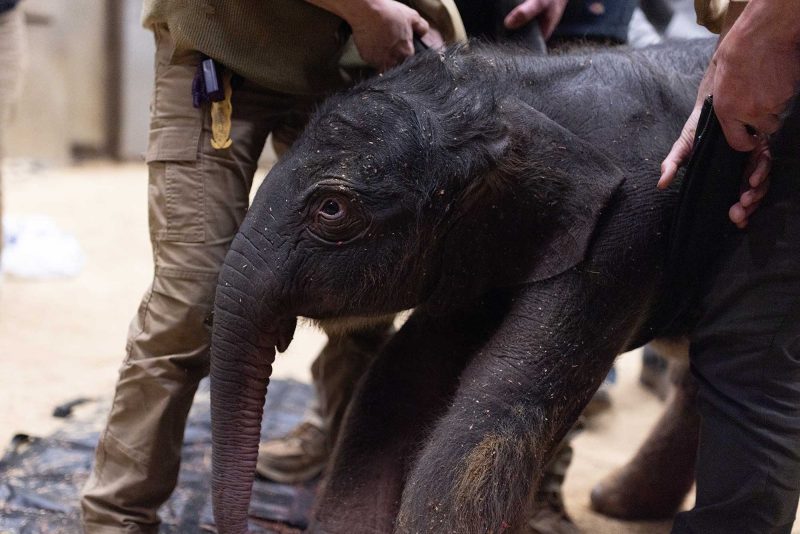
Smithsonian animal care and veterinary staff with the Asian elephant calf that was born to female Asian elephant Nhi Linh on February 2, 2026, at the Smithsonian’s National Zoo. The Zoo’s Asian elephant Spike is the father of this calf.
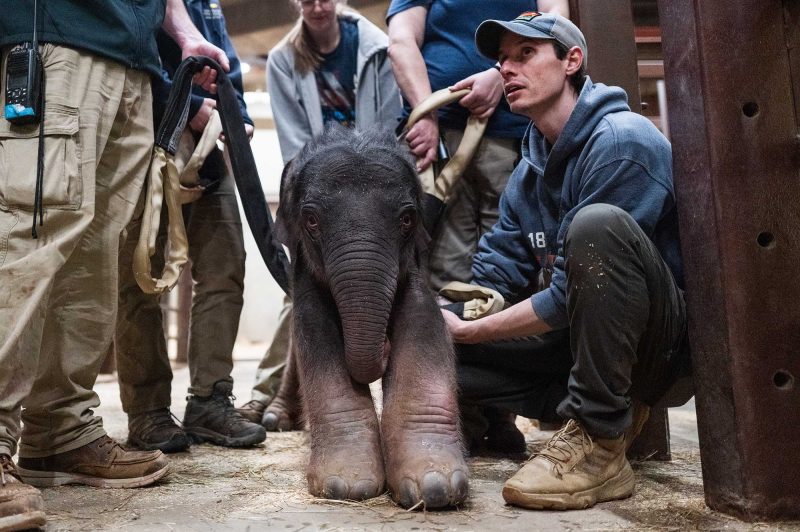
Smithsonian animal care and veterinary staff with the Asian elephant calf that was born to female Asian elephant Nhi Linh on February 2, 2026 at the Smithsonian’s National Zoo. The Zoo’s Asian elephant Spike is the father of this calf.
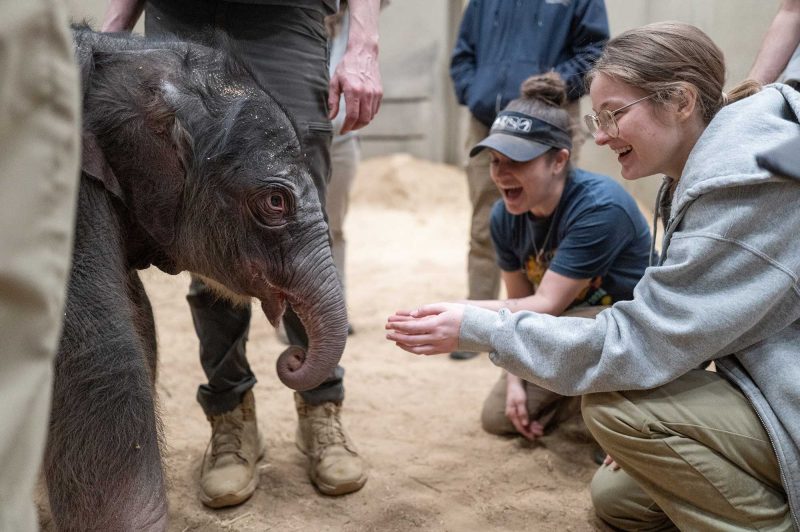
Asian elephant Nhi Linh gave birth to her first calf Feb. 2 at the Smithsonian’s National Zoo and Conservation Biology Institute. Photo 1 credit: Skip Brown, Smithsonian’s National Zoo and Conservation Biology Institute
“After waiting nearly 25 years for an Asian elephant calf, this birth fills us with profound joy,” said Brandie Smith, the John and Adrienne Mars Director of the Smithsonian’s National Zoo and Conservation Biology Institute. “When you see the calf and those heartwarming interactions with the herd, I hope you’ll be inspired to help save this endangered species.”
Asian elephants are listed as endangered, with fewer than 50,000 remaining in the wild. Zoo officials say this birth is especially important because the genetics of both parents are not well represented in zoos, meaning the calf will help strengthen the genetic diversity of the Asian elephant population in North America and around the world.
The birth followed a breeding recommendation from the Association of Zoos and Aquariums’ Species Survival Plan. Nhi Linh and Spike bred in April 2024. Although Spike had sired three calves at other zoos, none survived, making this healthy birth a milestone for elephant care teams.
Veterinarians conducted a comprehensive neonatal exam shortly after birth and reported that the calf was healthy, alert, and bright-eyed. She weighed 308 pounds and stood 38.5 inches tall. For now, mother and calf are bonding in an off-exhibit care area, where building strong social bonds with herd members and keepers is considered essential to the calf’s development.
“Asian elephants are intelligent, sensitive, and highly social animals,” zoo officials noted. “These early bonds are critical to a calf’s long-term health and well-being.”
To mark the occasion, the National Zoo is inviting the public to help name the calf while supporting elephant care and conservation. The elephant care team selected four names inspired by Vietnamese culture and the calf’s winter birth: Linh Mai (“spirit blossom”), Thảo Nhi (“gentle and beloved”), Tú Anh (“bright and intelligent”), and Tuyết (“snow”).
Voting is open through Friday, February 13, at noon Eastern Time. Fans can cast votes by donating $5 or more, with each dollar counting as one vote. All proceeds will directly support Asian elephant care and conservation programs.
“What we learn from our elephants in D.C. directly strengthens our work to protect wild Asian elephants across Southeast Asia,” Smith said. “I’m incredibly proud of our team, whose expertise made this moment possible for Nhi Linh and for all of us.”
Before making her public debut, the calf will spend several weeks off exhibit with her mother and herd to allow for quiet bonding time. The Elephant Community Center may close intermittently to provide a calm environment, and outdoor access will depend on weather conditions. Once ready, the calf will also make her first appearance on the Zoo’s Elephant Cam, allowing fans around the world to watch her grow.
The birth highlights the broader conservation mission of the Smithsonian’s National Zoo and Conservation Biology Institute. NZCBI leads the Smithsonian’s global effort to save species, better understand ecosystems, and train future generations of conservationists. Its two campuses are home to some of the world’s most critically endangered species. The Zoo’s 163-acre park in the heart of Washington, D.C., is always free to the public and features more than 2,200 animals representing 400 species, making it a popular destination for families and visitors of all ages.
In addition, NZCBI’s 3,200-acre Conservation Biology Institute campus in Front Royal, Virginia, plays a vital role in breeding and veterinary research. Work conducted there on 264 animals representing 20 species provides critical data for managing animals in human care and offers valuable insights for conserving wild populations. More than 300 staff and scientists work across Washington, D.C., Virginia, and field sites in more than 30 countries, collaborating with communities and partners to save wildlife and protect native habitats. NZCBI is a long-standing accredited member of the Association of Zoos and Aquariums.
As the newest elephant calf begins her life, zoo officials hope her story inspires people to support conservation efforts and recognize that protecting endangered species truly is something giant we can all be part of.

The Hidden Risks of House Hunting Solely Online

Choosing the Right Cleaner for Every Surface in Your Home

New Church Among Consent Items at County Planning Commission Meeting

Warren County GOP Mass Meeting Results Challenged After Allegations of Voting Irregularities

‘This Is About Equity’: In Richmond, Virginia Workers, Lawmakers Push for Inclusive Labor Rights for All

After Five Years of Attempts, Virginia On Track to Set Up a Prescription Drug Affordability Board

New Drug Take-Back Box at Warren County Sheriff’s Office Offers Safe Way to Dispose of Medications

‘Feeding Our Neighbors’ Continues Local Effort to Provide Free Meals in Front Royal

Blair David Eller (1963 – 2026)

Writing Workshop at Samuels Public Library Aims to Help Community Communicate More Clearly

Simple Steps to Reduce Wildfire Risk Around Your Home

Lyme Disease Cases Continue to Rise as Tick Season Returns

County Receives 5 More FY-27 Budget Overviews Prior to Closed Meeting on Administrator Search & Business Expansion

Belle Grove Opens March 21 With First Public Viewing of Memorial Quilts Honoring Enslaved Individuals

Iran At a Crossroads: Democracy, Monarchy, and the Lessons of the 1950s

Federal Judge Upholds Ruling That Certain Ex-Felons Should Not Automatically Lose Voting Rights

Virginia Lawmakers Explore Autonomous Technology for Transportation

Misconceptions About Multiple Sclerosis

Five Reasons to Consider a Career in the Community Sector

Frederick County Cattle Carrier Crash – Animals Still Reported At Large

‘Grow Up’: Former Republican Delegate Defends Civil-Rights-Themed Mailers in Redistricting Fight

Virginia One Step Closer to Probation Reform With Bills Headed for Spanberger’s Desk

Merit Versus Reality: Town Council Weighs Priorities Against Finance

Blue Ridge Wildlife Center Patient of the Week: American Beaver
