
Automotive
A history of roads in Virginia: Special action in Northern Virginia
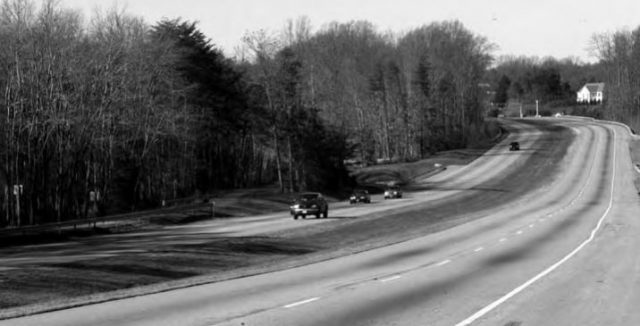
Sections of the Fairfax County Parkway were built with county, state and federal funds.
Due to the critical transportation needs in Northern Virginia, those localities took the lead in adopting alternative financing methods for highway construction and improvement projects.
Northern Virginia was first in using a “proffer” system that allowed the counties to negotiate with private developers in zoning matters so the developers paid for needed public improvements, such as new streets and schools, in return for favorable zoning decisions.
Some local governments also issued their own bonds for highway work. Proceeds from these bond sales were used either to supplement state funds or to build road projects for which state funds were not available.
In 1988, the General Assembly, with the support of Gov. Baliles, approved legislation that allowed private companies to build and operate for-profit toll roads. Companies must have their plans approved by state and local officials before building, and the toll structure must be approved by the State Corporation Commission. Private firms took the lead in other highway projects in Northern Virginia. The first 1.5-mile segment of one of Fairfax County’s most-needed roads was built by a developer in conjunction with construction of a major office park.
County, state, and federal funds were used to build other sections of the 35-mile Fairfax County Parkway. Another example of public and private sector cooperation was the financing of the improvements to Route 28 in Northern Virginia. The state sold bonds to widen and upgrade the heavily congested road near Dulles Airport, with the owners of commercial and industrial land in the area paying off the bonds through a special property tax. This first special tax district was authorized by the General Assembly in 1987. Since then, similar tax districts have been permitted
in other areas of the state.
The transportation initiatives and increased funding since 1986 meant a doubling, and in some areas a tripling, of the highway construction program. That kind of expansion in a short time frame could have led to problems if steps to address them were not taken. There were two questions in particular that had to be answered: could the road-building industry absorb the additional work, especially without a jump in prices, and could VDOT manage such an expanded program?
The answer to both questions was “yes.” The COT 21 members had looked into the first, and Gov. Baliles and the legislature had taken steps to deal with the second. The cost of highway construction remained stable, in part because of the increased competition for the road-building dollars. The number of contractors interested in working on Virginia’s roads increased, as did the number who bid on the various construction projects.
The department took several steps to discourage and detect collusion while making sure bids and prices remained competitive in the expanded construction program. Among the steps was the creation of the nation’s first full-time, multi-person, antitrust unit in a state transportation agency.
When Gov. Baliles first proposed his transportation initiatives, he brought in a management expert, Ray D. Pethtel, to head the 11,000-employee agency. Pethtel, who previously had served as head of JLARC, instituted a series of changes within the agency to make it more efficient and effective.
The time it took to complete highway projects was cut 20 percent, and the job was being done with fewer people per dollars spent. Substantial authority was decentralized to field offices around the state. Training was given new emphasis, along with increased communication with employees, the general public, elected officials, construction contractors, design and engineering consultants, minority-owned businesses, and others.
Use of computers and other technology increased in areas from surveying to drafting.
Produced by the
Virginia Department of Transportation
Office of Public Affairs
1401 E. Broad Street
Richmond, VA 23219
VirginiaDOT.org
