Local News
Blue Ridge Wildlife Center helped 3,400 animals, birds, reptiles and amphibians last year; adds veterinarian, two additional staffers to handle record increase in patients
In its annual report covering last fiscal year, the Blue Ridge Wildlife Center (BRWC) at Boyce cited 3,406 patients representing 160 species, including nine first timers, that kept its staff “busy as bees” over the 12-month period.
Using its always attractive and informative “The Ridgeline” newsletter for the colorful report, BRWC introduced Dr. Emily Hsieh to its membership, along with rehabilitation associate Sarah Midolo and front desk coordinator Alysa Everly. The chairman of the board of directors this year is Russ McKelway and Annie Bradfield enters her third year as executive director.
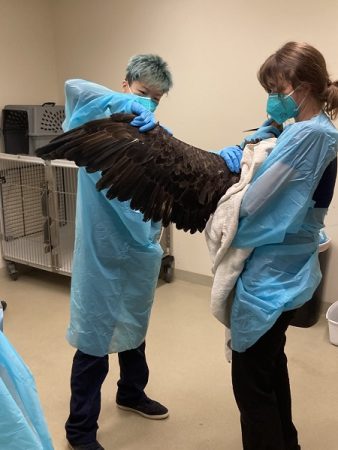
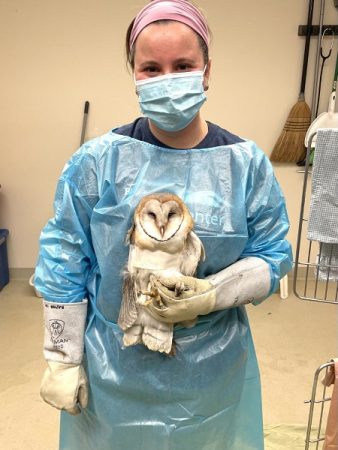
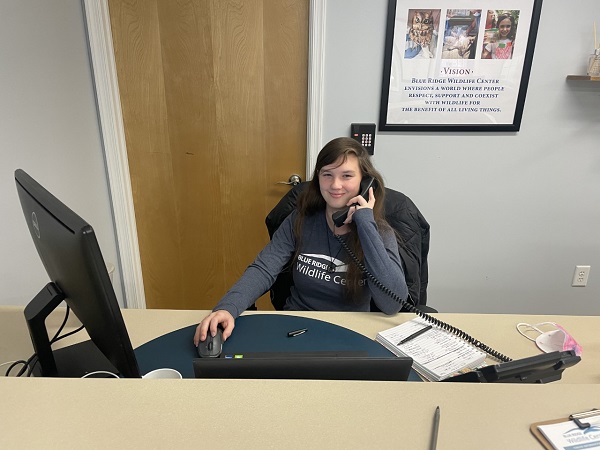
Pictured in succession are new Veterinary Doctor Emily Hsieh examining a eagle’s wing with some assistance; Rehabilitation Associate Sarah Midolo with owl; and Front Desk Coordinator Alysa Everly coordinating.
Bradfield said: “2022 was a perfect example of why we do the work that we do … our mission is completely centered around the concept that the health of our environment, wildlife, and humans are all connected. Often the threats to the health and safety of our local communities are first discovered through the patients that come to our hospital. For example, last year we admitted several (rabid) raccoons … we used the data to alert local health departments and law enforcement agencies so they could make informed decisions on how to protect the community.”
She also mentioned the outbreak of avian flu first found in Virginia in January 2022 that went on to ravage many commercial poultry farms here and around the nation. A disease that can spread between animals and humans, the epidemic was another reason BRWC was kept so busy.
Birds, in fact, were the second most numerous patients 1,304 or 38% to be treated. Mammals led treatment numbers at nearly 50% with 1,684 patients, including opossums (473), eastern cottontails (462), foxes (416), and gray squirrels (333). The remaining 12% or so were reptiles, turtles and snakes, and amphibians, including toads and frogs.
In effect, BRWC received patients from more than 50 Virginia counties, the most from nearby Loudoun (782), Frederick (582), Clarke (355), Fauquier (298), Prince William (247) and Warren (234).
Birds kept the shelter unusually busy: in December for example, BRWC admitted more sharp-skinned hawks than were admitted in any previous year. Other birds confined for rehabilitation purposes, included a young crow held up as an example of what NOT to do when you find a wild animal, bird or reptile in distress. Those who found the suffering bird fed him, gave him unknown medications and kept him in a small metal birdcage for three months.
Urging the public not to attempt to treat or keep injured and sick wildlife – this one has what is called “a guarded prognosis for release – BRWC says, “Good intentions are often not enough,” and pointed to the work being done by a “great network of wildlife rehabilitators” throughout Virginia. “These animals deserve professional, knowledgeable and legal care so they may have the best chance at a wild life,” the report states.
The Center reported revenues including contributions of $1.3 million and expenses during the fiscal year of $853,000. BRWC does not receive state or federal funding.
In 2022, BRWC took on 12 rehabilitation interns, mostly students or individuals looking to gain more in-depth knowledge and experience, working 8,000 hours, mostly during what they call the “busy baby season” – April to August.
Otherwise, another 47 volunteers contributed 7,000 hours of work both in the hospital, the education department, and other special projects. To volunteer, check out the online application form and email it to info@blueridgewildlifectr.org.
Also, for those interested, visitors should check out the recently refurbished Wildlife Walk, the outdoor introduction to the Center’s “ambassadors”, those animals and birds that for one reason or another could not be released back into the wild. For those who visit regularly, they will now miss the likes of Ambassador Snow, the unique and popular Arctic fox, who died last year. Also passing, like Snow from old age infirmities, were other longtime ambassadors, Jefferson, the esteemed bald eagle; Nigel, the Virginia opossum; Patches, the screech owl; and the squirrel Rufio.
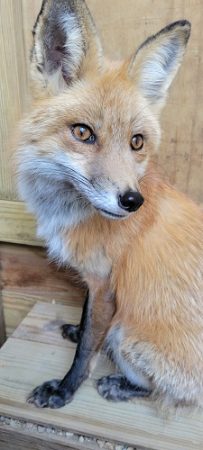
New animals who joined the “ambassadors club” include Gizmo, the opossum; Bear, the striped skunk, and Jasper, the red fox. Stop by Tuesdays, Wednesdays and Sundays for the $5 per person “Wildlife Look and Learn” events, or daily for a free walk around the ambassadors’ quarters, and a close look at the rescued animals.
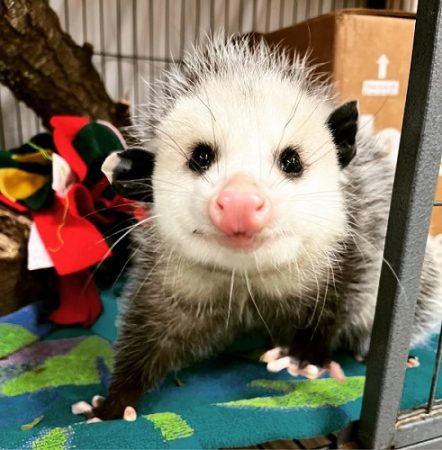
The next generation of Center ‘Ambassadors’ includes, again in succession: Gizmo the opossum; Bear the striped skunk; and Jasper the red fox.