
Local News
Blue Ridge Wildlife Center Patient of the Week: American Beaver
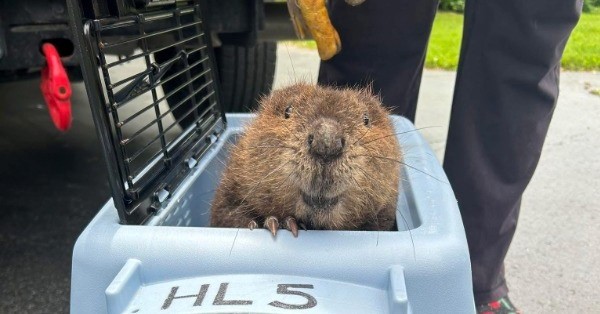
This young beaver was rescued in Lovettsville, Virginia, after being found lethargic and far from any water source—an unusual and concerning sight for a semi-aquatic species.
She was initially brought to Kristi’s Caring Hands Wildlife Rehabilitation and Education by Loudoun County Animal Services (LCAS) before being transferred to our hospital for advanced care. (LCAS is also responsible for the adorable photo above.)

On admission, our veterinary team noted that she was weak with labored breathing. As part of her diagnostic workup, our veterinary team carefully obtained a blood sample from the tail and took x-rays.
X-rays revealed significantly increased opacity throughout her right lung—a finding that could indicate pneumonia or complications from near-drowning.
Her condition remains serious, and her prognosis is currently guarded. We’re providing supportive care and monitoring her closely, doing everything we can to give her a second chance.
Beavers typically remain with their families for around two years, and for good reason. This patient is about a year old—still very much within that developmental window.

During this time, they don’t just grow—they learn. Young beavers are taught essential survival skills by their parents and older siblings, including how to find and harvest food, repair dams and lodges, avoid predators, and navigate the water systems they rely on.
This long period of family life is unusual for rodents, but it’s crucial to the beaver’s success.
A beaver who loses their family too early—like this patient—faces a steep learning curve if released without sufficient care and preparation.
Beavers are more than just fascinating rodents—they’re incredible ecosystem engineers.
By building ponds, dams, and wetlands, they create essential habitats for countless other species. Their dams trap sediment, reduce soil erosion, and filter pollutants, resulting in cleaner and safer water. Wetlands maintained by beavers even help mitigate floods and wildfires, making these animals key players in climate resilience and watershed health.
We hope this beaver continues to improve so she can return to the wild and resume her vital role in maintaining healthy ecosystems.
And if you’ve ever been frustrated by beaver activity—like chewing trees or causing flooding—we encourage you to explore the Human-Beaver Coexistence Fund. Their resources highlight the many benefits of living alongside beavers and offer practical, science-based solutions to common conflicts.
Looking for an easy way to help native wildlife? Become a monthly BRWC donor! For as little as $5/month, you can provide year-round, sustainable support that helps us fulfill our mission.

Business Growth Series: Why Good Businesses Still Struggle to Grow

Brownies with Mini Chocolate Easter Eggs

Shenandoah Downs Opens 11th Season April 11 with Tribute to Roger Hammer

We Don’t Know Everything About DNA

How PAAS Came to Dominate the Easter Egg Dye Tradition

Spanberger Signs Bipartisan School-Safety, Student Support Bills Into Law

Melanie J. Pomeroy (1958 – 2026)

David Benjamin Heller (1990 – 2026)

1776 Wasn’t Just About Independence

Three-Tiered System for Urban Agriculture Based on Lot Size Takes Shape at Town Planning Commission Work Session

Child Abuse Awareness Month Brings Focus to Reporting, Prevention in Warren County

National Dental Hygienists Week: Is Your Oral Care Routine Optimal?

The Coin That Traveled Through Time and Space

One “What If?” Question Is Changing the Future of Farming

AA Speaker to Explain Recovery Program at United Methodist Men’s Dinner
Jeannette M. Hyland (1944 – 2026)

Allen William Derflinger II (1959 – 2026)

Warehouse Clerk: A High-Demand Job—Even With Robots

FDA Cracking Down on Compounded GLP-1 Drugs

“Christmas in April” or Overspending? Budget Draws Criticism

Court Ruling Voids Prince William Data Center Rezoning, Raising Stakes for Local Debate

Spanberger Signs First Bills Targeting Healthcare, Housing and Energy Costs

Blue Ridge Singers Spring Concerts to Showcase Powerful Blend of Voices and Brass
What Counts as “Good Policy” Depends on Who’s in Power
