
Local News
Blue Ridge Wildlife Center Patient of the Week: American Coot
When Healing Isn’t Always What It Looks Like.
This American Coot was admitted after being rescued by AERO Animal Education and Rescue Organization in Woodbridge, Virginia.
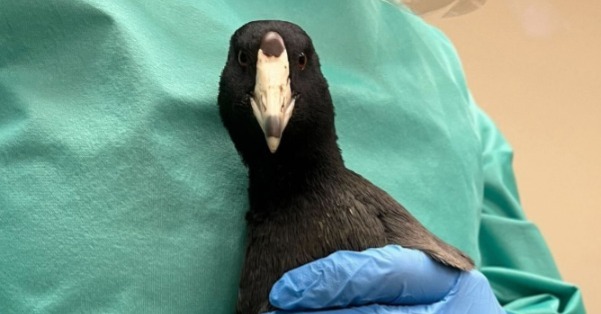
Although coots regularly overwinter in our region, this individual was the first American Coot ever admitted to Blue Ridge Wildlife Center.
On intake examination, the patient had multiple puncture wounds to the neck, right shoulder, left ankle, and left thigh.
The thigh wound extended deeply into the air sac and body cavity.
The pattern and location of the injuries were consistent with a suspected cat attack, which carries a high risk of infection due to bacteria commonly present in feline saliva.
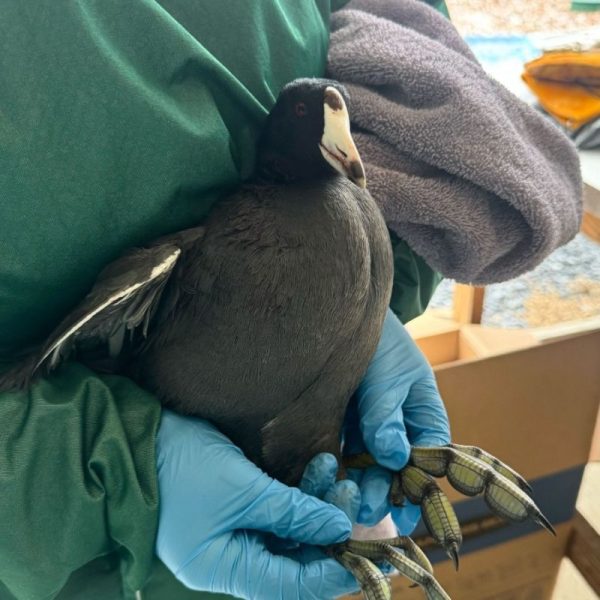
The patient was stabilized and taken to surgery for wound management. Wounds were flushed and closed where appropriate.
Some of the puncture wounds extended into the bird’s air sac system, which is part of the respiratory system. These wounds cannot be flushed with liquid without risking drowning, so they were managed surgically and with antibiotics.
Over the following days, the external wounds showed appropriate healing and infection appeared to be controlled.
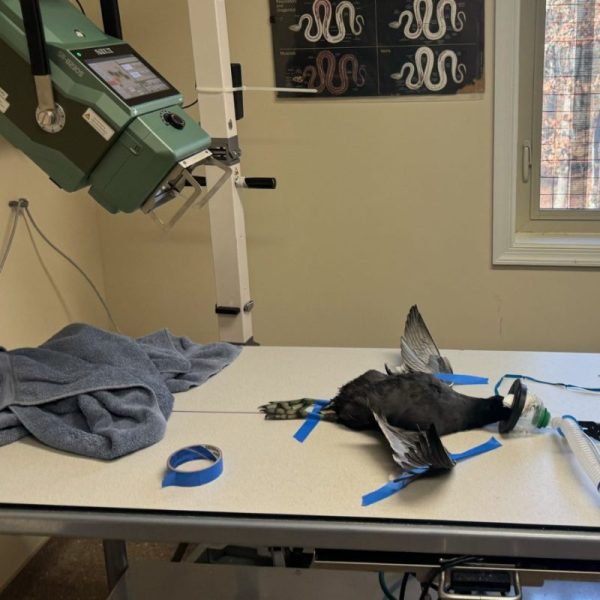
The patient was noted to have restricted extension of the left wing. Radiographs ruled out fractures or other orthopedic injury, and the restriction was attributed to soft tissue trauma.

Under sedation, the wing demonstrated normal range of motion, suggesting a potentially reversible condition with time and physical therapy.
Once the wounds were closed, the coot was transitioned from intensive care housing into a more species-appropriate, marsh-style enclosure with access to water.
Initial housing for wildlife patients is often kept simple to allow for frequent disinfection and to protect open wounds, but moving patients into habitat-specific enclosures as soon as medically appropriate is critical.
For high-stress species such as coots, appropriate enclosure design can significantly reduce stress, improve feeding behavior, and support recovery.
The patient was primarily monitored via remote cameras to minimize handling and allow continuous assessment of natural behavior.
On December 24, the patient was unable to swallow medication, a sign of advanced systemic illness.
Supportive feeding was attempted, but the bird passed despite these efforts.
This case underscores the serious and often unpredictable complications associated with suspected cat attacks, particularly when deep puncture wounds involve the air sacs.
It also highlights the importance of species-specific housing, low-stress monitoring, and cautious prognosis even when wounds appear to be healing externally.

Thank you to AERO Animal Education and Rescue Organization and to our supporters who make specialized wildlife medical care possible. While outcomes are not always successful, each case contributes to our understanding and future care.
Learn something new. Protect something wild.
This winter, turn your curiosity into action by joining BRWC’s Winter Webinar Series!
These engaging presentations break down real threats facing wildlife and explain practical ways you can help.
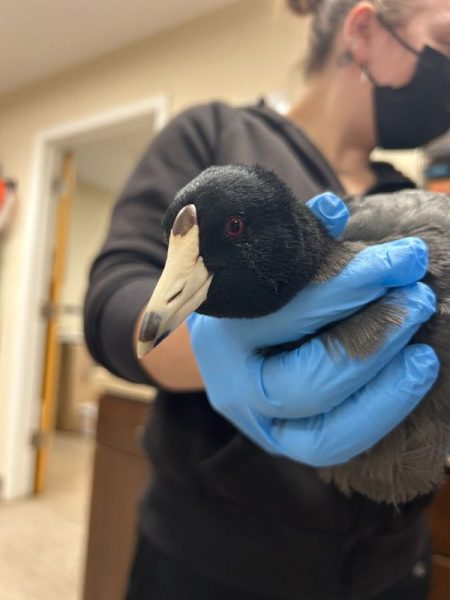
Topics include:
- Wildlife diseases and how they impact pets and people
- Window strikes and how to prevent them
- The impacts of cats on wildlife
- Keystone species and ecosystem health
- Invasive species, vultures, bioactive enclosures, and more
Webinars are just $5 for individuals or $10 for a group, and your registration directly supports the care of all of our patients.
Looking for an easy way to help native wildlife? Become a monthly BRWC donor! For as little as $5/month, you can provide year-round, sustainable support that helps us fulfill our mission.

New Church Among Consent Items at County Planning Commission Meeting

Warren County GOP Mass Meeting Results Challenged After Allegations of Voting Irregularities

‘This Is About Equity’: In Richmond, Virginia Workers, Lawmakers Push for Inclusive Labor Rights for All

After Five Years of Attempts, Virginia On Track to Set Up a Prescription Drug Affordability Board

New Drug Take-Back Box at Warren County Sheriff’s Office Offers Safe Way to Dispose of Medications

‘Feeding Our Neighbors’ Continues Local Effort to Provide Free Meals in Front Royal

Blair David Eller (1963 – 2026)

Writing Workshop at Samuels Public Library Aims to Help Community Communicate More Clearly

Simple Steps to Reduce Wildfire Risk Around Your Home

Lyme Disease Cases Continue to Rise as Tick Season Returns

County Receives 5 More FY-27 Budget Overviews Prior to Closed Meeting on Administrator Search & Business Expansion

Belle Grove Opens March 21 With First Public Viewing of Memorial Quilts Honoring Enslaved Individuals

Iran At a Crossroads: Democracy, Monarchy, and the Lessons of the 1950s

Federal Judge Upholds Ruling That Certain Ex-Felons Should Not Automatically Lose Voting Rights

Virginia Lawmakers Explore Autonomous Technology for Transportation

Misconceptions About Multiple Sclerosis

Five Reasons to Consider a Career in the Community Sector

Frederick County Cattle Carrier Crash – Animals Still Reported At Large

‘Grow Up’: Former Republican Delegate Defends Civil-Rights-Themed Mailers in Redistricting Fight

Virginia One Step Closer to Probation Reform With Bills Headed for Spanberger’s Desk

Merit Versus Reality: Town Council Weighs Priorities Against Finance

Blue Ridge Wildlife Center Patient of the Week: American Beaver

POLICE: 7 Day FRPD Arrest Report 3/9/2026

Discover Rotary with the Rotary Club of Warren County
