
Local News
Blue Ridge Wildlife Center Patient of the Week: Red-tailed Hawk
Why do more raptors end up in wildlife hospitals during winter?
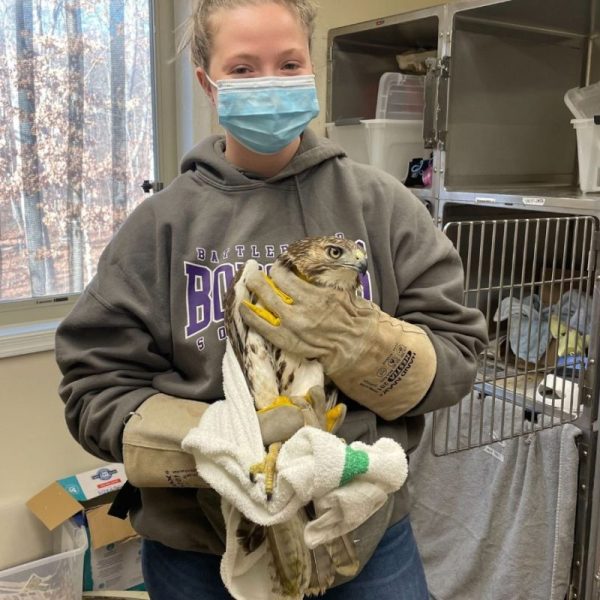
This juvenile Red-tailed Hawk is recovering well after a vehicle collision resulted in a fracture of the bird’s left ulna.
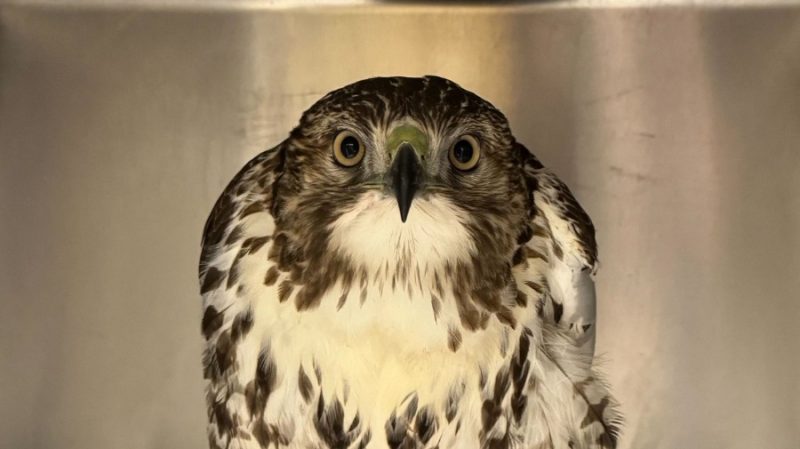
Fortunately, the radius (the other bone of the forearm or wing that runs parallel to the ulna) was intact. In cases like this, the intact radius essentially serves as an internal splint, which allows our team to stabilize the fracture with bandaging rather than surgical repair.
This young bird is otherwise healthy, alert, and eating well!
Over the next few weeks, our team will sedate this patient every few days for bandage changes and physical therapy so that normal range of motion is maintained at all of the joints.

Once the fracture is fully stable, this hawk will move to our pre-release enclosures to rebuild flight muscles and allow continued healing. If recovery goes as expected, we hope to return this bird home within the next six weeks!
Why do vehicle collisions increase for raptors in winter?
During winter, natural prey can be harder to find.
Small mammals may come closer to roads to forage for anything available, including trash or food scraps. Some are drawn to road salt, which can also attract them to the edges of highways.
Raptors follow their prey and hunt or scavenge near the road surface.
Red-tailed Hawks are also year-round residents in Virginia, and many northern individuals migrate into our region during winter.

This means more hawks on the landscape at a time when food is less abundant.
When raptors focus on prey or roadkill, they may not register an approaching vehicle in time, and collisions become more frequent.
You can help protect raptors in winter by avoiding litter, since trash attracts rodents and draws hawks closer to roads. Slowing down when you see roadkill also reduces the risk of injuring a bird that may be feeding or preparing to swoop in.
Looking for an easy way to help native wildlife? Become a monthly BRWC donor! For as little as $5/month, you can provide year-round, sustainable support that helps us fulfill our mission.

Get Your Equipment Ready Before the Start of Fishing Season

Landscaping Careers Offer Outdoor Work and Creative Opportunities

Blue Ridge Wildlife Center Patient of the Week: Virginia Opossum

From Crime Scenes to K9 Units: Citizens Academy Opens in May

Weekly Yard Waste Pickup Begins April 8 in Front Royal

Town Council Reviews Goals at Retreat in Advance of Work Session

New Virginia Laws Target School Construction and Classroom Cellphone Use

Clear Horizons Brings Fresh Approach to Mental Health

Funding Cuts, State Error Strain Virginia’s HIV Care System

Virginia Hospitals Filed More Than 1 Million Medical Debt Lawsuits Since 2010, a New Report Finds

POLICE: 7 Day FRPD Arrest Report 4/6/2026

Spanberger Signs Bipartisan Bills Tied to Billions in Business Investment Across Virginia

Birthright Case Forces US Supreme Court to Confront Prospect of Americans Losing Citizenship

Caleb Benton McKinstry (2010 – 2026)

Ideas for Nurturing — or Rediscovering — Your Inner Child

Protein Takes Center Stage in Updated U.S. Dietary Guidelines

Blue Ridge Wildlife Center Acknowledges a Quarter of a Century of Work in Wildlife Preservation & Human Education

What Does A ‘Fair Share’ Really Mean?

South Warren Ruritan Club Hosts 20th Annual Spaghetti Dinner Fuels Scholarships for Local Teens

Trees Take Root as Virginia’s Frontline Defense Against Urban Heat

Virginia Set to Rejoin RGGI as Utilities Prepare to Pass the Cost Back to Ratepayers

Virginia Joins Multi-State Lawsuit Challenging Trump’s Election Order

Trump Budget Seeks 43% Boost in Defense Spending, Cuts in Many Domestic Programs

Virginia Sees 33,000 ACA Enrollment Drop Since Subsidies Expired, More Likely on the Way
