
Local News
Blue Ridge Wildlife Center Patient of the Week: Virginia Opossum
A Feisty Mama’s Incredible Comeback
This Virginia opossum faced a terrifying ordeal but proved just how tough wildlife can be.

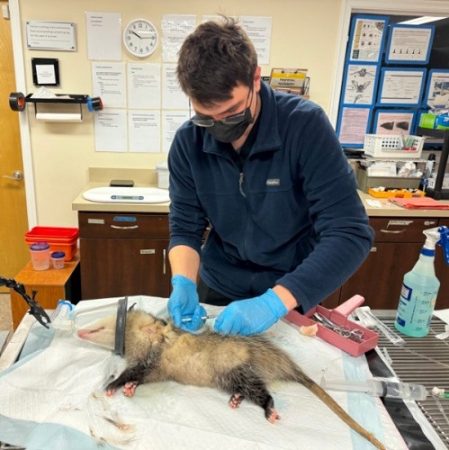
She came to us after a dog attack, suffering from deep puncture wounds, significant bruising, and lead poisoning.
Thanks to the skill of our veterinary team, including one of our student externs, Raymond, her wounds were surgically repaired and she began chelation therapy to remove lead from her system.

We’re thrilled to share that not only has she fully healed and been released, but she didn’t go alone—she brought nine joeys with her!

How Do Virginia Opossums Reproduce?
Incredibly short pregnancy: Unlike most mammals, opossums are marsupials, meaning their young are born at an extremely undeveloped stage and complete their development outside the womb. After just 11-13 days of gestation—the shortest of any North American mammal—these tiny, jellybean-sized babies are born.
Climbing to safety: At birth, each baby weighs less than a gram and is no bigger than a honeybee. Despite their tiny size, they must immediately crawl, unaided, from the birth canal to the mother’s pouch using instinct alone.
This journey is critical—if they don’t make it, they won’t survive.
Life inside the pouch: Once inside, they attach to one of the mother’s 13 teats, where they receive warmth, nourishment, and protection. Over the next two months, they continue to grow in this safe environment.
Getting ready for the world: As they mature, the babies outgrow the pouch and start clinging to their mother’s back when she moves around. By about three months old, they’re ready to explore on their own!
While opossums have been perfecting their survival skills for millions of years, human activities pose new challenges. Nearly 10% of the adult opossums we treat are here because of dog attacks—one of the highest rates among any species in our care. You can help prevent these injuries:
- Check your yard before letting dogs outside, especially at night.
- Keep dogs leashed and supervised outdoors.
- Ensure pets are up to date on rabies vaccinations in case of unexpected wildlife encounters.
While we were just trying to get through the week, this mama opossum survived a dog attack, recovered from lead poisoning, and raised nine babies. Talk about making us all look bad!
Looking for an easy way to help native wildlife? Become a monthly BRWC donor! For as little as $5/month, you can provide year-round, sustainable support that helps us fulfill our mission.
