
Opinion
Can we create an interracial dialogue to our mutual benefit?
Will 90% of the population in a county support change desired by 5% of that jurisdiction?
On March 19, I listened to a report on West Virginia Public Radio on actions by the West Virginia State Legislature. Before the body, that day was a debate on what to do with monuments and other structures that honor those who created and supported the Jim Crow era aptly called “Slavery by Another Name.”
Black members of the West Virginia Legislature sought to place memorials to Jim Crow in museums where those interested in history could view, and if they are so inclined to worship a racist past.
To the black people in the legislature and to the black community, these relics of a racist past are painful to be seen by those who suffered under slavery and later were denied basic civil rights like the ability to vote or attend integrated schools.
The monuments and memorials should not be destroyed but put in places where they can be viewed by those for whom they are not a source of pain.
The black population of West Virginia is less than five percent. The black population of Warren County, Virginia is about 5%. Does 95% of the population know or care about the 5% who are black and the descents of those brutalized by slavery?
It is beyond difficult for the white population of the county to understand the perspective of those who are not white without engaging the black community in a dialogue – that is without knowing the story of individual black citizens.
We fear what we do not know. If all we know about Black Lives Matter is what we see on television, then we do not know much at all. Black lives do matter – and those who matter most to our local discussion are the lives of those black citizens who live in Warren County. If we do not know a black person and have heard his or her story, they become a faceless mass of people on whom we can project our fears. But if we know a black man named Joe as Joe and not just a person with different color skin, if we have listened to Joe and know his story, then we can see him as a fellow human being and citizen and not as a threat, not as an object of fear.
By putting the question of the relocation of the statue on the Courthouse lawn to a popular vote, the Board of Supervisors essentially asked if the 95% in the county who are white know and care about the lives and the stories of the 5% who are not.
The relocation of the monument is but one of several issues facing the black people of Warren County. What does the black community think of an effort to relocate the monument? Have they been listened to? Is there a forum by which this listening session can take place?
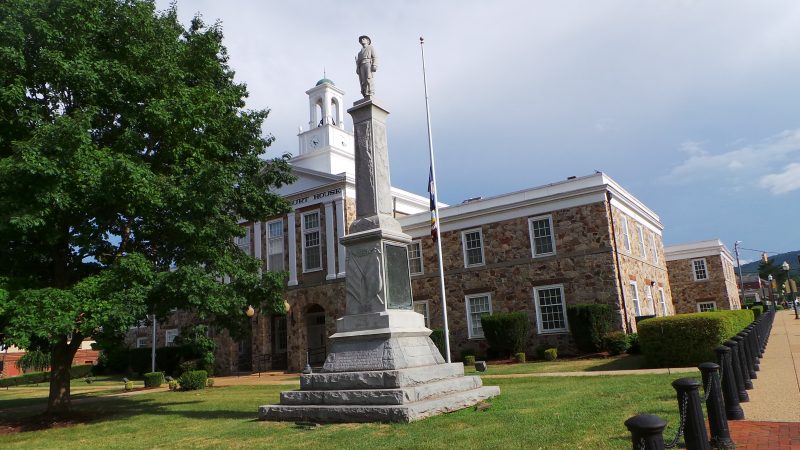
The focus of the local debate over the public display of Civil War-era monuments. Can the discussion lead to healing, rather than division? – Perhaps. Royal Examiner File Photo by Roger Bianchini
Many white people, but not a majority by any means, support what they believe to be the desires of the black community. Many white citizens have only a superficial connection to their fellow citizens. It is not racist not to know something about black people, but it is racist to act on one’s ignorance and contribute to a person’s pain by your belief that another person is not deserving of your respect.
Some political leaders have garnered support by creating the myth that there is no difference between peaceful protesters and criminals. There is a big difference. Peaceful protesters deserve the respect of their fellow citizens as they exercise the foundational right of every citizen since the founding of the nation. Those who put their perceived needs ahead of other black citizens and engage in the destruction of property and looting should be arrested and prosecuted. Black Lives Matter is a simple fact. Any other agenda does not serve a just cause and undermines the efforts of those who do.
Warren County should consider the creation of a Human Rights Commission to provide a forum where we can listen to each other’s stories and get to know each other’s joys and fears.
Tom Howarth
Warren County, Va.