
Local Government
County moves toward FY-2023 Budget vote with State contributions in question
(Update/Correction: The below reference to Melissa Chappell-White’s assertions on the possibility the POSF owes decades of back debt to the County has been corrected to indicate that possibility revolves around POSF Inc. ownership of multiple properties within the Shenandoah Farms Sanitary District and the possibility that “POSF Inc. owes decades of unpaid sanitary district fees and real estate taxes” as opposed to “past projects” as originally reported. A grammatical clarification to Mark Egger’s remarks has also been made.)
At a Special Meeting of April 12, the Warren County Board of Supervisors got a summary presentation of the Fiscal Year-2023 County budget proposal of $133,071,712 from Finance Director Matt Robertson and heard from seven speakers at a Public Hearing on that budget. No action was planned or taken as the supervisors hold out hope of a resolution of the State Budget process and potential impacts on State revenue streams into the County budget.
However, County Administrator Ed Daley told the board not to hold its collective breath awaiting that. Daley predicted the Virginia General Assembly might not approve the state budget for another month or two as the June 30th end of the current Fiscal Year-2022 approaches. By law, both state and local budgets must be approved before the July 1st start of the next fiscal year.

Finance Director Matt Robertson summarizes the FY-2023 Warren County Budget proposal with the help of a 12-frame PowerPoint. Below, one frame showing new positions proposed. Royal Examiner Photos by Roger Bianchini
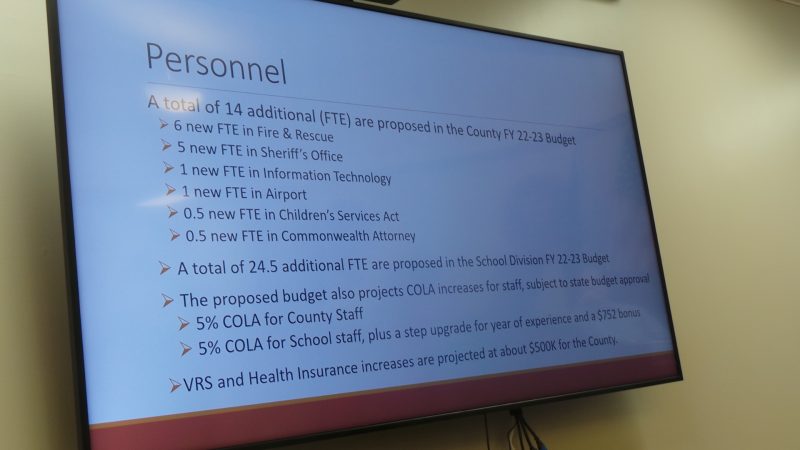
Approval of the County Budget has been discussed for a vote at the May 3 morning meeting. However, as the general assembly and governor continue to debate tax revenue and expenditure variables, municipalities are left guessing at state contributions on a variety of fronts. Those include public schools, which here has an anticipated 10% increase from the state projected in the existing budget; as well as constitutional officers and social services. And state revenues regarding personal property and the grocery tax remain unresolved.
The FY-23 County Budget has no tax increases proposed in support of a budget up 1.57% from the current budget year. However, several speakers urged the supervisors to remove the car aspect of the County’s Personal Property Tax due to an unprecedented rise in assessment values of used cars due to supply chain issues with new cars. Several supervisors noted they are keeping an eye on a pending decision on the car tax at the state level before committing to action locally. And in a Dillon Rule state like Virginia, it was observed that localities cannot enact authorities not granted them by the state government.
Public Schools funding perspectives
The public hearing got off to an explosive start when Mark Egger reached the podium. Referencing recent parental issues regarding public school library materials designed to address sexual orientation issues some students may face as they reach puberty, Egger lambasted the County’s Public Schools division for forwarding what he called a “Gender Agenda”. Of the County’s largest departmental sector – the local funding of public schools $27.72 million was cited at 31% of the County Budget, with Public Safety at 17% ($15.29 million) the next largest sector – Egger suggested a total cut of funding, “zero dollars” to what is generally considered to be, along with Public Safety and Public Health and Welfare (the latter 13% at $11.52 million in this budget), one of municipal government’s three primary functions and responsibilities.
“You heard me right, zero dollars,” Egger said as he launched into a philosophical treatise on gender, gender identification, and human sexuality. “I’m not going to use the nonsensical term transgender. – Gender is a grammatical term. Nouns in some foreign languages have a gender. Humans do not have a gender, they have a sex, and it is either male or female,” Egger asserted. He continued to equate teaching or referencing gender identification from other than a traditional male/female perspective to teaching that “the earth is flat” or “the moon is made of green cheese”.
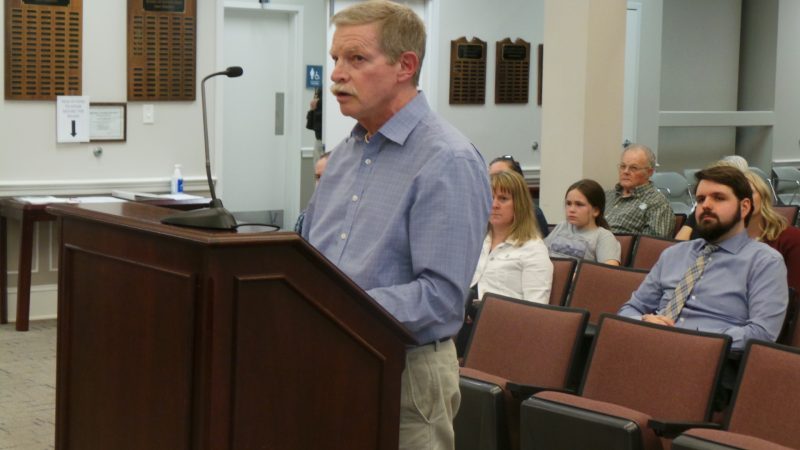
Mark Egger called for no County funding of the public school system due to information he termed ‘lies’ about non-traditional gender identification being taught or available in county schools. Below, E. Wilson Morrison student activities staffer Michael Williams begged to differ with Egger before calling for funding to improve the EWM Elementary School’s physical plant, which he said has suffered decades of neglect prior to some attention being given by the current public schools administration.
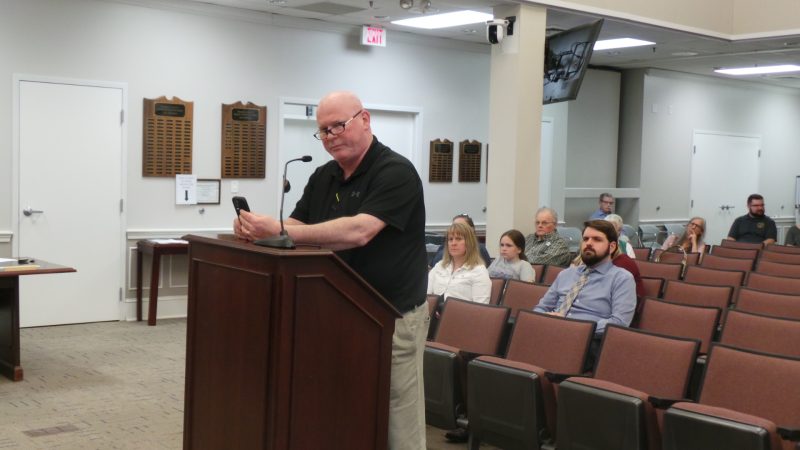
Egger was followed to the podium by second speaker Michael Williams, a staffer at E. Wilson Morrison Elementary School. Acknowledging Egger’s opinions and right to express them, Williams noted he would have to disagree with them before moving on to his input to the public hearing. That input was to adequately fund the school budget to allow for needed physical plant improvements at E. Wilson Morrison. Williams acknowledged some recent improvements and called that an “encouraging” development. However, he added that EWM remains the only public school in the county without a gymnasium. “And don’t get me started on the circa-1920 auditorium … with splintered wooden seats that E. Wilson Morrison himself sat in and were there before he was,” Williams theorized.
In concluding to implore the board for proactive funding to bring the school up to standards taken for granted at the system’s other public schools, Williams lauded current Schools Superintendent Dr. Ballenger and administrative staff for beginning the process and shedding light on the school’s physical plant shortcomings that long pre-date the current public schools administration.
Third up in the batting order, and continuing to criticize the Property Owners of Shenandoah Farms (POSF) initiative to retake management responsibility for the Farms Sanitary District, Melissa Chappell-White suggested suspending the Sanitary District’s budget until management and past financing issues were resolved. She even theorized that the POSF could owe the County decades worth of back debt related to “POSF Inc. ownership of 70 or so properties within the Shenandoah Farms Sanitary District, and the possibility, if not probability, that POSF Inc. owes decades of unpaid sanitary district fees and real estate taxes.”
The public hearing’s seventh and final public speaker was Wyatt Strickland, deputy chief and president of the Shenandoah Shores Volunteer Fire & Rescue Department. While calling the department’s future “bright”, Strickland noted the size and student and staff numbers at Christendom College (679 pre-and-post grad students) in the department’s service area in asking for funding to add some full-time career staffing to the department to assure timely emergency responses when necessary.
Developing a “smart” strategy to cuts
As noted above, a number of speakers addressed potential Personal Property Tax impacts from soaring valuations of used cars, as well as impacts from the national inflation driving costs on basic essentials among other things up while wages tend to remain stagnant. In response to questions about funding county staff salary increases, North River Supervisor Delores Oates noted that those increases had been mandated for certain county staffing positions at the state level.
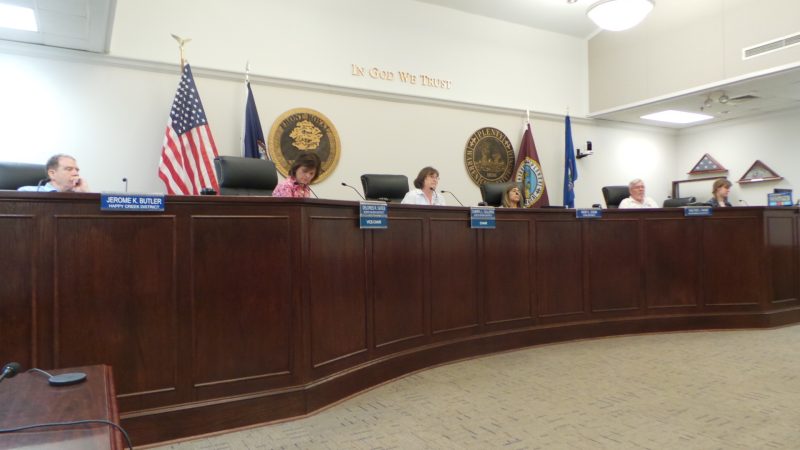
The board listened to public input, reacted and discussed options moving forward without a final state budget yet being approved. Below, County Administrator Ed Daley addressed board questions about a ‘smart’ strategy to implement cuts if state revenues fall below anticipated levels.
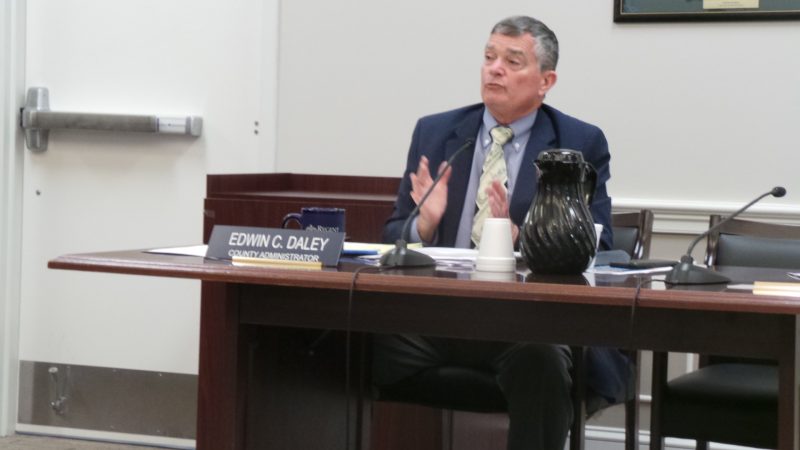
In response to questions from Fork District Supervisor Vicky Cook and Oates on the potential of cuts generated by lost state revenue, the county administrator agreed that rather than across-the-board departmental cuts, staff and the supervisors would work to target cuts to specific areas determined to be less vital in the coming fiscal year.
“We would be more looking at the dollars over there and where the biggest pieces are, and see where we can make reductions with the least amount of impact on public services,” Daley told the board.
“I just want to put it out on the table that, hopefully, we’ll be smart,” Cook commented after citing non-regional, non-profits the county helps fund locally as a potential target for cuts if necessary.
The Special Meeting and Budget Public Hearing followed a 40-minute joint Closed Session of the county supervisors and town council, along with members of both the County and Town EDAs. The motion into closed indicated discussion of “a prospective business or industry’s interest in locating or expanding its facilities in the community … in the Shenandoah Magisterial District located both within and outside the limits of the Town of Front Royal.”
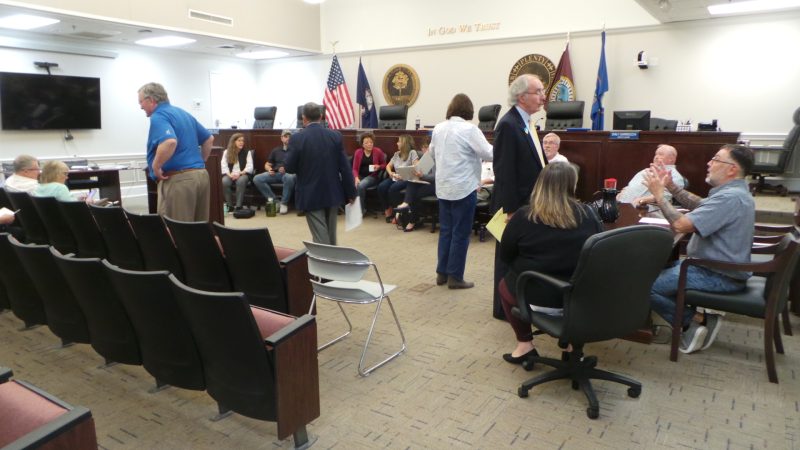
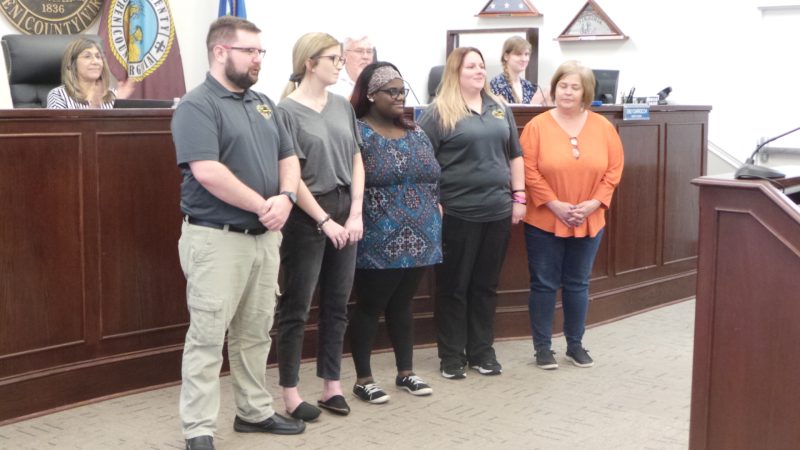
Town and County elected officials and both EDAs were present for a 6 PM closed session on a potential business or industry location or expansion on both sides of the county-town line in the Shenandoah District. Below, county emergency services dispatch personnel were introduced at the Special Meeting’s outset to acknowledge their contributions to the safety and welfare of the community during National Public Safety Telecommunications Week.
Watch the Board of Supervisors Work Session on the County video here.

Why We are Challenging the Republican Mass Meeting

Bruce Norman Showman (1954 – 2026)

EDA Relaunches Small Business Loan Program to Help Warren County Entrepreneurs Access Capital

Targeted Exercises to Improve Your Putting

The Hidden Risks of House Hunting Solely Online

Choosing the Right Cleaner for Every Surface in Your Home

New Church Among Consent Items at County Planning Commission Meeting

Warren County GOP Mass Meeting Results Challenged After Allegations of Voting Irregularities

‘This Is About Equity’: In Richmond, Virginia Workers, Lawmakers Push for Inclusive Labor Rights for All

After Five Years of Attempts, Virginia On Track to Set Up a Prescription Drug Affordability Board

New Drug Take-Back Box at Warren County Sheriff’s Office Offers Safe Way to Dispose of Medications

‘Feeding Our Neighbors’ Continues Local Effort to Provide Free Meals in Front Royal

Blair David Eller (1963 – 2026)

Writing Workshop at Samuels Public Library Aims to Help Community Communicate More Clearly

Simple Steps to Reduce Wildfire Risk Around Your Home

Lyme Disease Cases Continue to Rise as Tick Season Returns

County Receives 5 More FY-27 Budget Overviews Prior to Closed Meeting on Administrator Search & Business Expansion

Belle Grove Opens March 21 With First Public Viewing of Memorial Quilts Honoring Enslaved Individuals

Iran At a Crossroads: Democracy, Monarchy, and the Lessons of the 1950s

Federal Judge Upholds Ruling That Certain Ex-Felons Should Not Automatically Lose Voting Rights

Virginia Lawmakers Explore Autonomous Technology for Transportation

Misconceptions About Multiple Sclerosis

Five Reasons to Consider a Career in the Community Sector

Frederick County Cattle Carrier Crash – Animals Still Reported At Large
