
Local Government
Following Hugh Henry and Paul Barnhart Appointments Supervisors Ponder Roosters in R-1 and Industrial Well Water Prohibition
Following a session-opening 5:30 p.m. Closed Session scheduled for a half hour that did not adjourn until just prior to 6:30 p.m., at a Special Meeting called specifically to make appointments to vacant seats interviewed for during the Closed Session, the Warren County Board of Supervisors took action on those appointments in Open Session.
Those appointments were first, as expected, Hugh Henry to fill the final two-and-a-half months of the Fork District Supervisors seat vacated by the resignation of Vicky Cook, and subsequently Paul Barnhart to fill Henry’s seat on the County Planning Commission. Barnhart faced competition from county Homesteder advocate Amber Martin for the planning commission seat. Both appointments were unanimous, Henry’s by a 4-0 vote on a motion by Cheryl Cullers, seconded by Richard Jamieson, and Barnhart’s by a 5-0 vote on a motion by the just-sworn-in Henry, seconded by Cullers.

Circuit Court Clerk Angie Moore swears in Hugh Henry during a brief recess in the supervisors’ Special Meeting following Chairman “Jay” Butler’s announcement of the appointment decision. Below, Hugh Henry and Paul Barnhart are awaiting the end of the Closed Session during Amber Martin’s interview for the planning commission seat soon to be vacated by Henry. Royal Examiner Photos Roger Bianchini
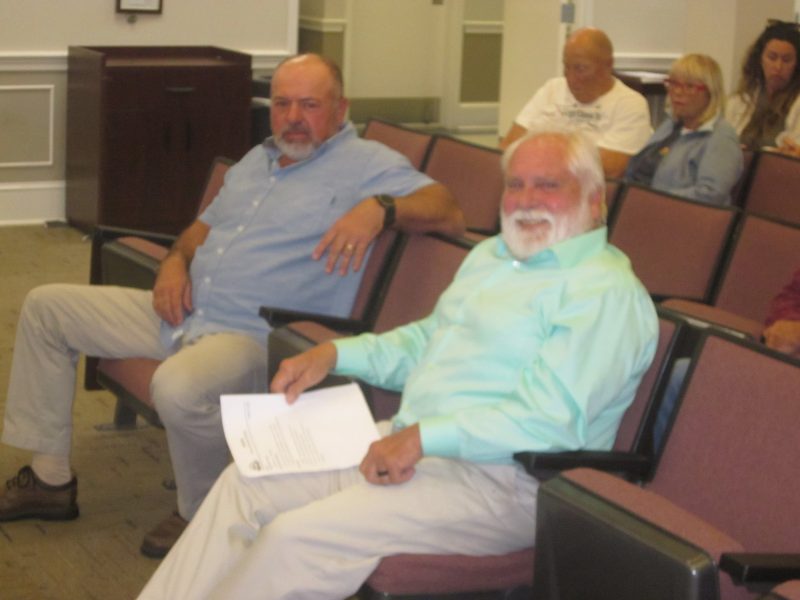
As previously reported, Henry is the lone candidate on the November election ballot for the Fork District supervisor’s seat. That fact appears to have broken the initial 2-2 deadlock, Stanmeyer and Jamieson opposed, to appointing Henry to serve out Cook’s term.
The other Special Meeting agenda item was “Cancellation of Snow Removal Services Contract for Lake Front Royal”. Prior to that vote, newly seated Fork District Supervisor Henry explained that it was his company contract that was being cancelled due to Conflict of Interest rules that he was aware of when he applied for the Fork District Supervisor’s seat. Henry abstained from the vote, which was passed 4-0 on a motion by Cullers, seconded by John Stanmeyer.
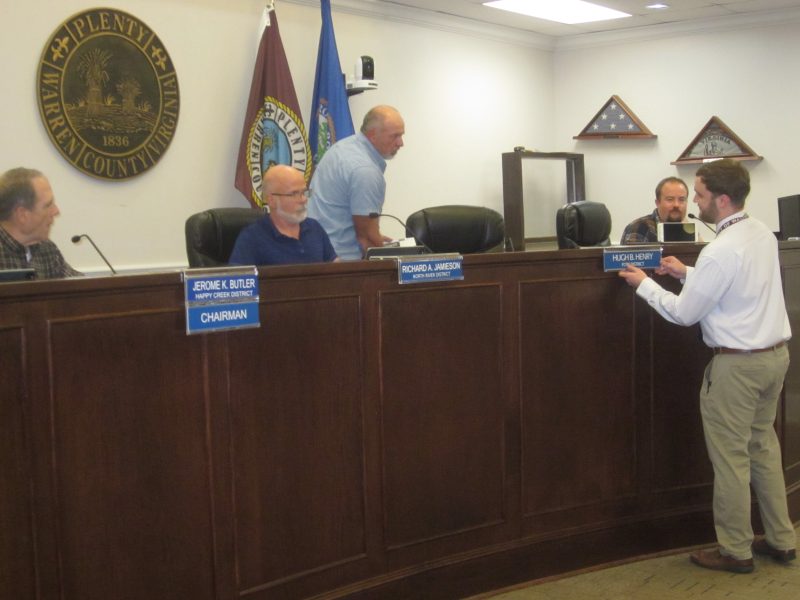
Hugh Henry takes his seat on the Board of Supervisors with a brand new nameplate.
At that point, the Action Item votes taken, the Special Meeting was adjourned. The board then moved to its originally scheduled five-item work session discussions.
Work Session
- Discussion — Urban Agriculture Text Amendment (Roosters on R-1)
First up was a detailed proposal and justification for that proposal regarding permitting allowing Roosters to be included with hens in Residential 1R (R-1) Districts on parcels with a minimum lot size of one acre:
EXPLANATION & SUMMARY: “Discussion on whether to direct the Planning Department to develop an appropriate text amendment for further consideration, which would mirror the town’s ordinance on Urban Agriculture, only insofar as it pertains to Roosters on R-1 lots that are at least one acre in size. (Or, adjacent R-1 lots owned and occupied by the same owner, with at least one acre in combined size).”
The detailed presentation addressed noise concerns, health, and flock protection against predatory animals. The presenter estimated 250 people being postively impacted by the proposal and cited “community benefits to both people and the environment.”
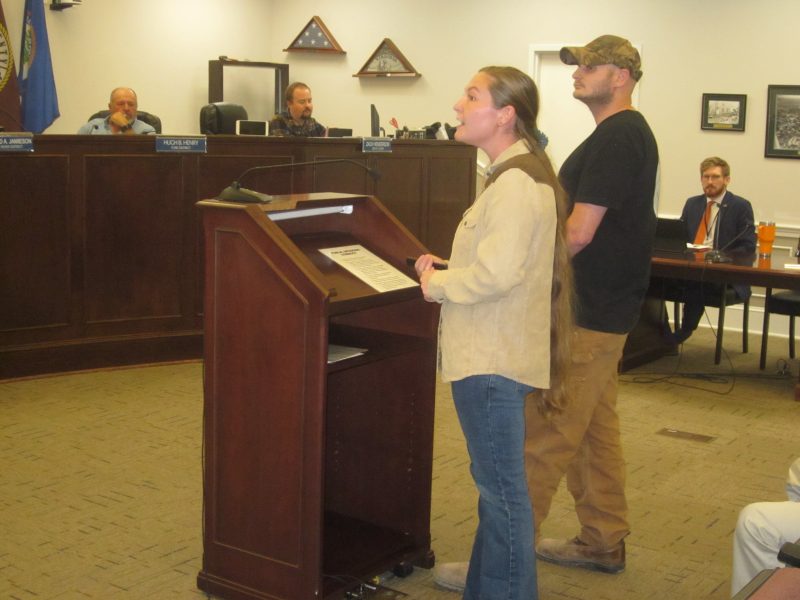
Lady presenter and backup support on Urban Agriculture Text Amendment to allow Roosters along with hens on R-1 zoned properties of an acre or more. Below are the reasons why it should be allowed in a PowerPoint presentation.

Following the presentation, Shenandoah District Supervisor Stanmeyer, who opened the discussion, noting his involvement in bringing the proposal forward, suggested the board verify the factual analysis prior to taking action on the proposal.
- Discussion – Proposal for Industrial Well Water Prohibition Ordinance
Another detailed presentation involved North River Supervisor Richard Jamieson’s initiative regarding industrial water usage in the County. It appeared to be part of an initiative to reject Data Center applications in the county due to their high water usage. We will note that a recent call from someone who has dealt with Data Centers developmentally told us that they are moving toward the ability to reuse water that has gone through their system, decreasing their constant need for a new water supply. How often such water could be reused apparently remains to be seen.
EXPLANATION & SUMMARY: “The Board of Supervisors and Planning Staff will discuss the proposal for an Industrial Well Water Prohibition Ordinance as introduced on the October 7th Regular Meeting.”
- SUPPORTING DOCUMENTATION
Legal Foundation
This ordinance was developed through a comprehensive analysis of Virginia statutory authority, review of successful precedents from other Virginia counties, and consultation with established Virginia legal principles governing municipal groundwater protection and public health regulation.
The above work session topic and the following one were flipped at the work session’s outset, making the well water presentation the final one before adjournment, which came at 8:29 p.m. It was also brought forward on an initiative by Supervisor Jamieson.
- Discussion – Closed Session topic process and determination
EXPLANATION & SUMMARY: “The Board of Supervisors will discuss the establishment of a more defined and thorough process for determining what is scheduled for closed session.”
Jamieson worried that some closed sessions adjourned on the advice of legal counsel during board meetings might not meet the criteria for calling a closed session under state code.
Fork District Supervisor Henry said that, from observing board meetings from the gallery, it often felt like there were a lot of closed sessions. However, with a smile, he observed that might be because he was anxious to hear what was being discussed behind those closed doors. And after his swearing in earlier during the special meeting, he will be able to be a part of those discussions, easing his unease at not knowing what was going on behind closed board doors.
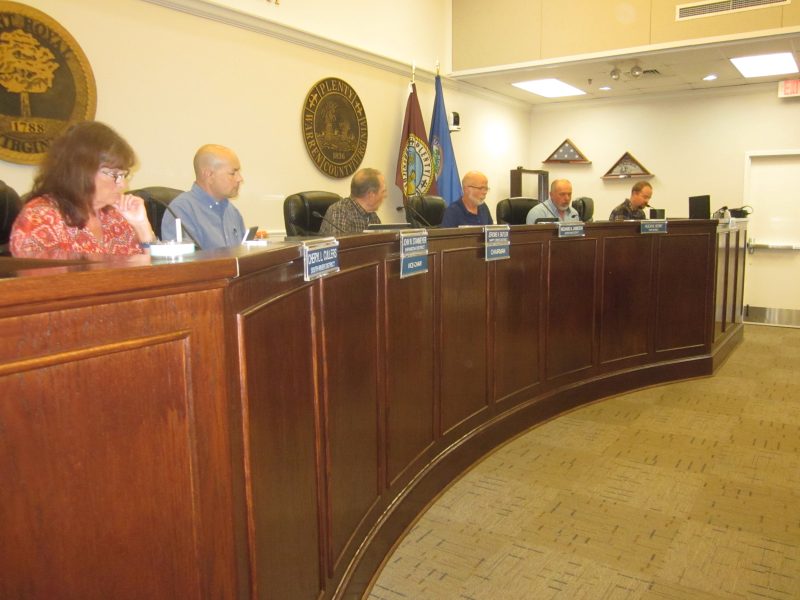
The board consensus on a variety of topics was more background supporting documentation prior to coming vote on code amendments
Supervisor Cullers said her preference was to conduct county business in open session. “I’m not a lawyer, and I don’t like going into closed session if we don’t have to. But I respect the fact that Mr. Ham’s job is to abide by the law, to interpret the law to the best of his ability. And I think he does a good job of that. He doesn’t just arbitrarily fly off the cuff. He does a lot of research to know and justify when we go into closed session.
“And whenever we can discuss something without going into closed session, that’s my preference. But at the same time, I don’t want to do something that’s going to cost the people of this community more money for legal suits just because we thought we knew more than a lawyer,” Cullers elaborated.
“There’s no doubt that that’s what their function is. But it doesn’t absolve this board of being the determining agency of whether we go into closed session,” Jamieson replied, adding, “I’m just saying it’s our responsibility to know what those (state codes) say.” And while Cullers said she agreed with that, she added, “I still say I am not going to say I know better than a lawyer with the experience and expertise that Mr. Ham has. And argue with him that he’s wrong and I’m right when I know that my interpretation of all this (state codes) may be not correct.”
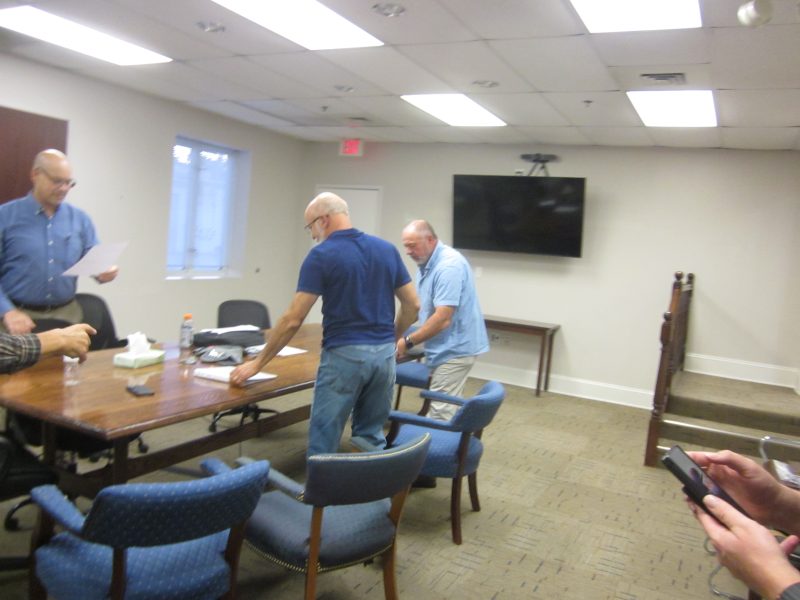
The board consensus on a variety of topics was more background supporting documentation prior to coming vote on code amendments
Cullers added that if she did have a disagreement on a call into closed session, she could remain in the main meeting room to make her disagreement known. “But I would rather go in there and understand what he is trying to say. And then if I disagree and want to come out here and make public my disagreement, that’s on me as an individual to do that.”
Jamieson responded that he didn’t believe any board member’s actions should be done arbitrarily. He also noted that he had made his concerns known to both the county attorney and the board, so he felt he was suggesting the proper path to pursue. However, Cullers concluded that she would not be comfortable in voting on the matter without additional legal information from legally qualified sources.
And on that note, the board moved to its adjusted final discussion item on industrial well water use.
Two other topics addressed earlier revolved around the coming board scheduling matters:
- Discussion – CY 2026 Board of Supervisors Meeting Schedule
EXPLANATION & SUMMARY: “The Board of Supervisors will discuss an early draft of the Meeting Schedule for the 2026 Calendar Year.”
- Discussion – Fiscal Year 2026-2027 Budget Calendar
EXPLANATION & SUMMARY: “Staff would like to propose a draft Fiscal Year 2026-2027 Budget Calendar:
“1. This draft proposes two Joint Budget Committee School Board and Board of Supervisor meetings as well as two Joint Budget Committee School Board and Board of Supervisor Work Sessions.
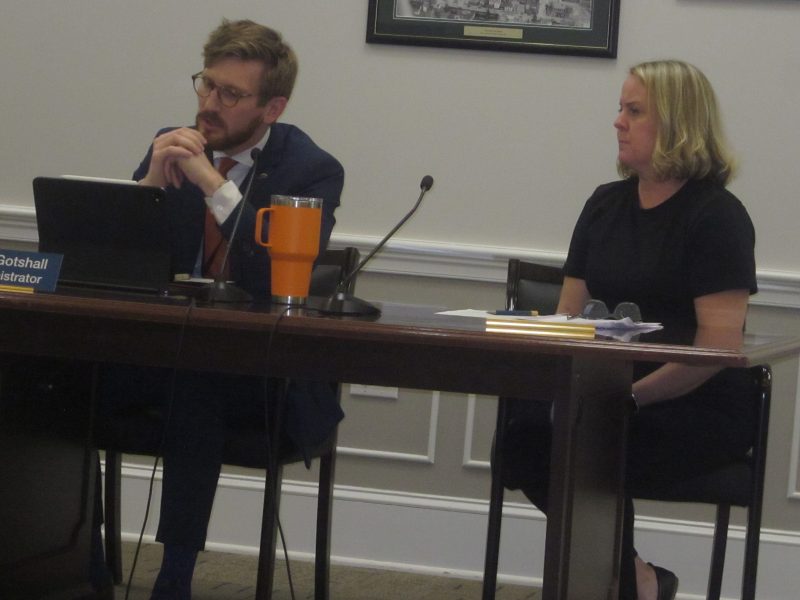
County Administrator Bradley Gotshall and Finance Director Alisa Scott addressed a proposed County Budget meeting schedule presented to the supervisors for the coming year.
“2. This draft anticipates receiving both the health insurance rates in mid to late February 2026 and the Commonwealth of Virginia budget as late as June 2026. Any amendments may be made after July 1, 2026, and a public hearing shall be held if any amendment changes the budget by more than 1%”
Click here to watch the Warren County Board of Supervisors Meeting of October 14, 2025.

Warehouse Clerk: A High-Demand Job—Even With Robots

FDA Cracking Down on Compounded GLP-1 Drugs

“Christmas in April” or Overspending? Budget Draws Criticism

Court Ruling Voids Prince William Data Center Rezoning, Raising Stakes for Local Debate

Spanberger Signs First Bills Targeting Healthcare, Housing and Energy Costs

Blue Ridge Singers Spring Concerts to Showcase Powerful Blend of Voices and Brass
What Counts as “Good Policy” Depends on Who’s in Power

Planned Parenthood Presses Virginia to Restore State Funding for Contraception Program

Weapon Offenses Rise on Virginia University Campuses

Trump Steps In to Pay TSA Workers as Congress Remains Stalled

Escaping the ‘Captivity of Activity’ by Making Time to Rest

Why Wearing a Bike Helmet Matters

Wilma J. Martin (1927 – 2026)

Michael Fanning (1957 – 2026)

Spanberger Order, RNC Lawsuit Highlight Divide Over Virginia Voter Roll Maintenance

DNC Kicks Off Voter Registration Blitz, Unveils New Campaign Playbook Ahead of Midterms

Republican State Lawmakers Propose Three-Month Gas Tax Holiday in Virginia

April Star Birthdays: Famous Faces Celebrating This Month

Time to Strengthen Those Hips Again

Supervisors Discuss Evolving FY-26/27 Budget Priorities and Revenue Sources, Including Real Estate Tax Hike & Cigarette Tax

From Students to Leaders: Mountain Vista Governor’s School Hall of Fame Honors Two Graduates

Hundreds Gather in Front Royal for “No Kings Day” Rally

How Public EV Charging Stations Work

A Social Network Just for AI? Bots Chat About Life, Love and More
