
State News
Report Doesn’t Rule Out Racism or Retaliation at Red Onion, Finds Other Complaints ‘Unsubstantiated’
When a handful of Red Onion State Prison inmates burned themselves in late 2024 amid allegations of racism and abuse, the Office of the State Inspector General (OSIG) launched an investigation into inmates’ claims of physical or sexual abuse, inhumane treatment, poor food quality, and prolonged periods of isolation for some inmates.
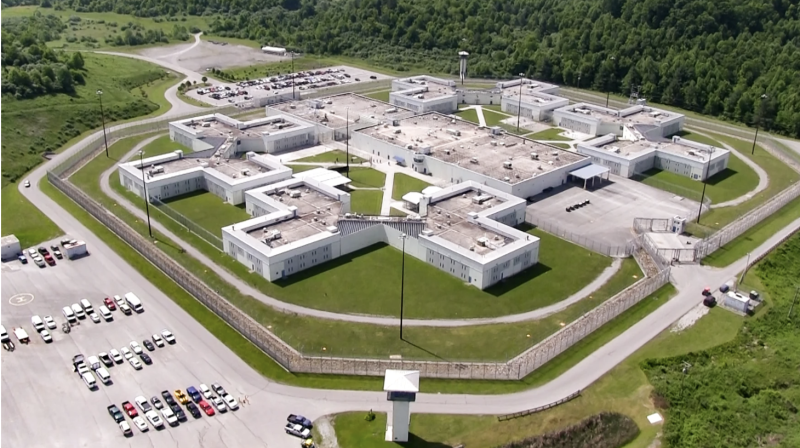
Most of the claims have been found “unsubstantiated” by OSIG’s Corrections Ombudsman team in a report obtained by The Mercury on Tuesday, while allegations of racism and retaliation against inmates have been deemed “inconclusive.”
Virginia’s new corrections ombudsman to prioritize Red Onion prison probe
This means that they could not be totally proven, nor disproven.
With a series of both announced and unannounced visits to the Southwest Virginia prison, the investigation team reviewed more than 500 complaints it’d received, along with 77 incident reports that inmates had filed, along with associated camera footage. The investigation was “limited to relevant circumstances as specified in the complaints,” the report stated.
The sporadically redacted report outlined how interviews with inmates and correctional officers, along with reviews of incident reports and other evidence, led to OSIG’s conclusions. Among the redacted information was how many inmates burned themselves — a number disputed between prison reform activists and Virginia Department of Corrections Director Chad Dotson.
Dotson told state lawmakers that six people burned themselves “using improvised devices that were created by tampering with electrical outlets,” while activists have asserted that closer to a dozen people harmed themselves in protest of the living conditions.
Some correctional officers interviewed as part of the investigation believed the inmates who burned themselves were seeking transfer to be closer to their families — echoing a sentiment Dotson relayed last year.
Complaints about racism, religious discrimination, and retaliation
The Mercury has communicated with Ekong Eshiet over the past year, one of the inmates who purportedly burned himself. He expressed concerns about officers retaliating against inmates who spoke out and said he felt unsafe around officers who’d purportedly taunted him for his Muslim faith. He has since transferred to an out-of-state facility.
Other inmates relayed similar concerns in the interview, saying they feared their access to phones or kiosks to transmit electronic communications would be limited, either in retaliation or as part of the regular operations. The report noted that phone access was a problem for inmates.
Kenneth Hunter, a former Red Onion inmate who now frequents the Virginia State Capitol as an organizer with the Virginia Interfaith Center for Public Policy, said in an interview last year he spent prolonged time confined solitarily in Red Onion during his sentence for a nonviolent drug charge. He said he is “well aware” of the racism allegations that have stemmed from the facility.
Hunter, a Black man, recalled how large portions of his fellow inmates were Black, in contrast to the white correctional officers. Black people are also disproportionately incarcerated in Virginia, reports show.
‘Unsubstantiated’ claims
Incarcerated people, their families, and prison reform activists have repeatedly complained about what they call excessive use of solitary confinement. Though Virginia doesn’t technically label it as solitary confinement, “restorative housing” is a form of confined housing that is used in correctional facilities here.
A 2024 lawmaker-directed report by a consulting firm confirmed the use of restorative housing and signaled that at least one unnamed facility was not granting legally required out-of-cell time for those who’d been isolated.
The new OSIG report shed more light on how restorative housing is used at Red Onion and found the facility had not abused the practice. The report said some inmates placed in restorative housing had chosen not to participate in out-of-cell time or had refused to comply with search procedures.
“It is a safety concern when an inmate refuses to participate in search procedures, and inmates are not allowed to leave their cell until they participate in search procedures,” the report stated.
The report dismissed other claims of medical or mental health neglect, poor food quality, inhumane living conditions, and physical or sexual abuse.
The probe also did not find Red Onion in noncompliance with VADOC’s grievance procedures, which must be addressed within 180 days of filing and requires inmates be notified at their completion. Review of a sexual harassment complaint and eight abuse complaints filed by a redacted name appear to have also cleared Red Onion staff of those allegations, per the OSIG report.
The report noted “Additional information” concerning those allegations, but the redactions make it difficult to ascertain the context.
With the report concluded, investigators recommend that the prison make complaint forms more accessible to residents and consider offering a course on self-advocacy and accessing health resources.
by Charlotte Rene Woods, Virginia Mercury
Virginia Mercury is part of States Newsroom, a nonprofit news network supported by grants and a coalition of donors as a 501c(3) public charity. Virginia Mercury maintains editorial independence. Contact Editor Samantha Willis for questions: info@virginiamercury.com.

Business Growth Series: Why Good Businesses Still Struggle to Grow

Brownies with Mini Chocolate Easter Eggs

Shenandoah Downs Opens 11th Season April 11 with Tribute to Roger Hammer

We Don’t Know Everything About DNA

How PAAS Came to Dominate the Easter Egg Dye Tradition

Spanberger Signs Bipartisan School-Safety, Student Support Bills Into Law

Melanie J. Pomeroy (1958 – 2026)

David Benjamin Heller (1990 – 2026)

1776 Wasn’t Just About Independence

Three-Tiered System for Urban Agriculture Based on Lot Size Takes Shape at Town Planning Commission Work Session

Child Abuse Awareness Month Brings Focus to Reporting, Prevention in Warren County

National Dental Hygienists Week: Is Your Oral Care Routine Optimal?

The Coin That Traveled Through Time and Space

One “What If?” Question Is Changing the Future of Farming

AA Speaker to Explain Recovery Program at United Methodist Men’s Dinner
Jeannette M. Hyland (1944 – 2026)

Allen William Derflinger II (1959 – 2026)

Warehouse Clerk: A High-Demand Job—Even With Robots

FDA Cracking Down on Compounded GLP-1 Drugs

“Christmas in April” or Overspending? Budget Draws Criticism

Court Ruling Voids Prince William Data Center Rezoning, Raising Stakes for Local Debate

Spanberger Signs First Bills Targeting Healthcare, Housing and Energy Costs

Blue Ridge Singers Spring Concerts to Showcase Powerful Blend of Voices and Brass
What Counts as “Good Policy” Depends on Who’s in Power
