
Local News
How to help Hurricane Harvey victims
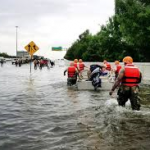 As the unprecedented flooding after the arrival of Hurricane Harvey over southeastern Texas in the last few days becomes more apparent, many folks want to reach out to help.
While help is important in rebuilding the lives and homes of hurricane victims, sometimes it is hard to know just how to help, what kind of help is most needed, and even if our donations will reach the intended victims.
According to the Federal Emergency Management Agency (FEMA), financial contributions are often the best kind of donation to make. That is because there are a number of voluntary organizations with extensive experience in disaster relief in areas such as: mass feeding, mass sheltering, first aid, pastoral care, child-care, pet care, and many other areas that can do their work when financial contributions are made. There are often a wide range of services that are needed, post-disaster that are met by these voluntary organizations.
How to help Hurricane Harvey victims
For a list of major disaster relief organizations in the United States that are involved with disaster relief, visit the National Voluntary Organizations Active in Disaster at www.nvoad.org.

To learn more about international disasters, visit www.interaction.org. Guidance for assisting disaster victims outside of the United States can be found by visiting www.usaid.gov or the Center for National Disaster at www.cidi.org.
Financial contributions to voluntary organizations following natural disasters make sense for other reasons as well. The voluntary organization can spend that money in the local disaster area, which can help the local economy recover.
FEMA officials say cash donations, which are tax deductible, allow the volunteer organizations to meet the needs of survivors more precisely and more quickly.

Donations often become a logistics problem and are referred to by relief workers as a “second disaster”.

Avoid contributing to a ‘Second Disaster’
Cash contributions, rather than unsolicited donated goods, avoid the cumbersome, costly and time-consuming process of gathering, sorting, packing, transporting, unloading, resorting, storing and distributing the goods. In fact, disaster relief experts say well-meaning donations of used clothing, bottled water, diapers and the like are often referred to as “the second disaster”.
Juanita Rilling, director of the Center for International Disaster Information in Washington, D.C. said, “Generally after a disaster, people with loving intentions donate things that cannot be used in a disaster response, and in fact may actually be harmful. And they have no idea that they’re doing it.”
Some ways in which help is being funneled:
 The Hurricane Harvey Relief Fund of Houston’s mayor, Sylvester Turner, which is administered by the Greater Houston Community Foundation.

The United Way of Greater Houston flood relief fund will be used to help with immediate needs as well as long-term services such as minor home repair.
Visit www.unitedwayhouston.org to donate or text UWFLOOD to 41444.
Houston Food Bank and the Food Bank of Corpus Christi are accepting donations.
To help animals suffering from the disaster, visit the Houston Humane Society or the San Antonio Humane Society. The Houston Society for the Prevention of Cruelty to Animals has set up an animal emergency response hotline (713-861-3010) and is accepting donations on its website, HERE.

The Texas Diaper Bank in San Antonio is asking for diapers and wipes, which can be mailed or shipped to 5415 Bandera Road, Suite 504, San Antonio, TX., 78238.
The Disaster Relief Effort of the Churches of Christ is seeking financial donations which will be used to purchase wholesale supplies for food boxes, hygiene boxes and infant care boxes to be distributed to flood victims.
Avoid the scammers
To be avoid being scammed, it is best to check out a charity before making a donation. A good place to locate reputable sources for giving is www.charitynavigator.org. There is a list on the front page of the site that lists approved charities that will ensure your donations reach Hurricane Harvey victims.
Area residents with customer service skills who are job-hunting may be interested to know that FEMA is hiring customer service personnel for the Winchester, VA, location, as well as locations in MD, TX, CA and Puerto Rica.

Customer representatives serve as the primary point of contact for persons inquiring about disaster assistance. Duties include assisting disaster victims, processing claim requests for disaster assistance, and providing information regarding available programs to individuals applying for disaster assistance.
Anyone interested in applying for a Customer Representative position can find more information at: https://careers.fema.gov/hurricane-harvey.
One thing is for certain: in the months to come, there will be untold needs by thousands upon thousands of Hurricane Harvey victims. And there will be many ways in which to help.
Those who are challenged in their ability to give, perhaps because of their own modest means, will find hope in the words of the late Mother Teresa, “If you can’t feed a hundred people, then feed just one.”



From Workers’ Parades to Backyard Cookouts: How Labor Day Began

Is It Too Late to Sign Up for the All About Trees Class This Year?

The Envelope That Decides Next Year

The Emergency Fund You’ll Actually Build

Stronger, Not Bigger: Rethinking Economic Development in Warren County

Kenneth Lewis Smith (1939 – 2026)

Strong Families Build a Stronger Warren County

The Science Prizes That Make You Laugh, Then Think

Grill the Perfect Corn on the Cob, Then Dress It Up

The Famous Last Words No One Wrote Down

US Supreme Court Again Urged to Permit Trump Vote-by-Mail Restrictions

President Trump’s Beef Policy May Help Food Prices, But At What Cost?

Virginia Attorney General Creates Worker, Federal Accountability Units as Office Highlights Meta Settlement

VDOT: Warren County Traffic Alert for September 7 – 11, 2026

Twenty-Five Years Later, Remembering When We Stood Together

U.S. Adds 162,000 Jobs in August as Manufacturing and Construction Hiring Rises

Spanberger Taps Daniel Young to Lead Government Watchdog Office

Update: Cline Appears Without Democratic Opponent at Winchester Congressional Event

UVA Health Experts Urge Athletes to Recognize Concussion Warning Signs as Fall Sports Begin

Bumblebees Solve Puzzle Without Training, Study Finds

Business Growth Series: “What If” Thinking Is Costing You Money

Blue Ridge Area Food Bank Calls on Community to Take Action Against Hunger in September

Virginia State Police Seize Guns, Nearly $200,000 in Cash During Weekly Crime Operations
The Queen is Gone. There Will Never Be Another
