
Local News
Blue Ridge Wildlife Center Patient of the Week: Northern Cardinal
This week’s featured patient represents just how far we’ve come as an organization.

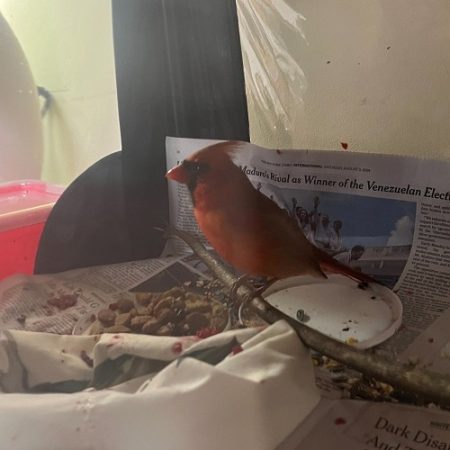
Photo @ Jessica Andersen, BRWC Rehab Director
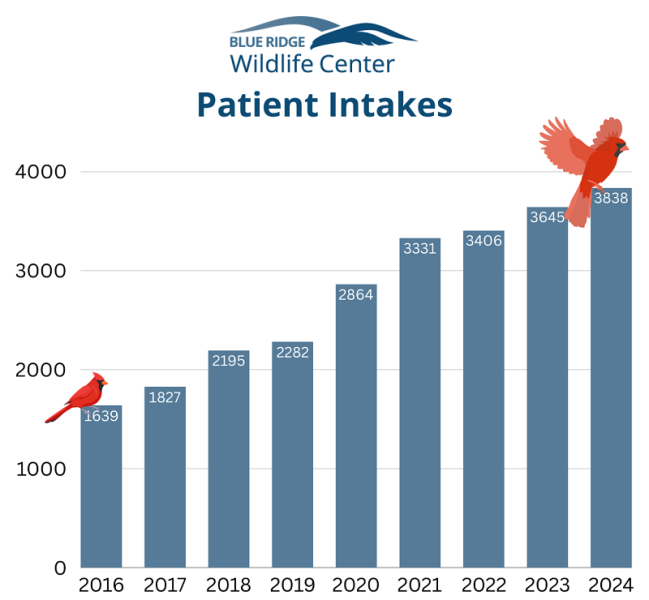
Patient 24-3838, a male Northern Cardinal, is the 3,838th patient we’ve admitted this year! That’s more than double the number of patients we cared for just five years ago. This growth reflects not only the increasing challenges wildlife face but also the trust our community places in us to provide expert care. To put this into perspective, check out the chart to see how our caseload has skyrocketed over the years.
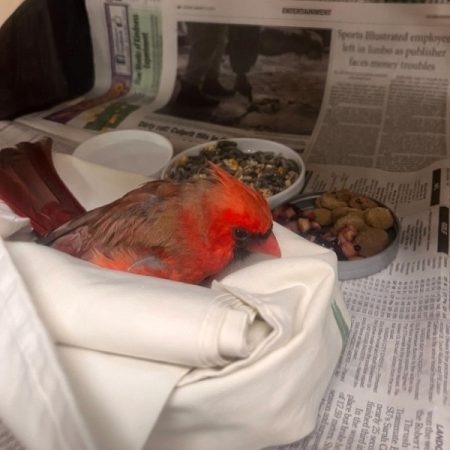
Take this cardinal as an example. After being hit by a car, he arrived unable to stand, lethargic, and unresponsive to typical triggers that would normally prompt defensive behaviors. These signs often indicate significant trauma.

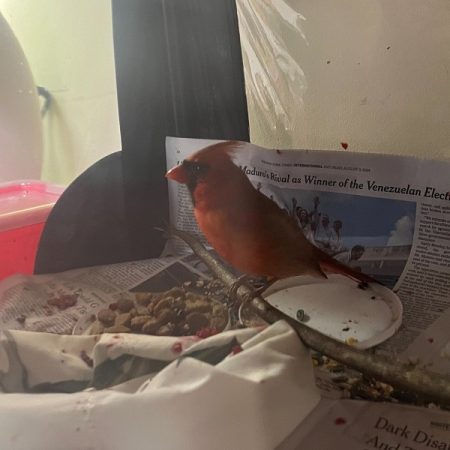
With professional care at BRWC, this cardinal made a remarkable recovery in just 24 hours, going from being unable to stand to hopping, perching, eating independently, and appearing bright and alert in his oxygen caging.
Northern Cardinals are one of the most recognizable birds in North America, thanks to their vivid red feathers (in males), striking black masks, and sweet, whistling songs. They’re not just beautiful—they play a vital role in our ecosystems.
Cardinals are non-migratory, meaning they stay in the same area year-round. In the winter, when other species migrate south, cardinals remain and contribute a vibrant splash of color to our landscape.
Their year-round presence makes them particularly important seed dispersers. Cardinals consume a variety of seeds and fruits, aiding in the spread of plants like dogwoods, sumac, and blackberry bushes.

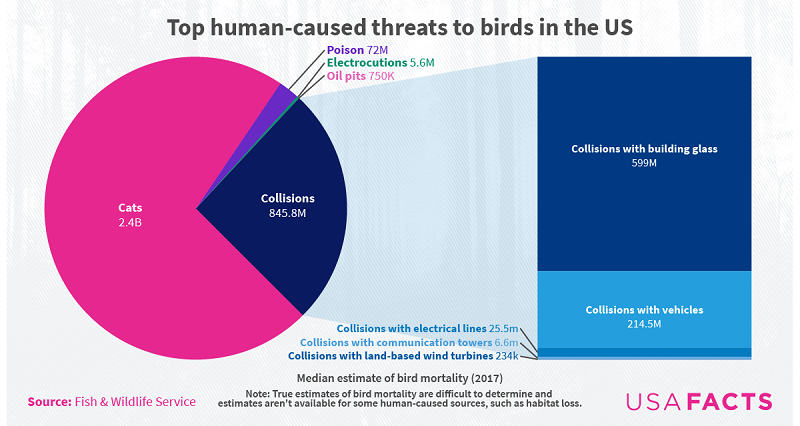
Car collisions are a leading cause of wildlife injuries and deaths, and like this cardinal, many victims suffer serious injuries like internal bleeding, concussions, broken bones, and more.
Here’s how you can help prevent these tragedies:
- Don’t throw trash or biodegradable items out of car windows—they attract wildlife to roadways.
- Slow down and stay alert, especially in areas with wildlife crossings.
- If you hit or see an injured animal, and it’s safe to do so, pull over and place a box or container over them until you can reach a wildlife professional for advice.
Thanks to the caring driver who brought this bird to us, patient 24-3838 has a second chance at life.
Your Support Drives Our Growth
Every year, we admit more patients than the year before, and with that growth comes the need for more resources to meet the demand. Together, we’ve grown from a small organization to a busy wildlife hospital treating thousands of lives each year.

Please, make your year-end gift today!
As we approach the end of the year, your donation is more important than ever. Your support ensures that every patient—just like this Northern Cardinal—receives the care they deserve.



VDOT: Warren County Traffic Alert for September 28 – October 2, 2026

Virginia Health Committee Considers Mandating Licensed Nurses in Every School

After Obama-Era Chesapeake Bay Executive Order Rescinded, Environmental Groups Brace for Fallout

Federal Judge Strikes Down SNAP Deadline That Put Virginia at Risk of Added Costs

Children Activities by Samuels Public Library for the Month of October

$5,000 Match Challenge to Support Warren County Children on Give Like Dolly Day

October 23rd Set for Post-Discovery Motions Hearing in Bradley Treece Gunfire Incident With Neighbors

Virginia State Police Seize More Than $1 Million in Drugs During Weeklong Operations

Jolissa Steele Shifflett Mathews (1944 – 2026)

False Birth Control Claims are Proliferating, Survey Says

Business Growth Series: Your Work Environment Is Affecting Your Growth

Frog Hunting Offers Virginians a Different Kind of Outdoor Adventure

How the Tech Bros Shop for a House

County Supervisors Fill Vacant Planning Commission Seat, Look to Future on Processes and Capital Improvements

America 250: ‘I Only Regret That I Have but One Life to Lose for My Country’

Building Gas Plants More Important Than Dominion Sale, Data Center Politics

Home Inspectors Help Buyers and Sellers Understand a Property’s Condition

Bowling Together: Why Work Is More Than a Paycheck

This Week’s Showtimes at Royal Cinemas as of September 24th

POLICE: 7 Day FRPD Arrest Report 9/21/2026

Blue Ridge Wildlife Center Patient of the Week: Eastern Cottontail

UVA Health Review Examines Real-World Results of Incisionless Liver Tumor Treatment

Maximilian James Donora (1995 – 2026)

Dollars for Dolly Campaign Aims to Turn Small Gifts Into Big Community Impact
