
Local News
Blue Ridge Wildlife Center Patient of the Week: Canada Goose
Highly Pathogenic Avian Influenza (HPAI) Update
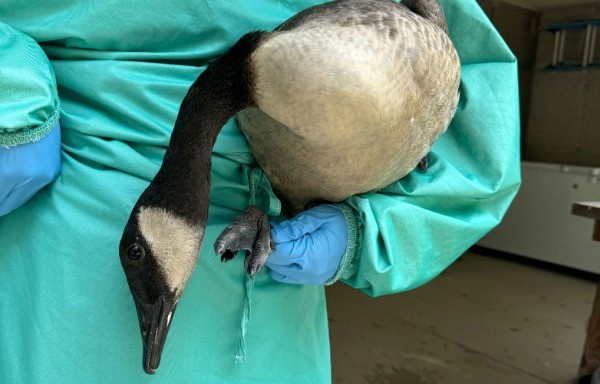
A Canada Goose from Fredericksburg, VA was recently admitted with severe neurological symptoms, including head tremors, incoordination, and respiratory distress—hallmark signs of Highly Pathogenic Avian Influenza (HPAI).
Given the severity of illness and the high probability of infection, humane euthanasia was the only option. Testing is pending, but with HPAI activity rising in Virginia and surrounding states, we anticipate a positive result.

In this photo, you can clearly see corneal edema – fluid build up in the cornea that gives it this blueish appearance. This is a common sign (but not seen in all cases) of HPAI.
Why euthanasia? HPAI is an incredibly aggressive virus with no treatment. Infected birds deteriorate quickly, experiencing severe neurological and respiratory distress.

Additionally, this virus spreads easily through direct contact, contaminated surfaces, and even airborne particles, putting other wildlife, domestic animals, and humans at risk.
By euthanizing suspected cases, we prevent further suffering and help curb the spread of the disease.
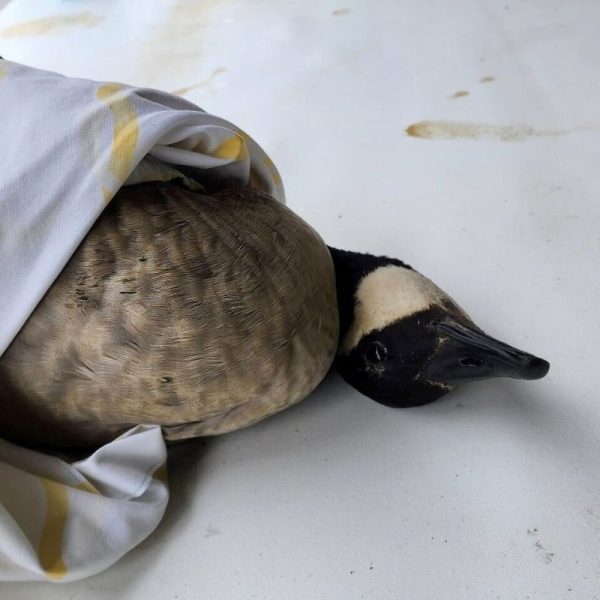
Here you can see torticollis, or head tilt. It is quite severe in this photo and the goose is essentially holding their head upside down. This is a common sign of HPAI.
Waterfowl play a major role in HPAI transmission. Ducks, geese, and other waterfowl are often asymptomatic carriers, meaning they can harbor and shed the virus without showing signs of illness.

These birds congregate in large numbers, sharing water sources and migrating over vast distances, allowing HPAI to spread rapidly across regions and species.
Raptors and scavengers, like eagles and vultures, are particularly vulnerable, as they become infected by consuming sick or dead waterfowl.
While the risk to humans remains low, individuals who test positive for influenza A should notify their physician if they have had recent bird exposure (hunting, pet poultry, wildlife rehabilitation, etc.) so that further testing can determine the virus subtype.
If you find a sick or injured waterfowl or raptor, please call us before transport to receive guidance on how to minimize risk and ensure safe handling.

Your vigilance and support help us protect wildlife and public health. Stay informed and stay safe!
Looking for an easy way to help native wildlife? Become a monthly BRWC donor! For as little as $5/month, you can provide year-round, sustainable support that helps us fulfill our mission.




From Workers’ Parades to Backyard Cookouts: How Labor Day Began

Is It Too Late to Sign Up for the All About Trees Class This Year?

The Envelope That Decides Next Year

The Emergency Fund You’ll Actually Build

Stronger, Not Bigger: Rethinking Economic Development in Warren County

Kenneth Lewis Smith (1939 – 2026)

Strong Families Build a Stronger Warren County

The Science Prizes That Make You Laugh, Then Think

Grill the Perfect Corn on the Cob, Then Dress It Up

The Famous Last Words No One Wrote Down

US Supreme Court Again Urged to Permit Trump Vote-by-Mail Restrictions

President Trump’s Beef Policy May Help Food Prices, But At What Cost?

Virginia Attorney General Creates Worker, Federal Accountability Units as Office Highlights Meta Settlement

VDOT: Warren County Traffic Alert for September 7 – 11, 2026

Twenty-Five Years Later, Remembering When We Stood Together

U.S. Adds 162,000 Jobs in August as Manufacturing and Construction Hiring Rises

Spanberger Taps Daniel Young to Lead Government Watchdog Office

Update: Cline Appears Without Democratic Opponent at Winchester Congressional Event

UVA Health Experts Urge Athletes to Recognize Concussion Warning Signs as Fall Sports Begin

Bumblebees Solve Puzzle Without Training, Study Finds

Business Growth Series: “What If” Thinking Is Costing You Money

Blue Ridge Area Food Bank Calls on Community to Take Action Against Hunger in September

Virginia State Police Seize Guns, Nearly $200,000 in Cash During Weekly Crime Operations
The Queen is Gone. There Will Never Be Another
