
Local News
Blue Ridge Wildlife Center Patient of the Week: Northern Flicker
When we know better, we do better.
This female Northern Flicker came to the Center after a window collision that caused bleeding into the lungs and brain injury.
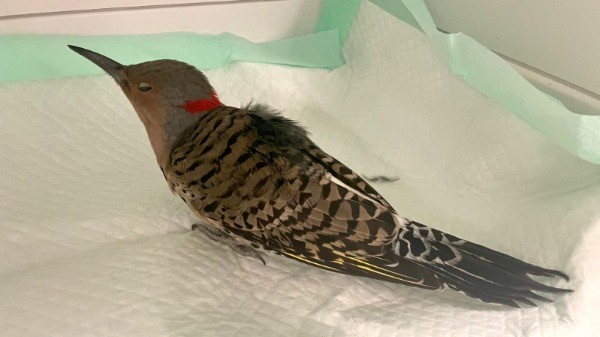
Photos / Blue Ridge Wildlife Center
In the past, after a window strike, rehabilitators (ourselves included) typically recommended containing the bird and allowing it to rest for a few hours before seeing if it could fly off. That’s no longer the case!
When we know better, we do better. Even when these birds have no obvious injuries and are able to fly off, it’s been found that many suffer ongoing internal bleeding, eye damage, and delayed effects of traumatic brain injury. These issues are likely to result in death if released without professional care.

We don’t expect humans to “walk it off” after high-speed collisions – we get them medical attention. For birds, who need to be in top physical shape just to survive in the wild, this is even more important.
Just remember, if the birds hit hard enough that you can grab them and contain them, they should be seen ASAP by a rehabilitator – don’t let them go, even if they seem like they’ve “recovered”!
After a few days with supplemental oxygen and anti-inflammatories, this woodpecker patient is feeling better and has moved out of our intensive-care area.

Help protect our birds by taking steps to prevent window collisions in your own home!

- Vertical or horizontal lines, spaced no more than 2” apart, are very effective at preventing strikes (lines should be at least 1/8” wide and can be made using tape, washable tempera paint, or specific products you can purchase for this purpose).
- Decals can be effective, but only if spaced as described above – a few decals on a large picture window is not an effective deterrent.
Close shades when not in use. Turn off lights after dark to help nighttime migrants.
UPDATE: Last week’s Patient of the Week has now been returned to its found location at Sherando Park!
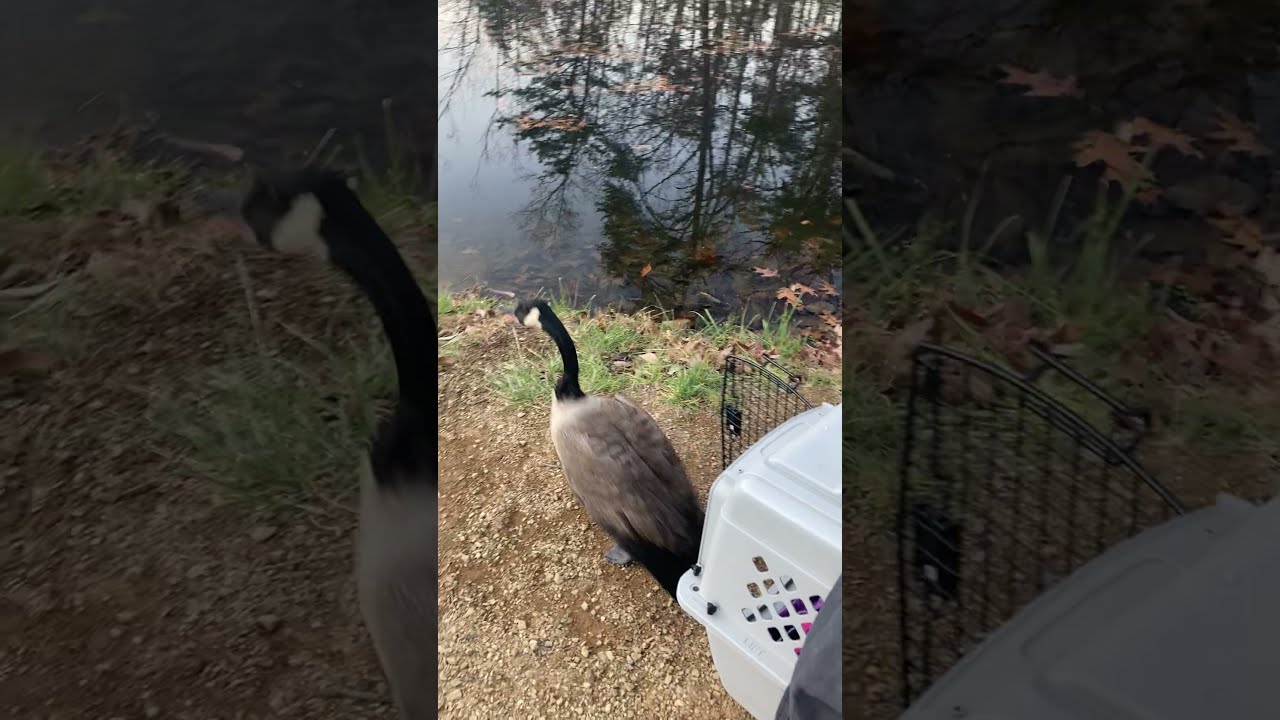
This goose was lucky to not sustain any fractures, only soft tissue damage, when it became entangled in fishing line. After a week of time to rest, this goose was ready to get home.
Please help wildlife that live near ponds, lakes, rivers, beaches, etc. by taking your trash home with you and cleaning up lures and fishing lines when you see it out in the environment!

Although there were no geese in the lake at the time of release, geese tend to frequent the same spots and they are regularly seen at this lake, so we suspect this patient will find its flock again quickly.
Watch the release video here:




10 Killed on Virginia Roads During Labor Day Holiday Weekend

Voters Could Move Congress to Revisit H.R. 1 Healthcare Overhaul, Kaine and McClellan Say

Daniel R. Keyser (1933 – 2026)

Town Council’s Data Center Dialogue Plays Out Against September 11 Backdrop

Virginia Voters to Decide Voting Rights Amendment in November

Blue Ridge Wildlife Center Patient of the Week: Northern Raccoon

Trump Doesn’t Have the Power to Limit Mail-In Voting, Lawmakers Tell US Supreme Court

Trump’s Trade War with Canada Escalates as New Tariffs Launch

Constitution 101: The Counterfeiting Clause

As AI Use Grows, Companies Begin Putting Limits on the Cost

ORDER OF PUBLICATION: In the Circuit Court for Warren County, Virginia

David Michael Smith (1960 – 2026)

Where Was Beth Macy?

Virginia Voters to Decide Marriage Amendment in November

Buying Local Can Strengthen Your Community — and Your Table

2 For 2 Foundation Promotes Swim Literacy for Homeschool Families

Weight-Loss Drugs May Help Protect Against Atrial Fibrillation

Warren County Volleyball Set to Host Fauquier Tuesday Night – September 8

Virginia Voters to Decide Reproductive Freedom Amendment in November

South Fork Fly Fishing Tournament Set for Sept. 12 at Shenandoah River State Park

Stone Branch Center for the Arts Welcomes Artist-in-Residence Linda L. Anderson

Amtrak to Suspend Virginia-to-D.C. Service for Critical Track Upgrades Oct. 16–26

Commentary: The Energy Virginia Needs is the Energy We Can Build Now

Labor Unions Are Growing, But Where Depends On State Politics
