
Local News
Blue Ridge Wildlife Center Patient of the Week: Bald Eagle
Photos / Blue Ridge Wildlife Center
Lead ammunition hurts wildlife, the environment, and people.
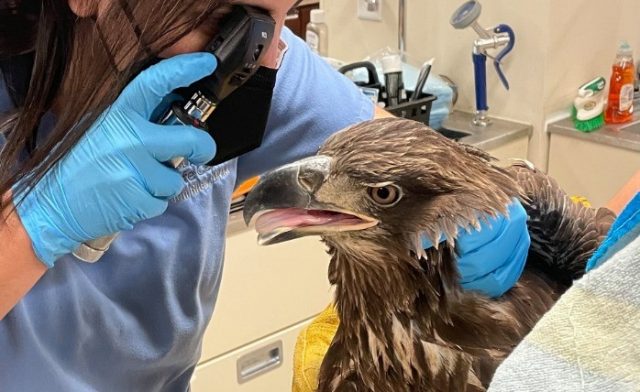
This young Bald Eagle was picked up near a landfill in Stafford County, VA after being found down and unable to fly.
In addition to having elevated lead levels, this bird had signs of trauma including bleeding into the lungs and minor eye damage. It is not uncommon for birds with high lead levels to fly into buildings, trees, windows, or other stationary items due to the loss of coordination associated with the heavy metal toxicity.
In fact, most of our lead toxicity birds are brought into care after they have suffered some type of physical trauma.
Deer hunting season is gearing up in our area and we always see a dramatic uptick in lead cases. If you hunt, please consider switching to non-lead ammunition. Lead not only contaminates the meat people may ingest, but poorly-buried gut piles (or animals intentionally left in the field) are continuing to poison our wildlife at an alarming rate. Greater than 80% of our eagles and vultures come to our hospital with high lead levels and this percentage is far higher in the late fall/early winter (hunting season).

This toxic metal is not only harmful to wildlife, but humans as well, especially pregnant women and children.
Given the damage lead is causing to wildlife, hunters and their families, and the recipients of venison donations, it is time to make the switch to non-lead ammunition.
For now, we are working to get this patients lead levels down, treat the inflammation in the eyes and lungs, and hopefully get this eagle back home soon!

If you are interested in learning more about the negative effect lead has on people, wildlife, and the environment, and alternatives to lead ammunition, please check out these websites:

Trump Budget Seeks 43% Boost in Defense Spending, Cuts in Many Domestic Programs

Virginia Sees 33,000 ACA Enrollment Drop Since Subsidies Expired, More Likely on the Way

Annual Dental Checkups and Cleanings: Essential Appointments

4 Stimulating Activities for a Healthy Brain After 50

The First Amendment: America’s Unique Foundation of Freedom

How to Tackle Credit Card Debt

Summer Enrichment Camp Gives Teens Hands-On Learning Opportunities

VDOT: Warren County Traffic Alert for April 6 – 10, 2026

David Silek to Remain in Chairman’s Seat of WC Republican Committee Pending 6th District Appeal Decision

Sales Set to Bloom Like Daffodils This Spring

America 250: The Bookseller Who Helped Save the Revolution

Business Growth Series: Why Good Businesses Still Struggle to Grow

Brownies with Mini Chocolate Easter Eggs

Shenandoah Downs Opens 11th Season April 11 with Tribute to Roger Hammer

We Don’t Know Everything About DNA

How PAAS Came to Dominate the Easter Egg Dye Tradition

Spanberger Signs Bipartisan School-Safety, Student Support Bills Into Law

Melanie J. Pomeroy (1958 – 2026)

David Benjamin Heller (1990 – 2026)
1776 Wasn’t Just About Independence

Three-Tiered System for Urban Agriculture Based on Lot Size Takes Shape at Town Planning Commission Work Session

Child Abuse Awareness Month Brings Focus to Reporting, Prevention in Warren County

National Dental Hygienists Week: Is Your Oral Care Routine Optimal?

The Coin That Traveled Through Time and Space
