
Local News
Blue Ridge Wildlife Center Patient of the Week: Central Ratsnake
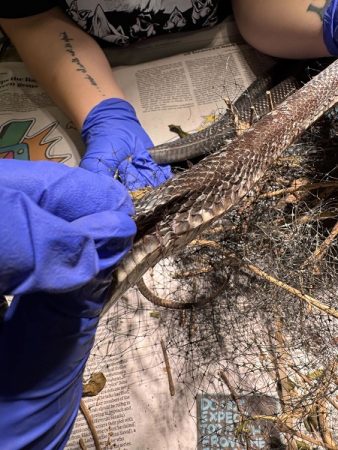
This is your seasonal reminder to properly dispose of garden netting and find alternatives when possible! This central ratsnake (formerly “eastern” but eastern and gray ratsnakes are now both considered “central”) was brought into care after being found tangled and constricted in garden netting.

After careful removal from the netting we determined that all injuries were superficial—just damage to the scales. This snake was also severely dehydrated.

If left alone, this snake would have died slowly from dehydration and constriction injuries as they continued to attempt escape.
As they try to wriggle free, snakes become even more tightly trapped in this type of netting, which is why it is so deadly.
While over 25% of our ratsnake patients come in due to netting injuries like this, other species, like bats, frogs, and songbirds are also commonly found entangled.
Instead of mesh netting, consider using more rigid materials such as metal grating, coated wire, or fine mesh intended for insects. If you cannot remove your mesh, please make sure to monitor it multiple times per day for any caught animals.
When disposing of or storing garden netting, it should always be put in a sealed bag or box to prevent animals from accessing it. Most of the cases we see are snakes entangled in garden netting that wasn’t in use at the time and was not properly stored.
Call the Center or your closest licensed rehabilitator if you find an animal caught in netting! Cut the section of mesh around the animal and bring the entire unit to the Center. This type of emergency requires professional removal to prevent further damage and injury.
This snake was fortunate to be found when they were. We are expecting a full recovery and will return the snake back to the found location when fully healed.
Join Us for Wildlife Day Camp!
Our engaging Wildlife Day Camps are back, and we’re inviting young nature lovers to explore the wonders of the animal world with our experienced education team.
Each camp day includes:
- Nature walks through the woods
- Up-close encounters with our animal ambassadors
- Hands-on crafts and creative activities
- Engaging educational lessons that bring wildlife science to life
Looking for an easy way to help native wildlife? Become a monthly BRWC donor! For as little as $5/month, you can provide year-round, sustainable support that helps us fulfill our mission.

Spanberger Emphasizes Job Growth, Business Investment After New Jobs Report

House Panel Challenges Defense Official on Iran Military Strategy

Maryland Delegation in Congress Backs Effort to Regulate Energy Use by AI Companies

Virginia’s Congressional Map Is the Fairest in America – Democrats Want to Make It the Worst.

Art, Poetry and Big Questions Take Center Stage at Laurel Ridge Humanities Week

Virginia Pushes New Protections for Pregnant and Postpartum Women Behind Bars

Should High Schools Have Career Coaches? Virginia Lawmakers Say Not Yet

‘World Is Watching’: Climate Advocates Focus on Data Center Energy Use

Industrial Zoning Among Key Focal Points at Town Planning Commission Work Session

General Assembly Nixes Bills That Required Data Centers to Get SCC Certificate

After Past Vetoes, Bias Training Bill for Medical Licenses Could Become Law

Virginia Joins Multistate Lawsuit Challenging Trump Administration Over New Global Tariffs

Kristi Noem Out As DHS Secretary; Trump to Nominate Oklahoma Senator Mullin

Five Tips to Make Spring Cleaning More Enjoyable

New ‘No Tax on Car Loan Interest’ Break Could Save Drivers Hundreds

Cline Launches Statewide Campaign to Oppose Redistricting Referendum

Obama, Spanberger Welcome Virginia Supreme Court of Virginia Ruling Allowing Redistricting Vote

Warren County School Board Reviews Health Insurance Options Amid Steep Cost Increase

Warren County School Board Ends ESS Substitute Contract

Cars Changing Lives Plans May 8 Golf Tournament to Support Transportation for Families in Need

William Gladwell Mason “Bill” Wilson (1936 – 2026)

Early Voting Begins Friday for Virginia Redistricting Referendum

Immigration Arrests Spark Bills to Guarantee K-12 Education Rights for All Virginia Students

Last-Minute Tweak to Bill Could Double Virginia’s Medical Malpractice Payment Caps for Plaintiffs
