
Local News
Blue Ridge Wildlife Center Patient of the Week: Eastern Copperhead
Let’s set the record straight about venomous snakes!
This stunning Eastern copperhead came to us in poor condition—emaciated, dehydrated, and with severe inflammation in their gums that prevented their mouth from fully closing.
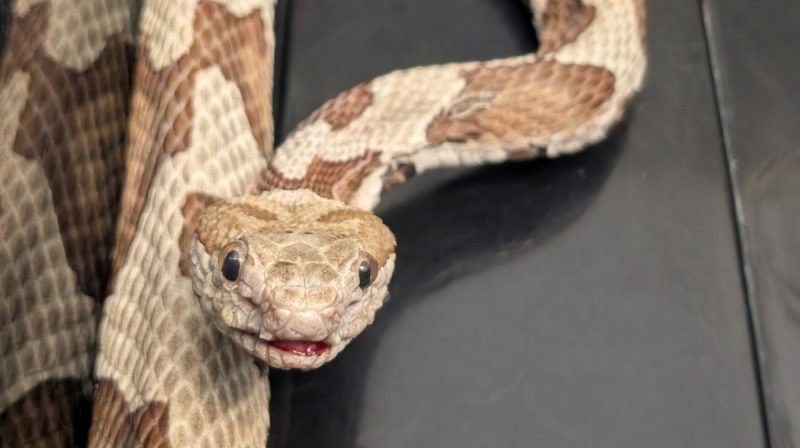
A closer look revealed an abscess near the upper left fang, with surrounding tissue so fragile that a gentle touch caused it to bleed.
Thanks to careful debridement and medical management, this patient is already showing improvement!
Debridement is a medical procedure where damaged, infected, or dead tissue is carefully removed to help a wound heal properly. In the case of this copperhead, debridement involved cleaning out the abscessed area around its fang to remove infected tissue and promote healthy regrowth. This step is crucial to reduce pain, prevent further infection, and give the affected tissue a chance to heal.

Let’s debunk some common myths about venomous snakes:
MYTH #1: Venomous snakes have slit-like pupils, while non-venomous snakes have round pupils.
- FALSE!
- This photogenic patient is proof that snakes’ pupils dilate and constrict in response to light—just like ours. Pupil shape isn’t a reliable way to tell venomous from non-venomous species.
MYTH #2: Venomous snakes are aggressive and will “chase” people.
- FALSE!
- Venom is a valuable and limited resource for snakes. Producing it takes time and energy, leaving them vulnerable if they’ve used it. Snakes are far more interested in escaping than engaging. What looks like “chasing” is likely the snake heading for the nearest exit—which might be in your direction.
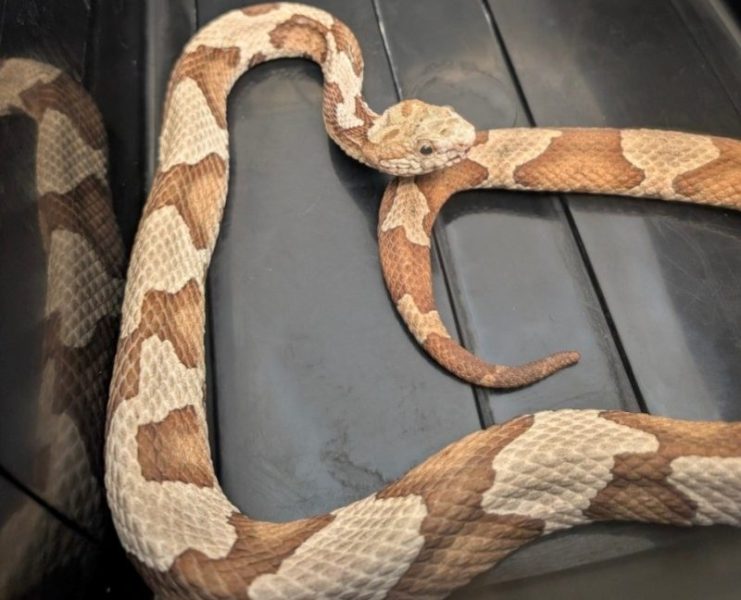
MYTH #3: Venomous snakes have a triangular head shape, while non-venomous snakes do not.
- FALSE AGAIN!
- Many snakes, venomous or not, can flatten their heads to appear triangular as a defensive response. It’s a bluff to look more intimidating—not a venom indicator.
We handle all our venomous patients carefully, with appropriate tools to ensure both their safety and ours. Even under stress, venomous snakes are far more likely to flee than to strike.
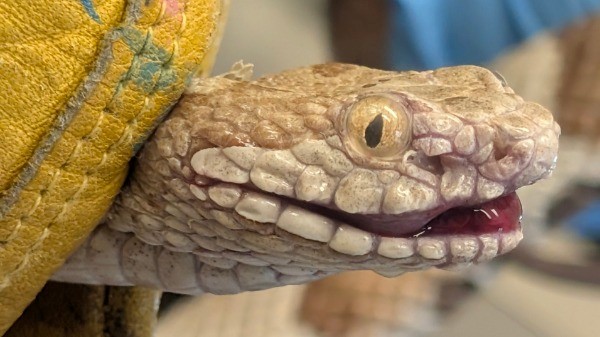
This copperhead’s recovery reminds us how important it is to understand and respect these amazing creatures—misinformation hurts wildlife too.
Looking for an easy way to help native wildlife? Become a monthly BRWC donor! For as little as $5/month, you can provide year-round, sustainable support that helps us fulfill our mission.

Brenda Jean Chrisman (1953 – 2025)

Pot o’ Gold Shamrock Hunt Returns to Downtown Front Royal for Sixth Year

General Assembly Wrap-Up: Housing Debate, Budget Battles and Pay Raise Controversy Mark Final Week

EDA, Fire & Rescue, and Building Inspections Present FY-27 Departmental Budget Requests to Board of Supervisors

Health Care Costs and Access Will Feature Prominently in 2026 Congressional Midterms

As Potomac River Advisories Lift, Public Concerns Remain After Sewage Spill

Businesses Owned By Minorities, Women Lobby to Reauthorize Federal Program

Helen Przepiorka Stuart (1921 – 2026)

How to Find a Reliable Babysitter

Amazon Pulls Back From Physical Stores — For Now

Court Accepts ‘Not Guilty by Reason of Insanity’ Plea in Godin case, Then Orders Independent Psychological Evaluations

Protect the Voice of Virginia’s Valley and Mountains

Finding Peace of Mind in Troubled Times

March Is Workplace Eye Health and Safety Month: Protecting Your Vision at Work and Beyond

Lawsuit Claims Violation of Constitutional Amendment Process, But New Law May Invalidate That Charge

‘Unprecedented Times:’ Virginia Democrats Defend Redistricting Referendum as Early Voting Begins

Petals & Pinkies Spring Tea Set for March 17 in Front Royal

Is Your Home Ready for Flooding? Simple Steps Can Help Protect Your Property

Constitution 101: The Borrowing Clause
Donald Wayne Powell (1942 – 2026)
Fairness Isn’t Just One Number

Meatballs: A Comfort Food Loved Around the World

VDOT: Warren County Traffic Alert for March 9 – 16, 2026

Spanberger Emphasizes Job Growth, Business Investment After New Jobs Report
