
Local News
Blue Ridge Wildlife Center Patient of the Week: Eastern Screech Owl
This mighty owl is no match for garden netting…
Eastern screech owls may not be the biggest or strongest owl, but they are masters of hiding! More often heard than seen, these 6 inch raptors are common in our forested areas. Unfortunately, this patient was seen, tangled in garden netting.
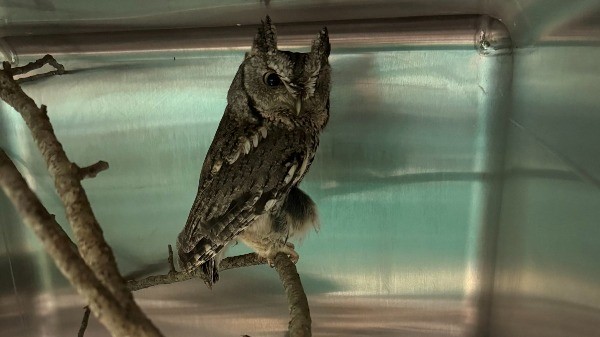
This patient is a gray morph Eastern screech owl (the same species as a red morph Eastern screech owl, like our ambassador, Dopey!). On intake, this owl was extremely lethargic and had difficulty standing, but luckily had not sustained any major injuries except constriction injuries around the neck. If you happen to find an entangled animal, please do not try to pull it out as this can cause further damage. The netting should be cut with wide margins around the animal and the victim, still entangled, can then be transported to a rehabilitator for safe removal. And as always, if you have any concerns, give us (or your closest permitted rehabilitator) a call!

After just over 24 hours in care, this patient is already feeling much better and is even perching.
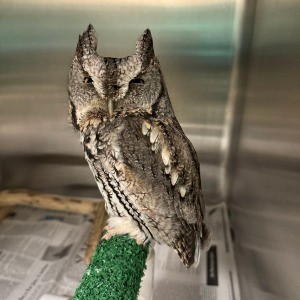
The overwhelming majority of our garden netting cases are snakes, but this material also entraps birds, bats, and other wildlife. There are many safer alternatives such as stiff, wire fencing or much finer mesh aimed at keeping insects out. We strongly encourage you to replace your garden netting with one of these options. When disposing of garden netting, never leave it out in a pile or tucked away in a shed or garage— instead secure the netting in a sealable bag or bin before placing it in the trash so that other animals cannot get entangled. Most of our patients with garden netting wounds were stuck in netting that wasn’t even in use at the time!
In 2022, we took in a record-breaking (at the time) number of animals—3,406 patients entered our doors for care. This red-tailed hawk (suspected vehicle collision) is our 3,500 patient this year!
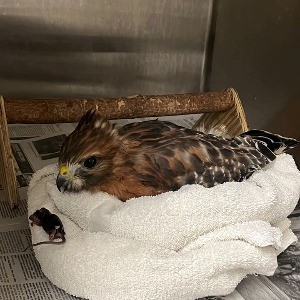
Raptors and their care costs significantly more than smaller birds with similar injuries. Between food, medications, anesthetics, bandaging materials, diagnostics, and other care, an injured raptor could cost us approximately $500—$1,000 per week. These are just some of the free veterinary and rehabilitative services available to ALL of our patients and it is all thanks to the generous support of our donors and community members.
Giving Tuesday is a global generosity movement that encourages people to do good during the season of giving thanks. This year, our Giving Tuesday campaign will focus on the incredible resources it takes to give our ever-growing number of patients the best possible care.
Wildlife Centers don’t receive state or Federal funding for what we do. We rely on your donations to save wild animals and return them to the wild. Help give back to our native wildlife by planning to give on Giving Tuesday, November 28th, the Tuesday after Thanksgiving!
Looking for an easy way to help native wildlife? Become a monthly BRWC donor! For as little as $5/month, you can provide year-round, sustainable support that helps us fulfill our mission.

Vonnie Grovine Blosser (1933 – 2026)

Front Royal VFW Unveils New Headquarters, Invites Veterans and Community to Reconnect

Sheriff Cline Introduces Major Frank Myrtle as New Chief Deputy of Warren County Sheriff’s Office

Warren County School Board Opens 2026 With New Leadership, Student Showcases, and Focus on Accountability

Still a City on a Hill: Celebrating 250 Years Of the American Experiment

Realigned County Board of Supervisors Revisit FOIA Legal Issues, Hear From An Aroused Public on Library Reinstatement

5 Essential Elements for Planning a Successful Wedding

Warren County School Board Elects 2026 Leadership

The Year of Confusion: What Did the Romans Do in January?

Dustin Blake “D-Ham” Hamilton (1996 – 2026)

Warren County Board of Supervisors Elects 2026 Leadership at Annual Meeting

In Statewide Survey, Employers Say Virginia Child Care Crisis Negatively Impacts Businesses

Commentary: Doing The Happy Dance as Social Security Pays Up

US House Backs Extension of Health Insurance Subsidies After Dems Force Vote

US Senate With GOP Support Advances War Powers Resolution Rebuking Trump on Venezuela

Tribute to an Extrordinary Local Lady and Her Nationwide Legacy

3 Must-Have Accessories to Make Winter Driving More Comfortable

Travel Planner: A Lovely Gem Hides in an Unexpected Place

The Sufficiency of a Sworn Affidavit: Town Planning Commission Favors Administrative Enforcement for Auxiliary Dwelling Units

Warren County Girls’ Basketball Team Set to Face Manassas Park This Friday

Battery Storage Bills Make a Return After Previous Vetoes

Virginia Transportation Board Transfers Rail and Trail Project Amid Public Concerns

Shenandoah River State Park Invites Public Input and Launches Expanded Programming for All Ages

Cancer Cluster Ruled Out In Southwest Virginia, Though More Data Collection Is On The Horizon
