
Local Government
Council moves toward middle ground on property maintenance standards
The long and winding, approximately two-year road toward Town authority to enforce increased property maintenance standards took another step on Tuesday evening, October 9. That step was a first reading 5-1 vote of approval, only Vice-Mayor Eugene Tewalt dissenting, of the previously-termed “Option C” of five options provided for consideration by staff in recent months.
The tentatively-approved option pending one more positive vote, stood dead center of those five staff-submitted options. In explaining his dissent, Tewalt continued to predict unexpectedly high costs for what has been described as a lower-cost, middle ground option. Tewalt has been critical of his younger council colleagues for continuing to approve capital improvements, and now additional code enforcement, without creating revenue streams to pay for either long-term debt service or required staff additions.
However, in the run up to a vote Councilman Chris Morrison pointed out that council had set aside some funds for additional property maintenance enforcement since he joined council two years ago. Town Manager Joe Waltz specified that set aside at $75,000.
As presented in a staff summary, what council has made the first step toward enforcement-wise “addresses all structures in the Town”; “addresses maintenance issues” and “can be enforced on a complaint basis or proactive enforcement”.
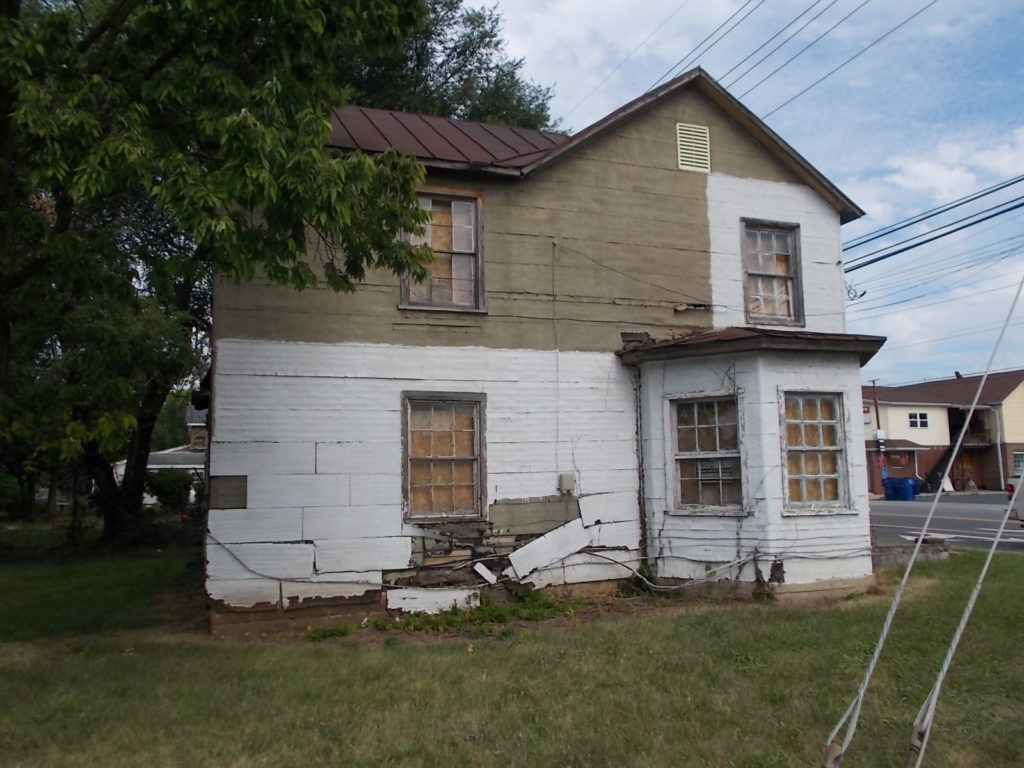
Think anyone lives there? Probably not and certainly not after October 22; in fact, derelict structures such as this may be in their final days as town eyesores. Photos/Roger Bianchini
While Tuesday’s vote was for the above-described dynamics of the option formerly known as “C” versus no change to existing codes, council engaged in a several-month work session debate on the five options prepared by staff. Those options ran the gamut from changing nothing or only addressing derelict and abandoned buildings with existing staff, to adding a rental inspection program and district likely requiring establishment of the Town’s own building inspections department.
Estimated cost of a building inspection department was forecast from $50,000 on the lower end to $150,000 or more on the high end.
On September 10 following an impassioned call by members of the public for a more proactive approach, in an unexpected result council moved from expected majority support for a so-called “baby step” don’t-do-much more than is already done Option B, to 4-2 support of the more pro-active, middle-ground Option C.
That September 10 vote came after a last-minute change of perspective by two councilmen, Gary Gillespie and John Connolly, in the wake of professional discussion (Gillespie) and the strong public showing of support of more strenuous enforcement standards. Read here: Public calls for more active Property Maintenance Code enforcement – and it works
Previously Gillespie and Connolly had indicated support of either Option A (no change) or Option B (enforcement already authorized by existing codes), joining Tewalt and Sealock in establishing a 4-2 majority against utilizing a broader enforcement standard authorized by the General Assembly last session. That authority was granted by the General Assembly after 29th District Delegate Chris Collins forwarded council’s request for the additional authority granted to cities and counties, as well as some towns by state-approved charter changes.
But with the majority initially formed by Connolly and Gillespie joining Chris Morrison and Jacob Meza in the more proactive option formerly known as “C”, the town government appears poised to begin a more stringent enforcement program following a second reading vote on October 22.
Following the first-reading 5-1, October 9 vote, Sealock explained that while he agreed with Tewalt on the necessity of identifying or creating revenue streams to support new projects, he does support increased building maintenance enforcement standards with the potential to protect town citizens from landlord negligence.
The public weighs in
Tuesday evening five public hearing speakers continued the public call for increased property maintenance enforcement. Several blasted council for a stated preference for a more frugal approach to providing code protections for citizens, especially lower-income renters most vulnerable to so-called slumlord abuses.
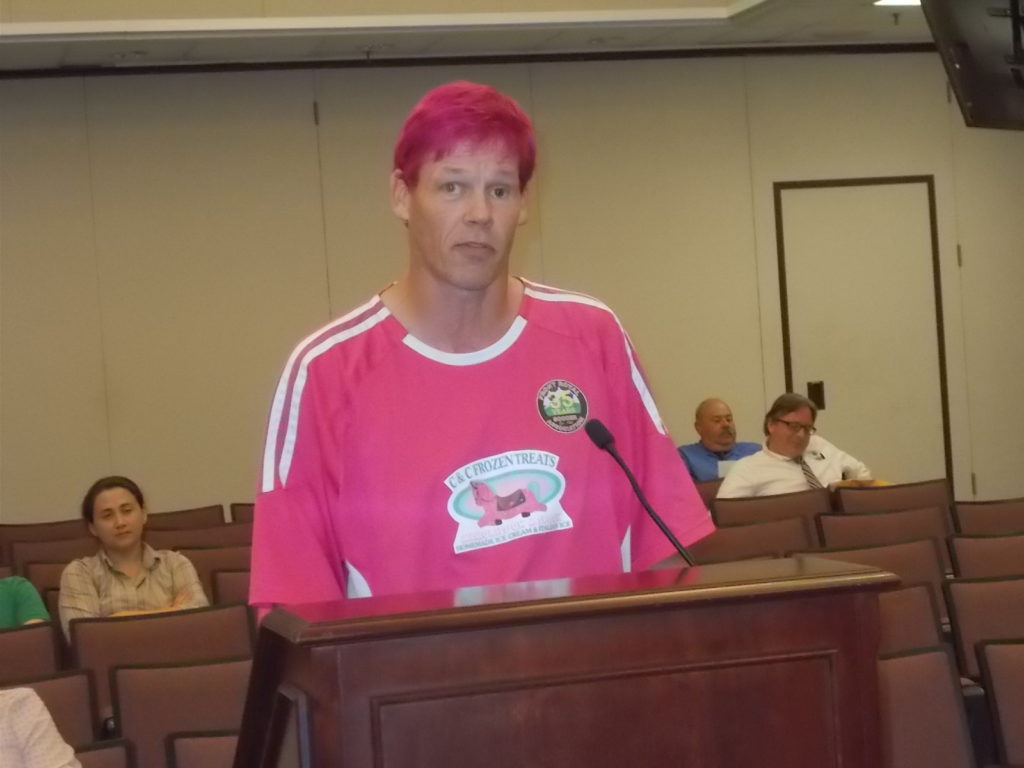
Dressed as the flavor of the day, C&C Frozen Treats owner William Huck urges council to begin more aggressive property maintenance standards for both the collective residential and commercial good of the community.
Among those speakers were council candidate Latasha Thompson, local Habitat for Humanity Director Stevie Hubbard, C&C Frozen Treats owner William Huck and “Birth Local” activist Melanie Salins. Local attorney and landlord David Silek also spoke for increased enforcement, though through an existing “public nuisance ordinance” rather than the proposed code change.
“General welfare is one of the basic roles of government – tonight is an opportunity to do that,” Thompson, who is seeking a seat on council, began. She pointed to past experience working for a landlord who took advantage of a lack of community enforcement standards to provide minimal living standards, long-delayed repairs for their tenants, coupled with excessive, sometimes daily late fees.
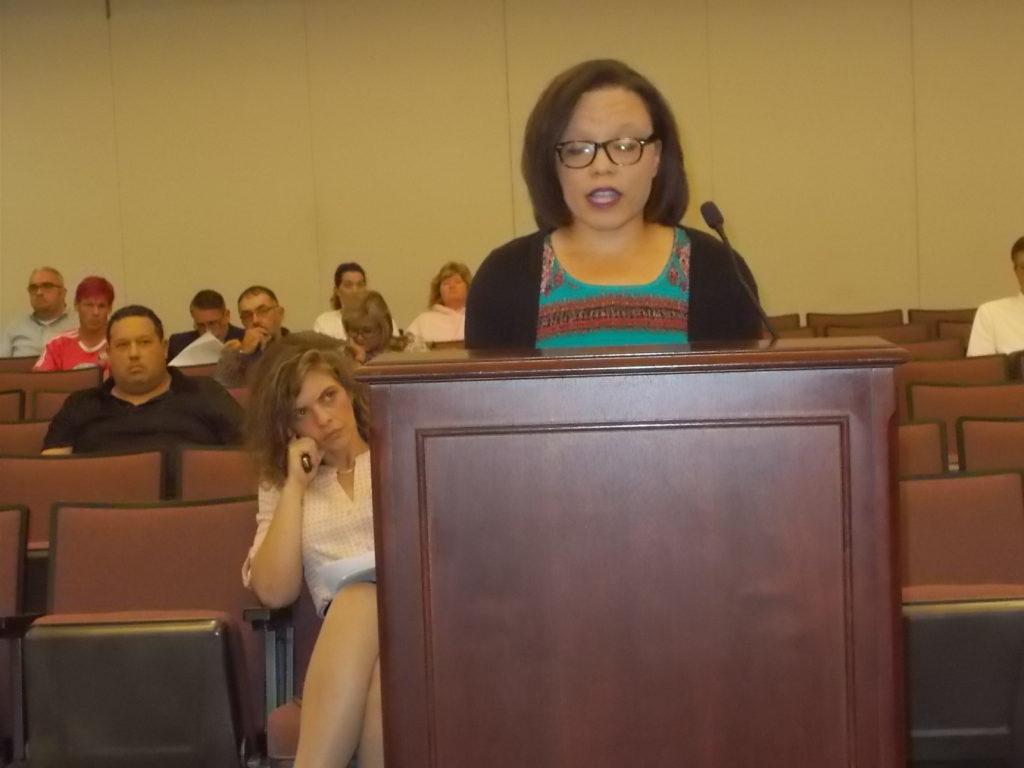
Council candidate Latasha Thompson called maintaining a certain level of ‘general welfare’ for the community ‘one of the basic functions of government’
“These are the kind of landlords that require an enforced code that has consequences associated. As long as there are no consequences they will continue to do as they have done. Passing this ordinance gives tenants an option of reporting issues and provides an avenue for action. The slumlords are taking advantage of our most vulnerable citizens and we can’t allow it to continue,” Thompson told council.
Salins began by citing existing codes that would appear to allow town officials to address blighted buildings and “nuisance properties” – the latter reference getting a shout out from Silek when he returned to the podium for part two of his evening’s performance theater – the first concerning downtown parking and Virginia Beer Museum proprietor David Downes parking exemption request which was not on the evening’s agenda.
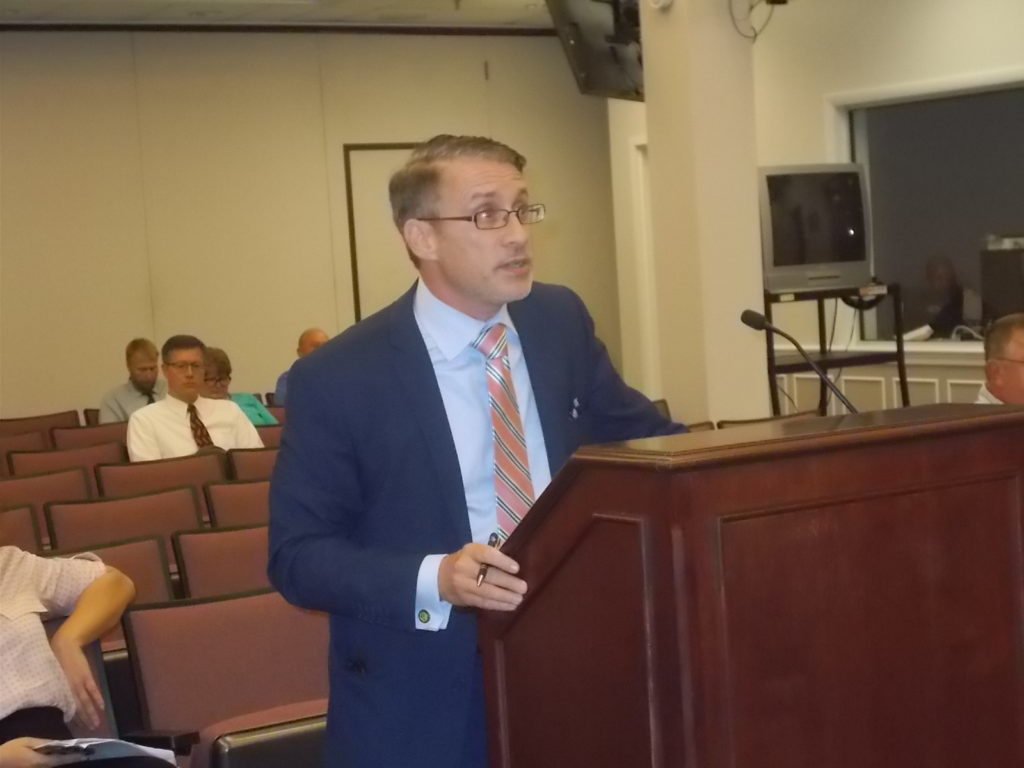
Attorney-landlord David Silek supported increased property maintenance enforcement, just not any new codes to accomplish that end.
Salins was scathing in her appraisal of the rationale that town government “can’t afford” more aggressive efforts to protect its citizens, particularly lower-income renters, from unsafe or unhealthy living conditions allowed to fester by abusive landlords.
“It seems to me it is your duty to uphold these laws,” she said of enforcing basic living standards for citizens. “Would you find it acceptable to not fulfill other duties, to uphold other laws? What if we start turning a blind eye to theft and drug dealing too? How do you pick and choose which laws are worthy of your enforcement when you took an oath to uphold all of them?”
As for the provision of revenue, Salins returned to a topic she had raised earlier in the meeting – the EDA’s waiver on an annual debt service fee in its loan to Valley Health for a new hospital, in favor of a one-time $240,000 payment she believes will cost the community millions over the life of the hospital construction loan.
“As I pointed out earlier, the EDA gave away $75,000 each year by waving fees – find that money if you need money.”

Melanie Salins was harshly critical of a ‘too expensive to enforce’ rationale when it comes to the health and safety of the community.
As other did, Salins also pointed to the threat of drug activity in less kept rental properties, as well as some of the town’s lower-end motels.
“The 14th paragraph (of the town charter) says you ‘will suppress houses of ill-fame’. I would say drug houses and hotels are ‘ill-fame’. This directly relates to the opiate epidemic plaguing the area. This maintenance ordinance directly addresses those slumlords who are inviting drug dealers into our town … it appears some slumlords in this town have no care or concern about what takes place inside their properties. They prefer the rent paid in cash and then turn a blind eye. They have no guilt or shame about their role in the drug game and what it’s costing our town and the taxpayers,” Salins asserted of the wide-ranging consequences of a governmental failure to mandate that certain property and living standards be maintained for a common social good.
Habitat for Humanity Director Hubbard concurred with Salins’ appraisal of the impact of poor living conditions on drug and opiate abuse. Of substandard living conditions she said simply, “They need to be fixed – PERIOD!”
Faced with the argument that municipal penny-pinching comes at a cost we may have difficulty measuring, five of council’s six members forwarded the middle-ground enforcement option, albeit without a rental inspection program, BUT with enforcement authority for “all structures in town” that can be initiated “on a complaint-basis”.
So it appears the Town is poised to add legislative teeth to its property maintenance enforcement options – at issue after that October 22 second vote will be does council have the will to order staff to follow through on those options, regardless of cost?

Constitution 101: Revenue and Presentation Clauses

What Are the Main Breeds of Dairy Cows?

Navigating Student Aid: How to Make Smart College Financing Decisions

Vonnie Grovine Blosser (1933 – 2026)

Front Royal VFW Unveils New Headquarters, Invites Veterans and Community to Reconnect

Sheriff Cline Introduces Major Frank Myrtle as New Chief Deputy of Warren County Sheriff’s Office

Warren County School Board Opens 2026 With New Leadership, Student Showcases, and Focus on Accountability
Still a City on a Hill: Celebrating 250 Years Of the American Experiment

Realigned County Board of Supervisors Revisit FOIA Legal Issues, Hear From An Aroused Public on Library Reinstatement

5 Essential Elements for Planning a Successful Wedding

Warren County School Board Elects 2026 Leadership

The Year of Confusion: What Did the Romans Do in January?

Dustin Blake “D-Ham” Hamilton (1996 – 2026)

Warren County Board of Supervisors Elects 2026 Leadership at Annual Meeting

In Statewide Survey, Employers Say Virginia Child Care Crisis Negatively Impacts Businesses

Commentary: Doing The Happy Dance as Social Security Pays Up

US House Backs Extension of Health Insurance Subsidies After Dems Force Vote

US Senate With GOP Support Advances War Powers Resolution Rebuking Trump on Venezuela

Tribute to an Extrordinary Local Lady and Her Nationwide Legacy

3 Must-Have Accessories to Make Winter Driving More Comfortable

Travel Planner: A Lovely Gem Hides in an Unexpected Place

The Sufficiency of a Sworn Affidavit: Town Planning Commission Favors Administrative Enforcement for Auxiliary Dwelling Units

Warren County Girls’ Basketball Team Set to Face Manassas Park This Friday

Battery Storage Bills Make a Return After Previous Vetoes
