
Local News
Northwest Virginia Regional Drug and Gang Task Force releases 2022 year end report
The Northwest Virginia Regional Drug and Gang Task Force, a HIDTA-funded initiative comprised of law enforcement personnel from Clarke, Frederick, Page, and Shenandoah County Sheriff’s Departments, Front Royal, Luray, Strasburg, and Winchester Police Departments, and the Virginia State Police Bureau of Criminal Investigation, Culpeper Field Office, has released its 2022 year-end report. The report details the task force’s mission and objectives for 2022, which included identifying, investigating, and dismantling major drug trafficking organizations, monitoring and bringing to justice members of violent gangs, and reducing crimes related to the manufacture, distribution, and possession of fentanyl, heroin, powder cocaine, crack cocaine, methamphetamine, and prescription drugs. The task force’s successes were measured by the eradication of critical threats, including gang-related offenses, and the reduction of overdose deaths and injuries in the region.
The report also provided details on the task force’s successful outcomes and seizures from drug and gang-related investigations conducted in 2022. The task force seized a total of $1,899,043.97 worth of illegal drugs, including cocaine, crack cocaine, fentanyl, heroin, methamphetamine, and marijuana, and seized $182,567.00 worth of assets and 42 firearms. The task force also made 191 felony arrests and indictments and identified, dismantled, and disrupted six drug trafficking organizations.


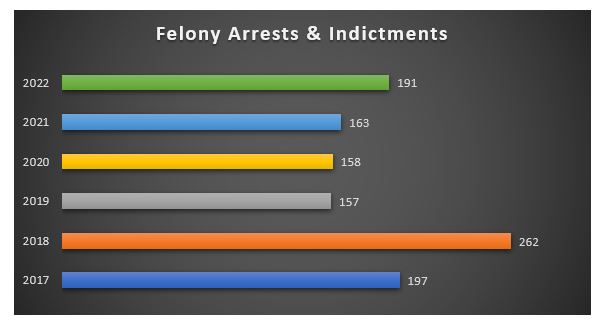

The task force’s 2022 operating budget was $127,146.33, and it received $157,500.00 in federal funding from the Washington/Baltimore HIDTA. The HIDTA funded administrative positions, such as an administrative assistant, criminal intelligence analyst, and SAUSA (Special Assistant United States Attorney), and provided support for disrupting and dismantling major drug trafficking organizations operating in the Northern Shenandoah Valley. Frederick County (Designated 2016) and Warren County (Designated 2019) were considered HIDTAs by the Office of National Drug Control Policy.

Vonnie Grovine Blosser (1933 – 2026)

Front Royal VFW Unveils New Headquarters, Invites Veterans and Community to Reconnect

Sheriff Cline Introduces Major Frank Myrtle as New Chief Deputy of Warren County Sheriff’s Office

Warren County School Board Opens 2026 With New Leadership, Student Showcases, and Focus on Accountability

Still a City on a Hill: Celebrating 250 Years Of the American Experiment

Realigned County Board of Supervisors Revisit FOIA Legal Issues, Hear From An Aroused Public on Library Reinstatement

5 Essential Elements for Planning a Successful Wedding

Warren County School Board Elects 2026 Leadership

The Year of Confusion: What Did the Romans Do in January?

Dustin Blake “D-Ham” Hamilton (1996 – 2026)

Warren County Board of Supervisors Elects 2026 Leadership at Annual Meeting

In Statewide Survey, Employers Say Virginia Child Care Crisis Negatively Impacts Businesses

Commentary: Doing The Happy Dance as Social Security Pays Up

US House Backs Extension of Health Insurance Subsidies After Dems Force Vote

US Senate With GOP Support Advances War Powers Resolution Rebuking Trump on Venezuela

Tribute to an Extrordinary Local Lady and Her Nationwide Legacy

3 Must-Have Accessories to Make Winter Driving More Comfortable

Travel Planner: A Lovely Gem Hides in an Unexpected Place

The Sufficiency of a Sworn Affidavit: Town Planning Commission Favors Administrative Enforcement for Auxiliary Dwelling Units

Warren County Girls’ Basketball Team Set to Face Manassas Park This Friday

Battery Storage Bills Make a Return After Previous Vetoes

Virginia Transportation Board Transfers Rail and Trail Project Amid Public Concerns

Shenandoah River State Park Invites Public Input and Launches Expanded Programming for All Ages

Cancer Cluster Ruled Out In Southwest Virginia, Though More Data Collection Is On The Horizon
