
Automotive
The ABCs of EVs
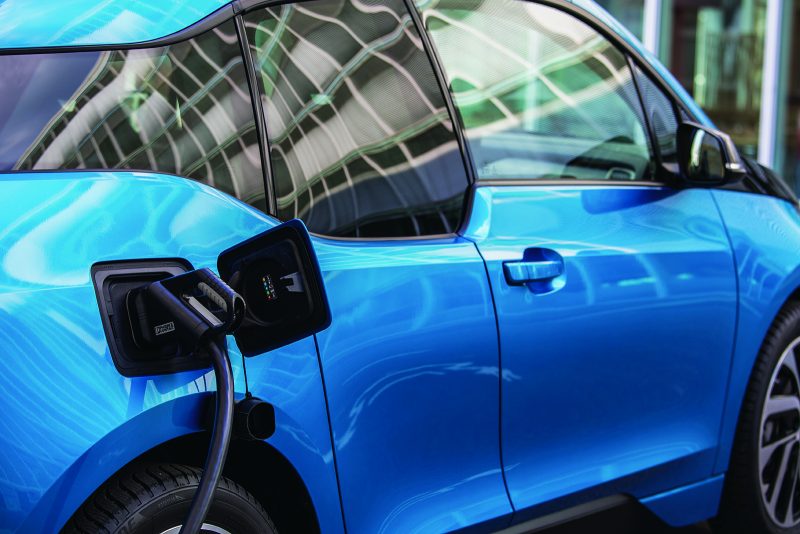
Electric vehicles (EVs) are gaining in popularity, and with good reason. These cars are silent, economical, environmentally friendly and reliable. Here’s how they work.
The battery
A fully electric car is powered by a large battery, itself composed of power cells. It’s also equipped with an electric transmission.
Depending on the battery’s power, which is measured in kilowatt hours (kWh), a car will have a longer or shorter range. The range refers to the distance it can cover with a single charge. For instance, a car with a 60-kWh battery has a range of about 240 miles while a car with a 40-kWh battery has a range of 150 miles.
Charging
To operate, EVs first need to be plugged into an external power source so the battery can be charged. There are three types of charging stations:
• 120 V (slow)
• 240 V (standard)
• 400 V (fast)
In addition, EVs are equipped with an energy recovery mechanism called regenerative braking, which helps charge the battery while driving. It works when some of the car’s kinetic energy is converted into electricity, which is then stored in the battery. This saves a lot of battery power, thereby extending the range of the car.
To learn more about EVs, speak to an expert at your local dealership.
