
Local News
Warren County Civil Rights Legacy on Display at New Historical Center
“This is hallowed ground,” said one man through tears at the opening of the James Wilson Kilby African-American Historical Center on Saturday, November 9. Once a home, now a museum, this historical center is dedicated to memorializing the legacy of civil rights in Warren County for which James Kilby fought as a black man and a resident of Happy Creek during the fifties and sixties, at the height of the civil rights movement. Relatives and friends of the Kilby family gathered in a tent in the front yard of 844 Shenandoah Shores Road, where James and his wife Catherine raised their family, daring to dream what seemed to be the impossible at a time when it was dangerous to be black and think of a life beyond sharecropping.
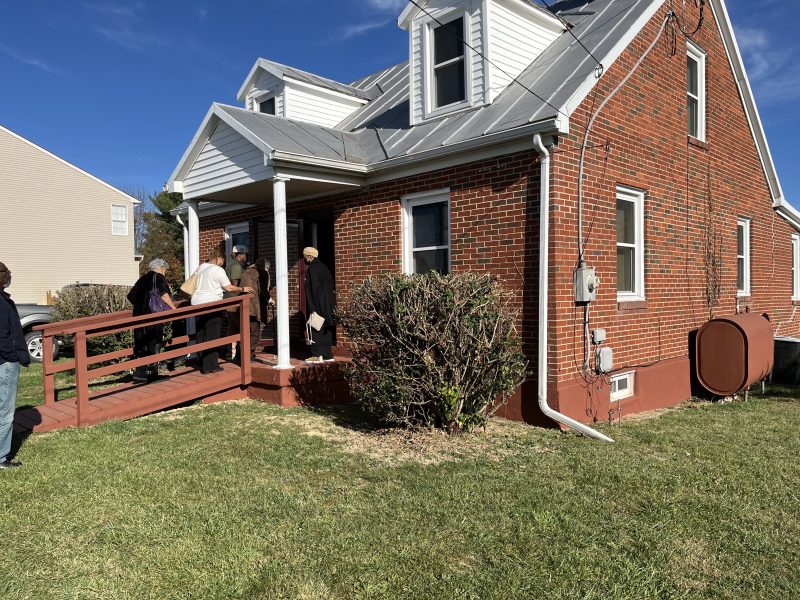
844 Shenandoah Shores Road, once the Kilby residence, is now the James Wilson Kilby African-American Historical Center. Royal Examiner Photo Credits: Brenden McHugh.
The grand museum opening was a time of joyful prayer, singing, and heartfelt speeches accompanied by a meal. Tears were shed, praise was given to God, and Patricia Kilby-Robb, daughter of James and Catherine, spoke of the commission her father gave her before he passed away to open this museum. Kilby-Robb, who works at the Department of Education, began her prepared thoughts by saying, “Yes, we acknowledge our survival through historical events, but today is about celebrating the accomplishments from slavery, emancipation, Jim Crow, civil rights, to equal rights.” The price of that sacrifice for freedom is made more poignant by the awareness that here, at 844 Shenandoah Shores Road, a cross may have been burned on the front lawn, or a bloody sheet may have been thrown over the mailbox. Such is the resistance that James, Catherine, their family, and their friends faced as they fought for desegregation.
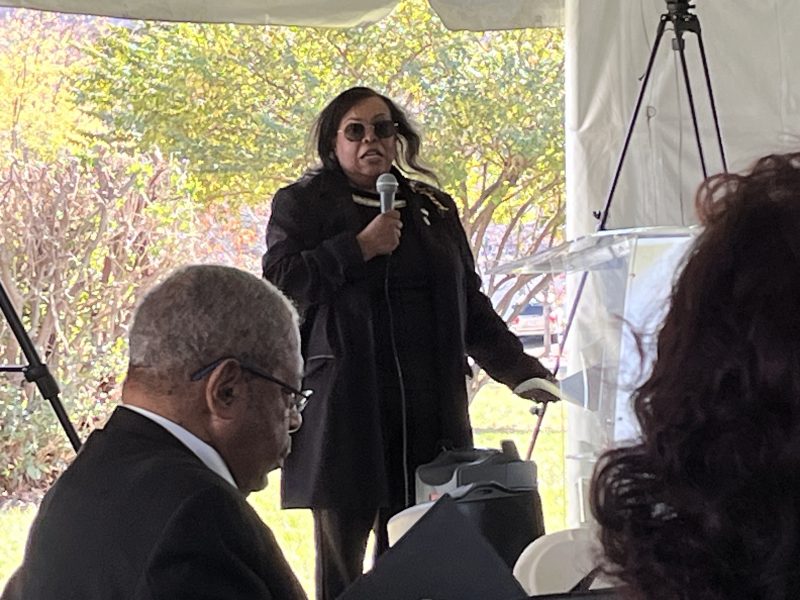
Above: Patricia Kilby-Robb, daughter of James Wilson Kilby and Catherine Elizabeth Ausberry Kilby, stands before a gathering in which many of her extended relatives are represented, for the opening of a museum dedicated to memorializing her father’s fight for civil rights in Warren County. Below: This desk space testifies that the Kilby Museum is not only a place for remembering but also a place to work and imagine the future.
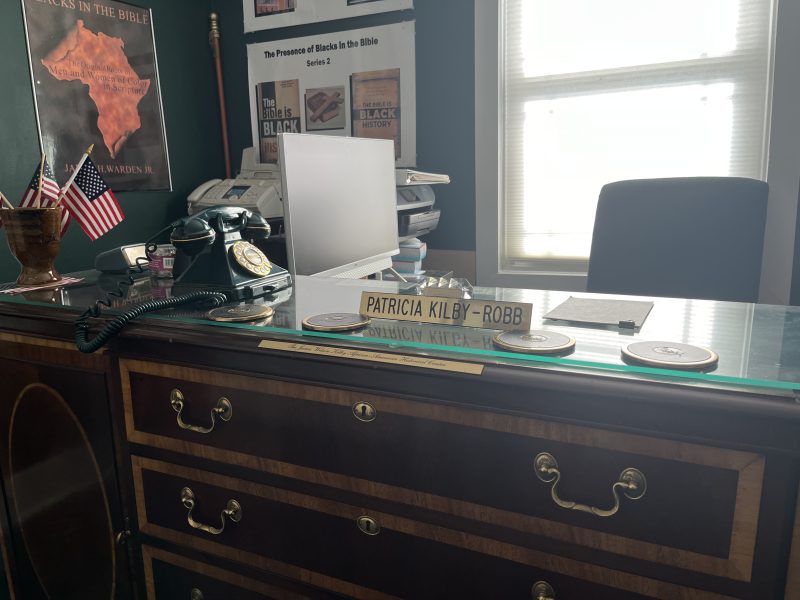
She also emphasized the educational nature of the historical center, where research into her family’s past is still being gathered. This center is a veritable seed from which a mighty oak will grow as the center develops connections with the wider Virginia area and other African-Americans are invited to tell their stories. Ultimately, Kilby-Robb believes that all of humanity is one blood, and the Bible is the heritage of her people as much as it is of any other. “We were race mixing a long time ago whether we wanted it or not,” she said. She added: “We can claim that we are true Virginians.” She continued: “Look at us, the successes that we have made, the accomplishments, the jobs, the houses that we live in, the contributions to society … but more importantly, we never lost our way. We still worship the very God that brought us over to this far land.”
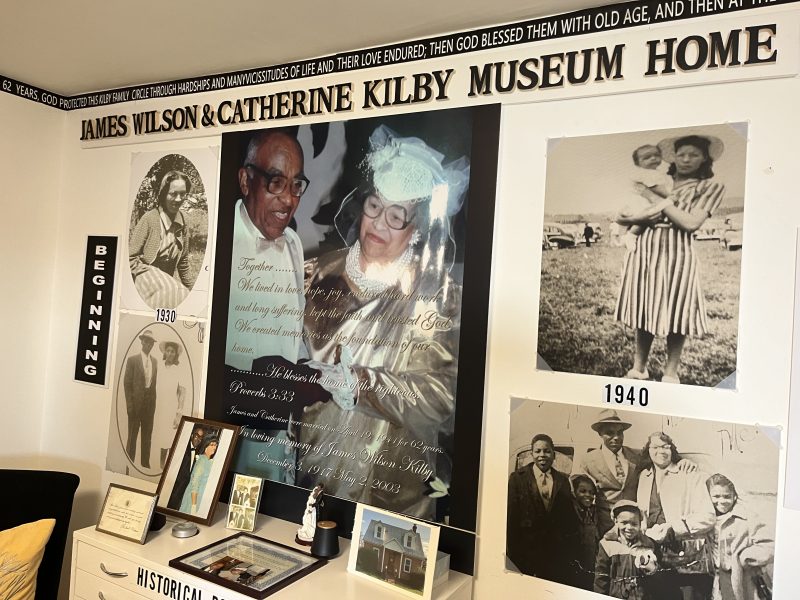
A photograph of the Kilby couple, James and Catherine, is proudly displayed within the museum in honor of their legacy of pursuing equal opportunity.
Kilby-Robb can remember the time when Criser High School, a school for colored people, was offered as a consolation prize to those fighting for integration. She also remembers when Warren County High School was finally integrated, where she would spend her tenth, eleventh, and twelfth grades. Her father served as the president of the National Association for the Advancement of Colored People and later as the Education Committee chair for the same. Among his many contributions to the black community in Warren County was a lawsuit defending the right of blacks to attend Warren County High School. The legacy he bequeathed to his daughter weighed heavily on her. In a series of dreams in which she felt his presence, Kilby-Ross saw clearly that she was meant to bring her father’s dream of a museum to completion. And she has.

Business Growth Series: Why Good Businesses Still Struggle to Grow

Brownies with Mini Chocolate Easter Eggs

Shenandoah Downs Opens 11th Season April 11 with Tribute to Roger Hammer

We Don’t Know Everything About DNA

How PAAS Came to Dominate the Easter Egg Dye Tradition

Spanberger Signs Bipartisan School-Safety, Student Support Bills Into Law

Melanie J. Pomeroy (1958 – 2026)

David Benjamin Heller (1990 – 2026)

1776 Wasn’t Just About Independence

Three-Tiered System for Urban Agriculture Based on Lot Size Takes Shape at Town Planning Commission Work Session

Child Abuse Awareness Month Brings Focus to Reporting, Prevention in Warren County

National Dental Hygienists Week: Is Your Oral Care Routine Optimal?

The Coin That Traveled Through Time and Space

One “What If?” Question Is Changing the Future of Farming

AA Speaker to Explain Recovery Program at United Methodist Men’s Dinner
Jeannette M. Hyland (1944 – 2026)

Allen William Derflinger II (1959 – 2026)

Warehouse Clerk: A High-Demand Job—Even With Robots

FDA Cracking Down on Compounded GLP-1 Drugs

“Christmas in April” or Overspending? Budget Draws Criticism

Court Ruling Voids Prince William Data Center Rezoning, Raising Stakes for Local Debate

Spanberger Signs First Bills Targeting Healthcare, Housing and Energy Costs

Blue Ridge Singers Spring Concerts to Showcase Powerful Blend of Voices and Brass
What Counts as “Good Policy” Depends on Who’s in Power
