
Local News
160 years later – Jackson’s Valley Campaign strategies and the Battle of Front Royal’s unique part in that campaign are recalled
A small crowd of historical buffs joined by an honor guard of reenactors presenting the colors of the United States, the Commonwealth of Virginia, and the Southern Confederacy gathered early Monday evening, May 23, at the Warren Rifles Museum in Historic Downtown Front Royal. They gathered NOT to celebrate a fight to preserve slavery as an American socio-economic institution, but rather to acknowledge the sacrifice of soldiers on both sides and the Psychological Warfare (PsyWar) strategies employed during Confederate General “Stonewall” Jackson’s Valley Campaign before there was a term to describe such strategies.
It was a joint celebration of the military genius of the Valley Campaign 160 years past, the Battle of Front Royal in which Jackson’s forces defeated an outnumbered Union force as part of that campaign, and of Jackson’s life that would end on May 10, 1863, as a result of a friendly fire incident at Chancellorsville the following year.
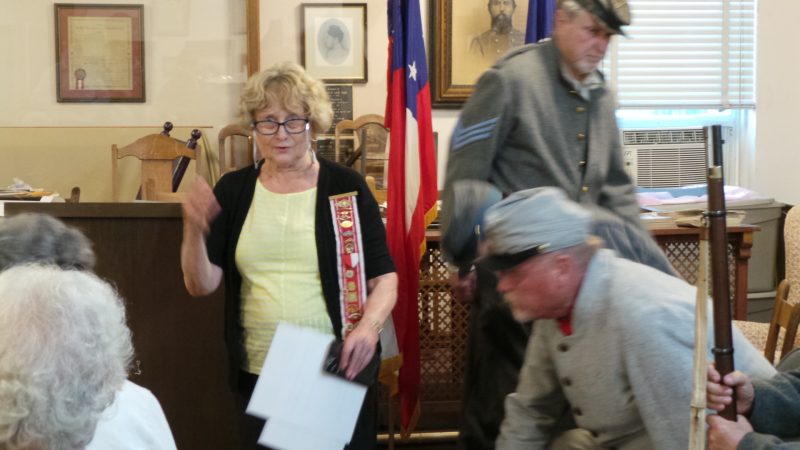
Suzanne Silek launches Monday’s Civil War history acknowledgment of Jackson’s Valley Campaign and the Battle of Front Royal’s role in that landmark campaign in military history. Below, featured speaker J.P. Morgan explains ‘PsyWar’ in the Valley 160 years ago. Royal Examiner Photos by Roger Bianchini. Video by Mike McCool, Royal Examiner.
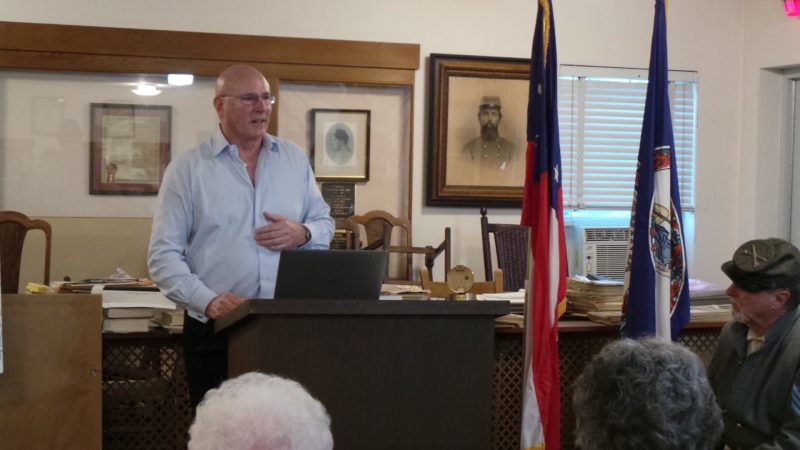
Royal Examiner columnist and U.S. Army retired Lt. Col. John Paul Morgan was the featured speaker, expanding on his commentary titled “PsyWar in the Valley,” published here in acknowledgment of the 160th anniversary of Confederate General Thomas Jonathan “Stonewall” Jackson’s “Valley Campaign” of 1862.
Morgan pointed to radical strategies of troop movements and deployment, security from even Jackson’s own commanders on his battle plans, and disinformation on what numerical force he had in the Shenandoah Valley.
That latter aspect created in part by the first two was crucial, as Union leaders believed Jackson’s actual force of about 16,000 was 60,000 or more, threatening the Union capital from the west in 1862 as the Union Army was poised to take the Confederate capital of Richmond with a vastly larger force than Richmond was defended by.
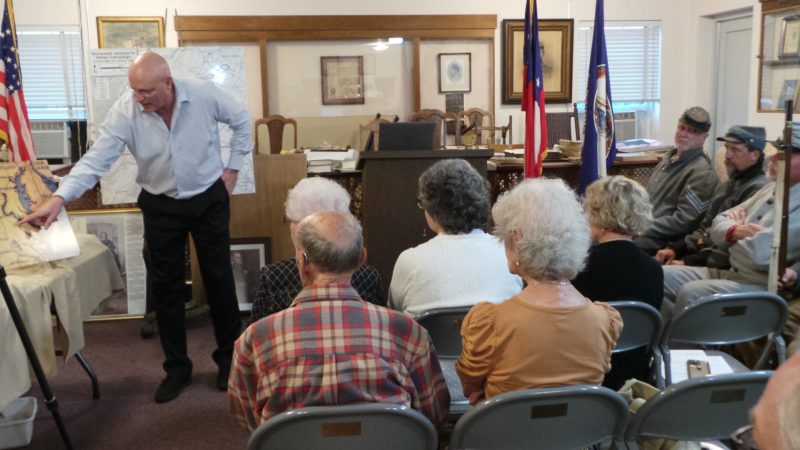
They thought he was here, and then he was there – Morgan traces ‘Stonewall’ Jackson’s unprecedented troop movements up and down the Valley creating the illusion of a much larger force than he actually had that Union leaders believed could threaten to invade Washington, the Union capital in 1862.
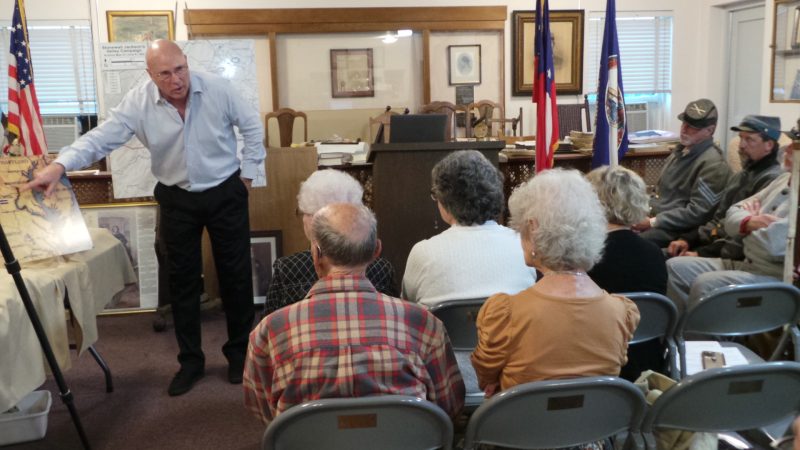
That Union leadership misperception led them to pull key forces from the planned Richmond offensive to the defense of Washington D.C. Those Lee-Jackson developed strategies leading to troop movements to protect the Union capital from a phantom force created one of the greatest military-strategic shifts of wartime history, Morgan asserted of strategies still studied in military schools and training to this day.
It was this advanced strategical plan developed between Confederate Commanding General Robert E. Lee and General “Stonewall” Jackson, playing to concerns and psychological tendencies of the opposing side’s leadership, that was the focus of Morgan’s presentation.
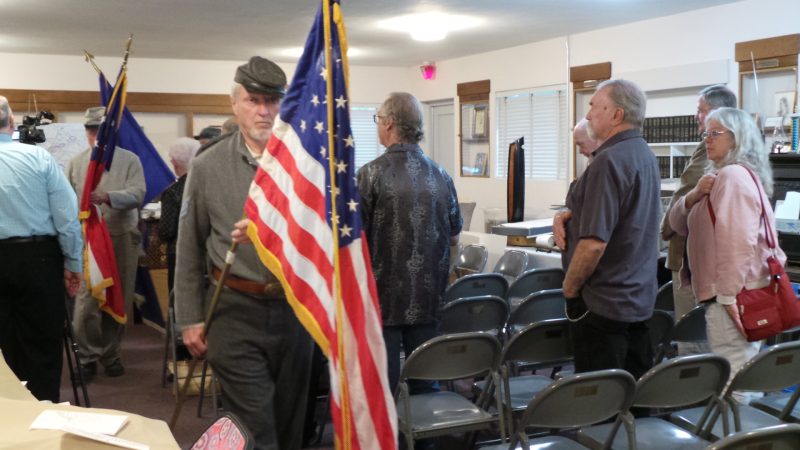
The colors of the U.S., the Confederacy, and Virginia were displayed in opening and closing the historical remembrance of Front Royal and ‘Stonewall’ Jackson’s unique places in American military history.
Watch the presentation on a unique aspect of military history in this exclusive Royal Examiner video.

5 Tips to Prevent Sports Injuries

Standardbred Owners Ainspan, McDonald Each Score Thoroughbred Wins at Colonial Downs’ Virginia Derby Meet

Most Dangerous Cycling Scenarios Involving Cars

VDOT: Warren County Traffic Alert for March 23 – 27, 2026

Virginia State Police Seize $22.4 Million in Drugs, Recover Firearms in Weeklong Operation

Virginia Home Sales Rise in February as Inventory Grows, Spring Outlook Uncertain

Bing Crosby Stadium Hosts Warren County–Skyline Baseball Battle Tonight

Warren Supervisors Address Audit Contract, Permits, and Property Sale at March 17 Meeting

Here’s How Virginia Lawmakers Suggest the Next State Budget Handle Federal Health Care Funding Fallout

Spring Essentials Checklist: Prepare Your Home for Summer

Virginia Joins National Push for Refunds After US Supreme Court Voids Trump Tariffs

Four Reasons to Consider Hiring a Professional Cleaning Company

Ask the Expert : We Are Applying for a Mortgage Soon. What Kind of Documents Will We Need?

Charles Michael “Rusty” “Chuck” Fischbein (1944 – 2026)

Jerrold E. “Jerry” Groves (1931 – 2026)

Town Planning Commission Moves Forward with Industrial Zoning, Holds Preliminary Discussion of Urban Agriculture

Schools Push for Budget Flexibility, Consistent Funding as Needs Grow

Skyline High Teams, Athletes Successful Seasons and Performances Acknowledged – Oh, and Those Roosters

School Board Seeks to Restore Meals Tax Funding for School Facilities

Wasting Drinking Water: 3 Habits to Eliminate From Your Daily Routine

Medicare Launches TEAM Program to Improve Recovery After Surgery

Izaak Walton League Promotes Conservation and Outdoor Programs at Community Forum

POLICE: 7 Day FRPD Arrest Report 3/16/2026

Blue Ridge Wildlife Center Patient of the Week: Great Horned Owl
