
Local Government
Light agenda segues into lengthy discussion of departmental accountability for details on monthly expenditures – Why does that sound familiar?
Following a closed session on legal advice related to the various EDA financial scandal-related litigations, the Warren County Board of Supervisors faced an unusually light open meeting agenda beginning at 7 p.m. Tuesday, February 21st. As to “New Business” the board’s agenda contained only a six-item Consent Agenda from which nothing was pulled for additional discussion; one personal service acknowledgement resolution of appreciation (to Ron Harvey for his lengthy service on the Parks & Recreation Board); routine monthly approval of accounts and budgetary appropriations and transfers; and outside agency reports from VDOT, the Virginia Cooperative Extension Office, and county Department of Social Services.
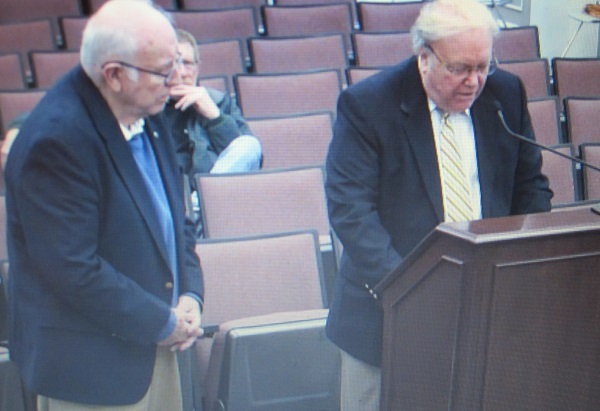
Parks & Rec Director Dan Lenz, right, reads the Resolution of Appreciation to Ron Harvey, left, for his valued service to the department’s board of directors over the years. Harvey recently announced his retirement. Royal Examiner Photos Roger Bianchini
Why aren’t they here when I want them here?
The latter category was shortened by the lack of presence of representatives from VDOT or the Cooperative Extension Office to review and respond to questions about their submitted written reports. That has increasingly been the case since the board recently voted to eliminate its monthly 9 a.m. morning meetings utilized for four decades or more to accommodate the work schedules of involved agency personnel, some like VDOT’s, traveling from other areas of the state. That scheduling change was made at the request of North River Supervisor Delores Oates, who reasoned morning meetings were inconvenient to the work schedules of her and Happy Creek Supervisor Jay Butler. The board approved the request without discussion of the potential inconvenience it might cause for those presenting those monthly outside agency reports.

The board’s second monthly meeting of February also saw no speakers at Public Comments on non-agenda matters of constituent concern. However, the board spent some time reviewing one matter of citizen concern – the reassessment appeal process, which is nearing the end of its first phase with the Board of Assessors and moving toward Phase Two with the Board of Equalization. It was forecast that by April the board will have the final reassessment numbers and be ready to move the real estate tax rate toward or at revenue neutral level before the board addresses any potential need to maintain some of the additional real estate tax revenue from the average 43% higher assessments being experienced. Information on those processes is available on the county website or through the Commissioner of the Revenue or County Land Office.
Pandemic era assistance ending
And as to another citizen concern, the one agency report delivered in person, by Warren County Department of Social Services Director Jon Martz (beginning at the 16:20 mark of linked county video), did take some time as he reviewed the pending end of pandemic era alterations to various federal social services benefits that were increased during COVID-19 pandemic restrictions on businesses and jobs.
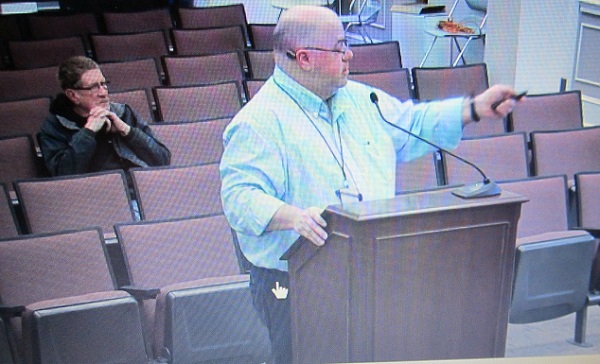
County Social Services Director Jon Martz clicks at PowerPoint display on coming roll backs of federal COVID relief benefits as the pandemic Public Health Emergency ‘unwinds’. Major hits are impacting the SNAP food assistance program as shown in graph in final photo below.

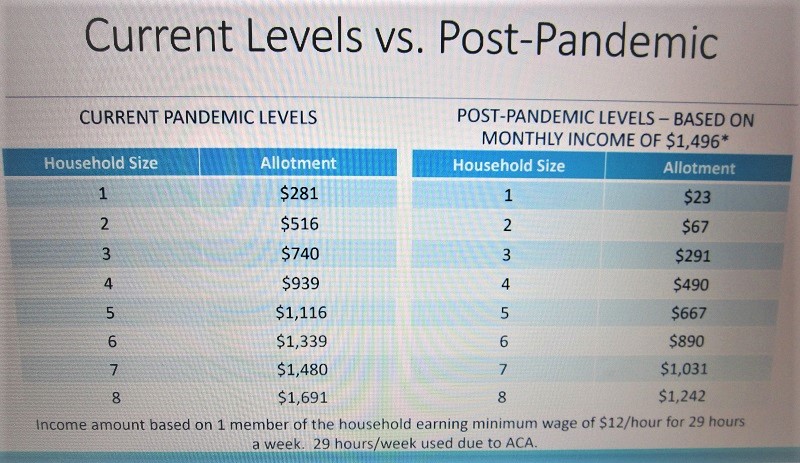
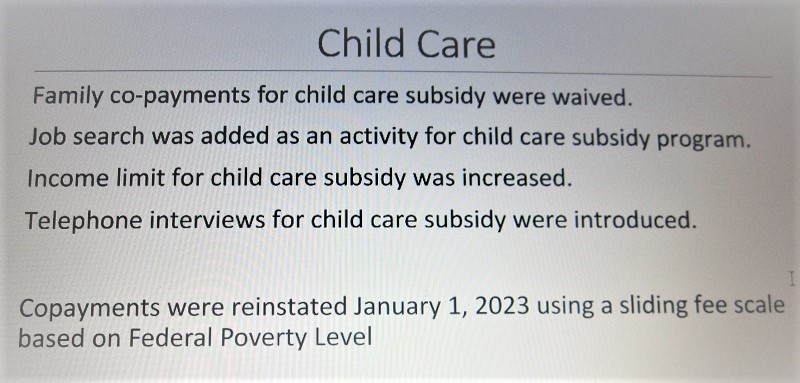
Among those pending changes away from extra help Martz reported during a PowerPoint presentation were the March 1st end of large increases in the federal SNAP (Supplemental Nutrition Assistance Program) money available to help feed lower income households; Medicaid eligibility – Martz told the supervisors as many as 2,000 of the county’s 10,086 Medicaid recipients were facing the loss of coverage as of April 1; and the re-institution of Child Care co-payments from recipients that went into effect January 1, among other variables.
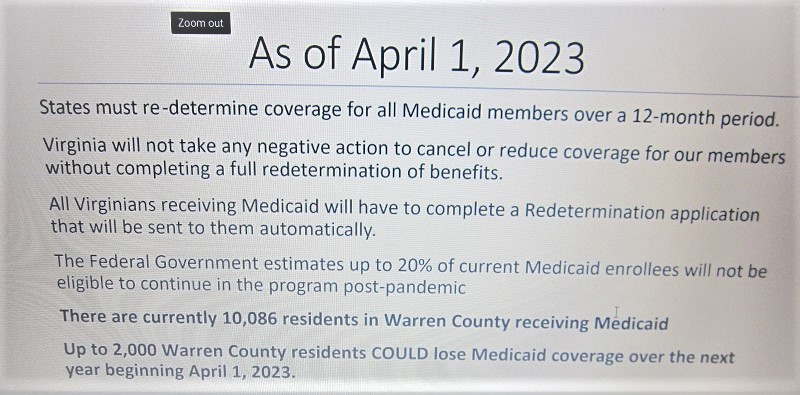
More federal social service roll backs displayed – as many as 2,000 of over 10,000 county Medicaid recipients could be losing coverage. And Child Care subsidies are rolling back too.
With the end of Martz’s report the board discussed potential ways of trying to help county citizens still struggling financially through the loss of the cited additional services benefits. The SNAP changes impacting families ability to acquire adequate nutrition was cited as a particular concern. Martz replied to a question, noting an initial run on food banks. But he added that his office had one overriding rule – “Nobody leaves with nothing”. Some optimism was expressed by the county’s elected officials that the county government would find a way to assist those still needing extra help beyond the parameters federal programs are returning to as the COVID pandemic restrictions are eased.
Approval of Accounts – not so fast

But as the meeting progressed through its routine business toward its brief action agenda there was a bump in the business-as-usual road. That came as the board reached Approval of Accounts, particularly it seemed to the Expenditures Report. Asked if there were any questions on the submitted report by Chairman Vicky Cook (at the 1:22:10 mark of linked county video), South River District Supervisor Cheryl Cullers referenced what she perceived as vagaries in some purchase orders. After complimenting Board Deputy Clerk Emily Ciarrocchi for the preciseness of her entries regarding purchases, Cullers cited questions about other departmental entries. And while Cullers said she wasn’t accusing anyone of anything, her concern over the lack of detail in the Approval of Accounts section of the meeting agenda led her to cast the lone “no” of five votes on the motion to approve the financial accounts presented to the board that night.

File photo of South River Supervisor Cheryl Cullers, who is seeking more detail in monthly county expenditure reports. Maybe supervisors and citizens concerns on such things are beginning to merge. Could that lead to resolution of long-festering Shenandoah Farms Sanitary District tax expenditure issues raised by many involved residents? Stay tuned, sports fans.
Cullers cited line item vagaries such as “Amazon purchase” in departmental accounting records leading to a lack of certainty in what the county’s elected officials were being asked to approve as expenditures in monthly financial accounting reports. Cullers eventually focused in on gasoline purchases for county vehicles. Could staff be buying cheaper regular fuel while being charged for higher grade, which the county’s elected officials were then being asked to authorize payment for, Cullers wondered.
To at least one observer, Cullers concerns seemed to echo those expressed by some Shenandoah Farms residents, including members of past and current Farms Sanitary District Advisory boards, directed the board of supervisors way without direct answers for two years or more now. As previously reported by Royal Examiner, Shenandoah Farms citizen questions have revolved around infrastructure project decision-making processes and contracts, as well as an accounting of whether some Farms Sanitary District tax revenue has been moved for use outside the Sanitary District over the past three years during a period of repeated turnovers at the top of the county finance department in the wake of the departure of the former county administrator and deputy administrator. To our knowledge, despite Supervisor Oates disputed public assertion the necessary information is available on the County website, those questions have not yet been answered to those citizens satisfaction.

But perhaps with Cullers new interest in more detail in the accounting of county expenditures, not only will she get the answers she seeks about car fuel and Amazon purchases. Perhaps too, she and her colleagues will acquire the requested information Shenandoah Farms citizens have been seeking about how, why, and where their Sanitary District tax revenue is being spent. And might that information be acquired before the supervisors current appointed Shenandoah Farms Sanitary District Advisory Committee (SFSDAC) is asked to sign off on future infrastructure project decisions coming from the supervisors and county staff? For it seems that they, like their predecessor the Property Owners of Shenandoah Farms (POSF), uniformly disagree with those county staff and supervisor infrastructure project decisions and recommendations as not providing the “best bang for the buck” to Farms Sanitary District taxpayers.
Maybe a little across-the-board county financial and expenditure oversight and more transparent detailing could lead to positive movement on the Shenandoah Farms Sanitary District management/advisory front. – “Hey, if you don’t have good dreams, you’ve got nightmares” as Mickey Rourke’s character in the movie “Diner” said.
See full board discussion and agency and staff presentations in the county video.




VDOT: Warren County Traffic Alert for September 28 – October 2, 2026

Virginia Health Committee Considers Mandating Licensed Nurses in Every School

After Obama-Era Chesapeake Bay Executive Order Rescinded, Environmental Groups Brace for Fallout

Federal Judge Strikes Down SNAP Deadline That Put Virginia at Risk of Added Costs

Children Activities by Samuels Public Library for the Month of October

$5,000 Match Challenge to Support Warren County Children on Give Like Dolly Day

October 23rd Set for Post-Discovery Motions Hearing in Bradley Treece Gunfire Incident With Neighbors

Virginia State Police Seize More Than $1 Million in Drugs During Weeklong Operations

Jolissa Steele Shifflett Mathews (1944 – 2026)

False Birth Control Claims are Proliferating, Survey Says

Business Growth Series: Your Work Environment Is Affecting Your Growth

Frog Hunting Offers Virginians a Different Kind of Outdoor Adventure

How the Tech Bros Shop for a House

County Supervisors Fill Vacant Planning Commission Seat, Look to Future on Processes and Capital Improvements

America 250: ‘I Only Regret That I Have but One Life to Lose for My Country’

Building Gas Plants More Important Than Dominion Sale, Data Center Politics

Home Inspectors Help Buyers and Sellers Understand a Property’s Condition

Bowling Together: Why Work Is More Than a Paycheck

This Week’s Showtimes at Royal Cinemas as of September 24th

POLICE: 7 Day FRPD Arrest Report 9/21/2026

Blue Ridge Wildlife Center Patient of the Week: Eastern Cottontail

UVA Health Review Examines Real-World Results of Incisionless Liver Tumor Treatment

Maximilian James Donora (1995 – 2026)

Dollars for Dolly Campaign Aims to Turn Small Gifts Into Big Community Impact
