
Local Government
Data Centers and Backyard Beekeeping in Focus for County Planning Commission
“This is not a punishment,” said Planner Kelly Wahl, speaking at a work session of the County Planning Commission on the evening of Wednesday, October 8. Having discussed a potential reduction to setback requirements in R-1 and R-2 zones, the commission moved on to data centers. Above all, Wahl expressed her joint desire with Zoning Administrator Chase Lenz to involve the public in the decision-making process related to the development of performance standards in the hypothetical scenario that the County receives a data center application.
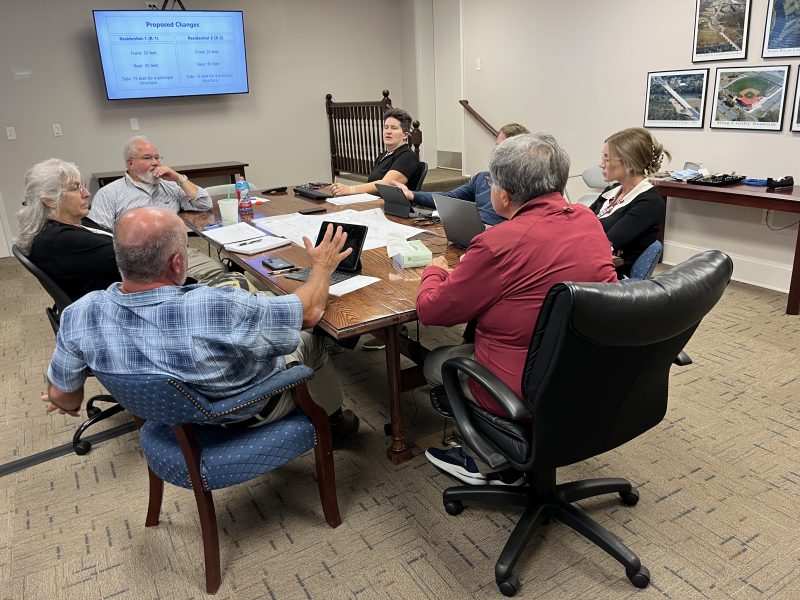
The County Planning Commission sits for a work session on the evening of Wednesday, October 8. Royal Examiner Photo Credits: Brenden McHugh.
As a resident of Warren County and as a mother, this issue is personal to Wahl. Hence, the need for a charette, allowing other residents and possibly parents who care about the future of this county to come together and articulate the greatest possible expectations going forward. When the Royal Examiner witnessed a public hearing on data centers at the Town Planning Commission meeting of September 17, it came as a surprise, based on prior social media activity, that not one of the more than ten people who spoke said anything about banning data centers.
Those people may have understood that Virginia is a Dillon Rule state, meaning that localities only have the power vested in them by the General Assembly. As the assembly has a track record of allowing data centers, it is highly improbable, if a data center developer pursued a legal remedy for the reasonable use of his property, that the ruling would not be in the plaintiff’s favor. It will be interesting to see whether future public participation at the county level follows that trend. Indeed, there may be multiple charettes, Wahl revealed, one for each district.

So much depends on the commissioners doing their research, composing their thoughts, and getting back to her. Already, she has a timeline that includes, but is not limited to, consideration at a work session, public participation, and finally, the verdict of the Board of Supervisors. Although the public participation could be moderated by staff, Commissioner William Gordon raised the point that the gathering could become contentious, and therefore it might be wise to bring in a skilled consultant who can manage the event. The point was well received.
Several tangential points were made during the discussion, including Gordon’s statement pertaining to arbitrary judgment that, on something like noise, data centers should not be regulated more stringently than any other industrial use. Also, Commissioner Scott Kersjes made the point that Warren County does not currently have the infrastructure to support a data center, to which Commissioner Hugh Henry replied that any data center applicant would be financially responsible for covering the cost of any new infrastructure their endeavor requires.
Wahl remarked that the Town did not recommend the idea of having a charette, but nonetheless, such an event is very important to County staff. In Wahl’s mind, having the standards will prevent a scenario in which any regulation is applicant-driven. As of right now, she emphasized, staff have received no application for a data center, and this agenda to develop expectations that a data center would then need to satisfy is purely a matter of being proactive instead of reactive. If indeed the public has an appetite for constructing and vetting a regulatory behemoth, Wahl is opening the door.
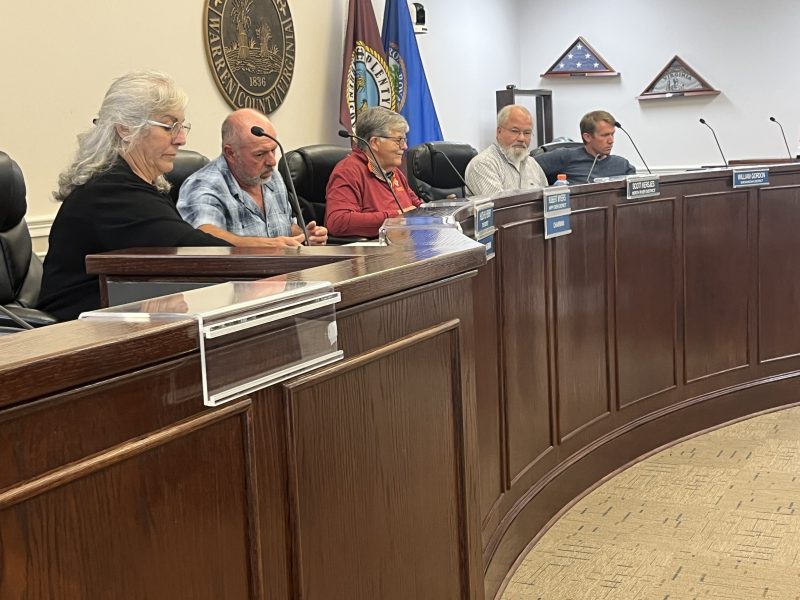
The commission convenes its monthly regular meeting after the work session.

After the work session, the commission met for its monthly regular meeting, in which the first public hearing on the agenda was an item related to backyard beekeeping. Not only by the public but by the unanimous agreement of the commissioners, the performance standards articulated here were judged too restrictive. While there may be some valuable pieces, like the requirements for setbacks, the restriction of this expensive hobby to a non-commercial enterprise was troubling. The item was therefore tabled for further review by staff.
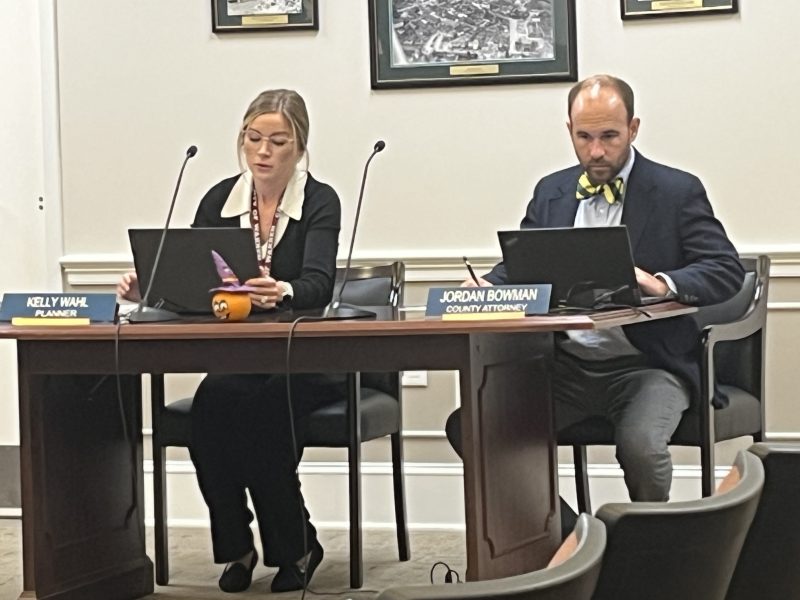
Planner Kelly Wahl and County Attorney Jordan Bowman.
Also considered were a private camping application, a short-term rental, a relaxation of rules related to the administrative task of granting a family subdivision variance, and, under new business, the disposition of a potential manufacturing, warehousing, and distribution facility. Reports of various commissioners were brief, the most poignant being Hugh Henry’s, in which he reflected on his time with the commission and the foundational knowledge of land use he has received as he looks forward to future political prospects. Everyone wished him well.




Number of Retiring U.S. Senators Ranks Among Top 5

DATA Centers Future Here, Changes in Zoning Text Amendment Procedures, and a Little Post-Meeting Drama for One Supervisor

Missed the VA250 Mobile Museum? Another Stop Is Coming Close By

Balancing Optimism and Caution, Spanberger Says Virginia’s Revenues Grew $2.1 Billion in Fiscal Year 2026

Lorraine Partlowe Dovel (1942 – 2026)

SCC Commissioner, Former NextEra Attorney Declines to Recuse Herself From Merger Case

Historic Preservation Group Asks Supreme Court to Halt Trump’s $400 Million White House Ballroom

How to Control Your Lights With Your Voice

This Week’s Showtimes at Royal Cinemas as of August 20th

Spanberger Signs Executive Order to Boost Virginia’s Emergency Preparedness

Middletown Secures Third Straight Virginia Trees for Clean Water Grant

Warren Coalition Plans Recovery Month Kickball Game, Picnic to Support Local Recovery

Blue Ridge Wildlife Center Patient of the Week: Common Raven

DOJ Probes William & Mary Over Alleged Race-Based Scholarship Policies

Royal Oak Computers Moving After 35 Years in Downtown Front Royal

Why You May Feel Younger Than Your Actual Age

Virginia Launches 25th Anniversary ‘Drive Sober or Get Pulled Over’ Campaign

Selah Theatre Project to Open New Winchester Arts Center With ‘Come From Away’

Alongside Kiggans, US House Speaker Says Virginia’s 2nd District ‘Will Determine the Fate of the Country’

Virginia Secures $17 Million to Upgrade Rail Service and Improve Transportation Infrastructure

Mice May Drive Lyme Disease More Than Deer

College Football 2026: You Can Taste the Excitement!

Fall Is the Buyer’s Season — Start Now, Be Home by Christmas

AI Investment Boom Reaches Historic Scale, but Returns Remain Uncertain
