
Local News
WATCH: Sixth District Democratic candidates stump in Warren County
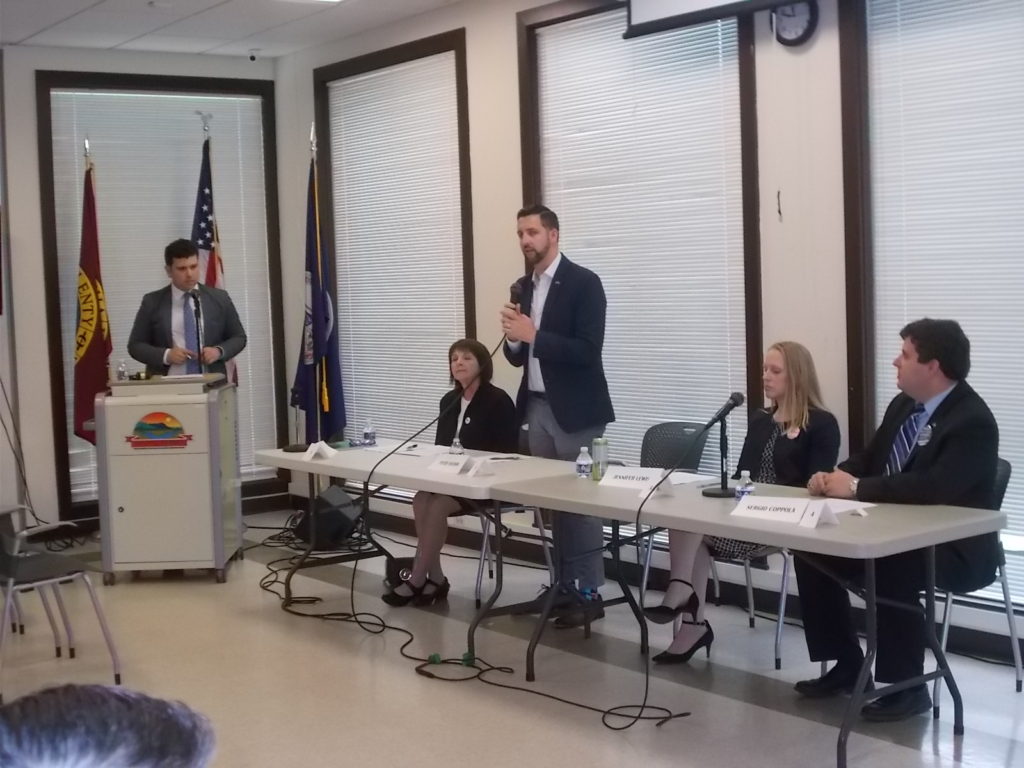
Under the watchful eye of moderator Tristan Shields, far left, Peter Volosin responds to a question as, from left, Charlotte Moore, Jennifer Lewis and Sergio Coppola wait their turns. Forum Photos/Roger Bianchini
On Saturday, May 5, four Democrats seeking their party’s nomination to run for Virginia’s Sixth District seat in the November 2018 U.S. Congressional mid-term election were hosted by the Warren County Democratic Committee. The Democratic Candidates Forum was held at Warren County’s Villa Avenue Community Center before a room full of Democrats excited by their chance to “flip” the U.S. House of Representatives seat held for 25 years by Robert Goodlatte.
On November 9, 2017, two days after Democrats picked up 15 of the 16 seats they would have needed to earn a 50-50 split in the Virginia State House of Representatives (they lost that 16th seat by a blind draw to determine the winner), Goodlatte joined an expanding list of Republican congressional incumbents announcing they will not seek re-election in 2018.
Goodlatte’s departure from the Sixth District, coupled with recent election results, not only in Virginia, but in other traditionally conservative districts across the nation have raised Democratic hopes for a major change of congressional electoral fortune this coming November.

And on May 5, four Democrats brought their respective cases forward as the best person to achieve that change of fortune in Virginia’s Congressional Sixth. Those Democrats are: Peter Volosin, Charlotte Moore, Jennifer Lewis, and Sergio Coppola. Volosin and Moore are Roanoke-based, Lewis is from Waynesboro, and Coppola is a Bridgewater native living in Rockingham County. Volosin has been in the race the longest, announcing his intention to challenge Goodlatte some time prior to the November 2017 state house election shocker and Goodlatte retirement announcement.
And while I will point readers to our accompanying video of the entire forum to draw a final judgment on their perspective of the candidates’ relative viability versus each other, as well as versus the eventual Republican nominee to replace Goodlatte, I will undertake below that video link to summarize each candidate’s self appraisal in response to questions about their legislative priorities and belief as to why they would be the best person to be the Democrat on the Sixth District ballot in November 2018.

Why us?
All four candidates stressed certain party priorities, including a need for better health care options for Virginians, as well as an overall shift in legislative priorities in Washington.

The legislative priority shift was described as one that would spread employment and higher wage opportunities, tax breaks and other economic benefits to all Americans, including the middle class and working poor. In one way or another all four candidates expressed a belief commonly held by Democrats that Capitol Hill Republican legislative initiatives are primarily directed to the benefit of America’s wealthiest and highest corporate and private political donor class, rather than the average American.
After citing a need to lessen student loan debt, Volosin said “We’ve got to end Citizens United.” Citizens United was the 5-4, 2010 U.S. Supreme Court ruling that corporations have the same legal rights as people, particularly as it applies to unlimited and often anonymous political campaign contributions (“free speech”) made through Political Action Committee (PAC’s) to achieve partisan political ends.
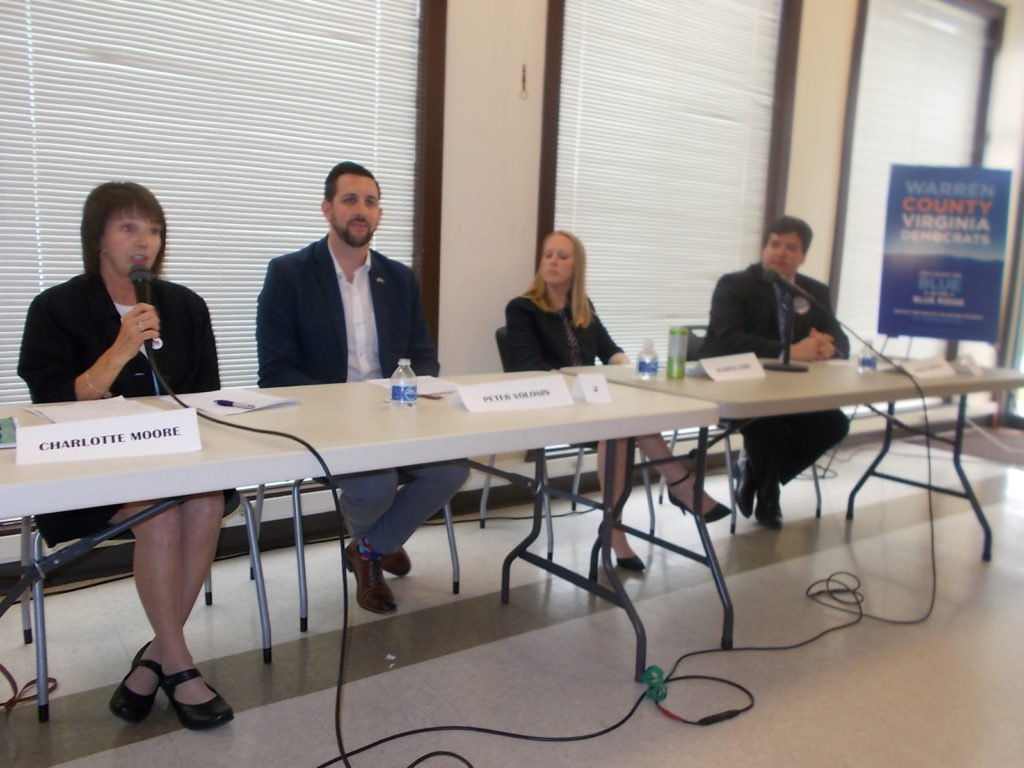
Charlotte Moore speaks as other 6th District Democratic primary contenders listen.
Volosin also referenced Republican-sponsored “trickle-down” economic theory dating to the Reagan-era 1980’s at the base of the philosophy that legislative economic benefit to the rich will eventually filter down to those at the non-rich end of the economic spectrum.

“It doesn’t work,” Volosin said of the 35-or-so-year track record of such “trickle-down economics” legislation.
On the health care front at the federal level Democrats point to Republican dismantling of the Affordable Care Act (ACA or “Obamacare”) with no alternative plan in place to improve affordable health care cost options for Americans. At the state level, Democrats have long pointed to the Republican-controlled General Assembly’s rejection of Medicaid Expansion through four consecutive sessions. If passed, Medicaid Expansion was estimated to expand more affordable health care to 400,000 moderate to lower income Virginians, as an integral part of the ACA.
Attacks on the environment and consequent impacts on public health were another political divide between Democrats and Republicans cited to pinpoint varying legislative perspectives. Specifically, the candidates were asked about their stance on “fracking”.
Fracking is a hydraulic fracturing of the earth’s crust to facilitate cheaper access to subterranean resources, primarily natural gas. Unlike the Sixth District incumbent or Trump EPA director appointee Scott Pruitt, all four Sixth District Democrats expressed STRONG opposition to fracking, as well as a belief that climate change is real.

They pointed to environmental consequences of fracking in particular, primarily the contamination of surrounding water supplies leading to such famous examples as being able to light the water out of home taps on fire in areas where fracking occurs.
Lewis recounted visiting areas of West Virginia in which she saw “water buffaloes” – no, not the big animal, rather large plastic water tanks – in every yard in communities near fracking sites.

Photo of a fracking site in West Virginia – what could go wrong when you hydraulically fracture the earth to reach natural gas deposits, other than perhaps activating dormant fault lines, earthquakes, water contamination and fire? Public Domain/blogspot
“These people had no access to clean water. So, the fracking company would come by and fill these tanks up and run a water line into the house. That is no way to live – we can’t keep destroying our planet,” Lewis said, as she expressed support of a 100% move toward renewable energy sources like water, wind and solar.

Lewis suggested that Trump EPA appointees be held accountable for their dismantling of regulations designed to protect the environment, in favor of deregulation to the benefit of environmentally-destructive industries.
Volosin observed that fracking can impact water sources as much as 250 miles away – a 500-mile radius. He noted that even Saudi Arabia, a nation whose vast wealth is based in oil production, was moving to diversify away from oil as its sole energy source.
“We can’t keep destroying our planet – climate change is real,” Lewis said. None of her Democratic rivals disagreed.

Fracking sites in Pennsylvania, West Virginia and eastern Ohio – could Virginia be next? Public Domain Photo/imgur
But of Lewis’s notion of Trump EPA accountability, Volosin observed to some appreciative laughter, “We can complain about the EPA, but Scott Pruitt has built a $46,000 soundproof booth; so he can’t hear us.” Volosin’s reference was to the widely-reported Pruitt EPA expenditure on a soundproof booth out of concerns about informational leaks out of his department. As attorney general of Oklahoma, Pruitt was a champion of expanded corporate fracking in Oklahoma – the appearance of which coincided with a marked increase by the hundreds in the number of earthquakes experienced in Oklahoma where fault-line activity had not been prevalent before.
Moore agreed in whole with Lewis and Volosin on increased environmental protections – “We can’t keep destroying the earth’s shell – what are we doing to our water supply?” she asked.
Coppola agreed as well, stating that we in Virginia may tend to take water for granted because of the widespread underground aquifer that allows wells to be drilled in many areas. But if fracking becomes prevalent in Virginia, well drilling into that underground aquifer may be of little future use.
Lewis also was the first candidate to verbalize support for a distinct change in Sixth District representative perspectives on political, even White House, accountability were independent oversight or federal law enforcement investigations to substantiate wrongdoing of any kind. Sixth District incumbent Goodlatte raised eyebrows with his unsuccessful effort to open the 2017 Congressional session by trying to remove independent ethics oversight of congressional members’ behavior.
“I am ready to tackle fraud, waste and abuse of power,” Lewis promised county Democrats.
On the public safety front, all four candidates expressed a desire to see improvements in gun control laws to help stem the tide of gun violence, including mass shootings of the kind experienced recently in Florida and Maryland schools and other public venues like the Las Vegas concert shooting. Improved and lengthier background checks that could delay a gun purchase from being made in the heat of a moment of anger were cited as possible paths forward; as well as mental health assessments being circulated and available as part of arms purchase background checks.
“Some people talk about Democrats wanting to take all guns away – we know that’s NOT true,” Volosin said. “We need to talk to our gun-owning friends and develop policies to everyone’s benefit.” Of the need to own semi-automatic weapons with large clips, Volosin observed, “If you go hunting and it takes you 30 shots to kill a deer, you may want to go fishing.”
Other shared perspectives included campaign finance reform and bringing an end to gerrymandering of electoral district boundaries to partisan advantage. Virginia Democrats have pointed to the vast disparity between statewide electoral results over the past decade – going for Barack Obama in 2008 and 2012 and for Hillary Clinton in 2016, as well as the party’s election of four of the last five governors since 2002 – while Republicans have maintained distinct General Assembly majorities, at least prior to the abrupt change – from a 66-34 to a 50-49 Republican majority – in the state house in 2017.
Why me?
Near the forum’s conclusion, moderator Tristan Shields asked the candidates to summarize why they believed they were the party’s best candidate for the Sixth Congressional District seat.
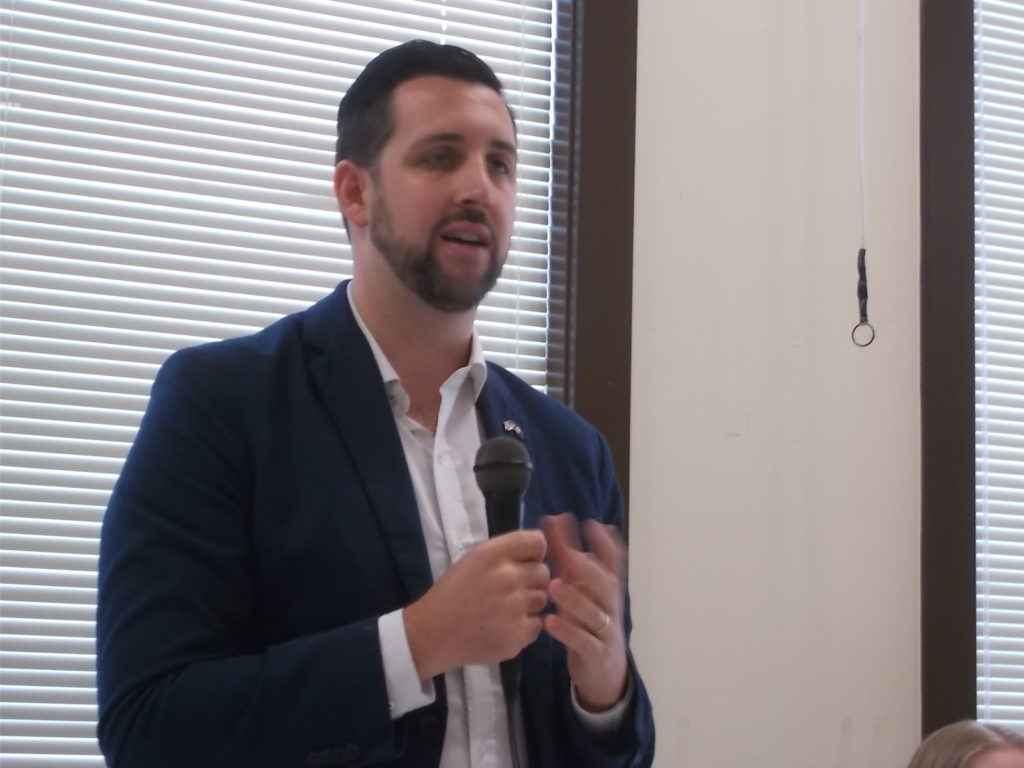
Announced for the U.S. Congressional 6th District Democratic nomination the longest and with the broadest work history, the latter including economic planning, union organizing and world travel with the world bank – Peter Volosin
Volosin pointed to his background in economic, housing and urban planning and his love for the Blue Ridge Mountains where he was born and raised.
“I want to be able to assure that coming generations can enjoy the Blue Ridge too; and have the kind of economic growth that will allow them to be successful. – That’s what I do every day,” Volosin said of his community and economic planning background.
He also noted a diversified work history that has included both union organizing and world travel in a job with the World Bank. “I am different in my life experience – I have been around the world and seen and experienced things that have solidified to me why we, as Democrats, believe in equality.”
“I will fight to support our small business and farms. As an economic planner and son of a small business owner, I know that towns thrive when small business succeeds. We need better roads, expanded rail service, stronger schools and greater broadband coverage,” Volosin states in his campaign literature.
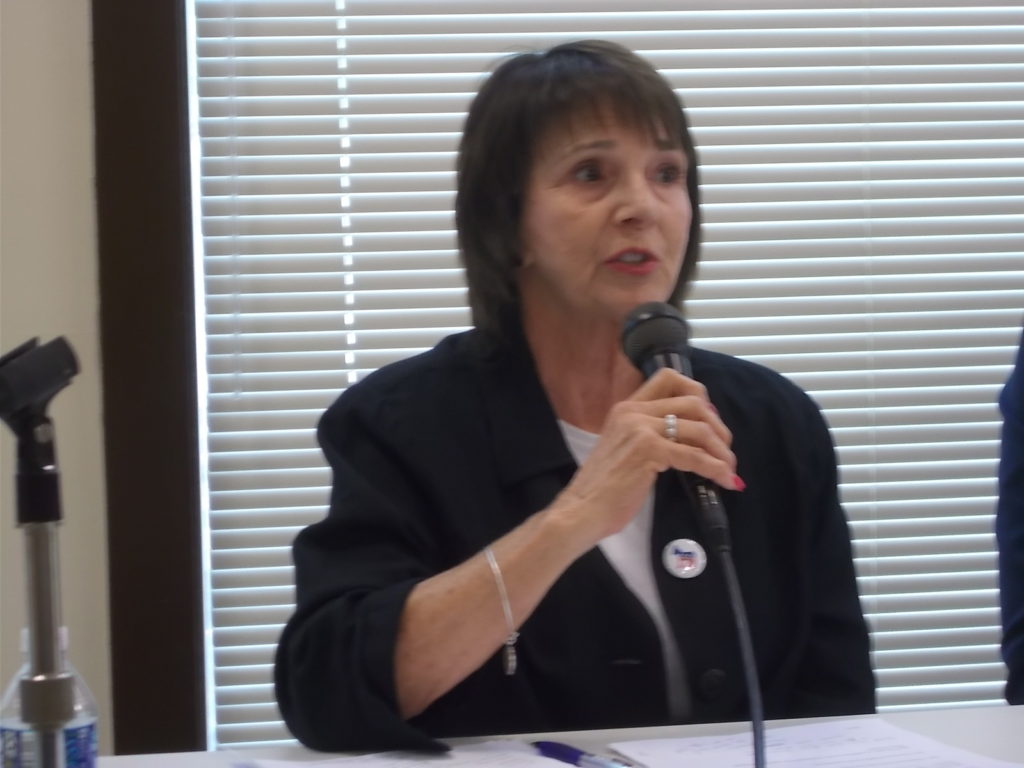
With a background in municipal government on the Roanoke County Board of Supervisors and experience on nine affiliated state or regional boards and associations – Charlotte Moore
Moore pointed to two terms of service on the Roanoke County Board of Supervisors and affiliated statewide municipal governmental associations. She noted that in her local government role she had become adept at dealing with the public, including when factually-challenged, conspiracy-styled disinformation was brought into the conversation.
It is an experience she believes would serve her well in the current political environment in Washington and on Capitol Hill, she said.
“I am very passionate about education, mental health and the environment. Education is critical for our children’s future. The need for mental healthcare continues to increase. We need to sustain our environment for our children and grandchildren,” Moore states in her campaign literature.
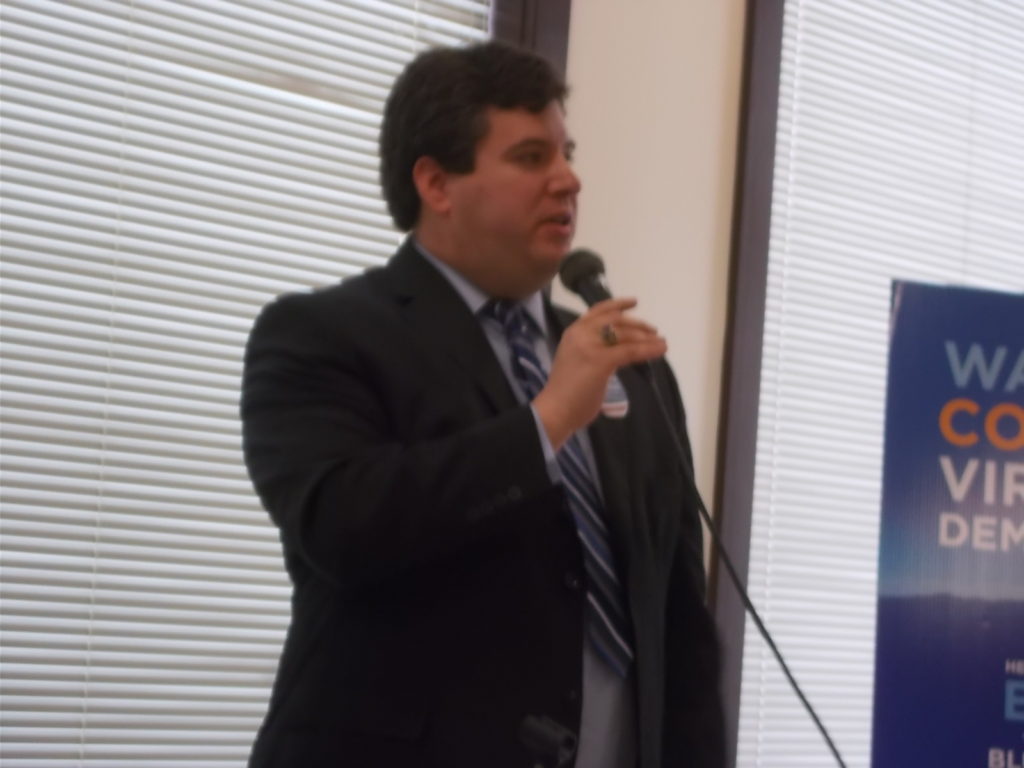
Short on experience but long in confidence on how to get the job done – Sergio Coppola
The least experienced candidate Coppola, pointed to his political science degree, coupled with ambition and a belief in what he can achieve given the opportunity.
“His work has led him to take a bipartisan approach to national issues,” Coppola’s campaign literature notes of his Bachelor of Science Degree from JMU with concentrations in Computer Science, Business, and Politics, adding, “With this background he has made American’s health care a primary focus of his campaign.”
Coppola also described himself as a political moderate who would be a more viable option to independent or crossover Republican voters turned off by the more extreme and divisive politics found on Capitol Hill today.
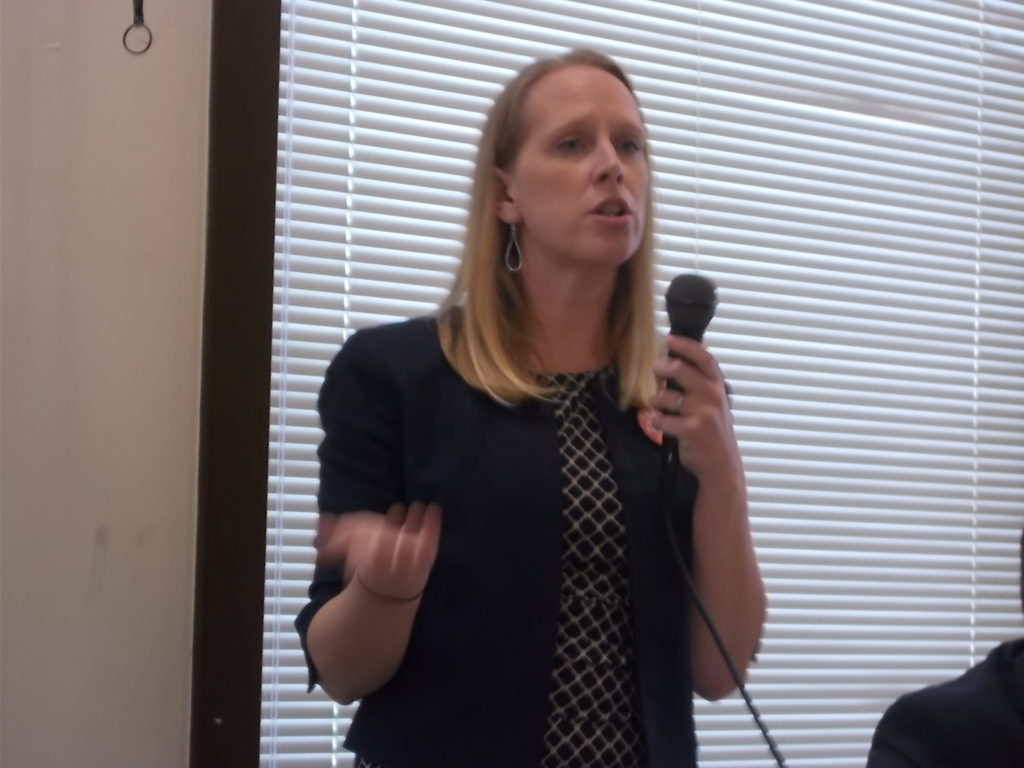
Long on party grassroots organizing and community service experience, the latter including chairmanship of the Waynesboro Parks & Rec Board, appointed membership on the Council on Youth and elected membership on the Headwaters Soil and Water Board – Jennifer Lewis
Lewis took issue with the self-described “moderate” Coppola’s view of what electable looks like in today’s political landscape, even in traditionally conservative districts like Virginia’s Sixth Congressional.
“I believe I am the right candidate with the right values to help clean Washington up now – bold, progressive views,” Lewis told county Democrats. Among those bold views was support for the legalization of marijuana. She pointed to the huge amount of commercial tax revenue raised in states that have legalized “pot” – and suggested that new tax revenue source could be used to add funding to the state’s public school system.
“All too often today we see erosions of basic human decency and tears developing in the fabric of our society. We need leadership dedicated to repairing the breach, not fanning the flames. My work in activism and grassroots organizing has taught me the necessity of building diverse coalitions, the value of listening to all sides, and the joy of finding collaborative solutions,” Lewis’s campaign literature states.
If elected Lewis said she would have an open-door policy toward constituents regardless of political persuasion, an experience she recounted not having with the current Republican incumbent.
A divide within?
Whatever inroads he may have made earlier, a quick check after the forum indicated Coppola lost at least part of the room with his response to the final question of the afternoon – “Will you support the party nominee if it is not you?” moderator Shields asked to wrap the two-hour forum up.
Moore, Volosin and Lewis all said “yes” – indicating a belief that what they see as a destructive partisan stranglehold on the federal government needed to be broken, and that could best be accomplished by new-blood Democrats on Capitol Hill. Then the microphone was passed to Coppola.
“No, I can’t say I will,” he said, appearing to indicate there was one unnamed person on the podium he would not support out of an also unstated concern. Queried later by this reporter, Coppola would only say on-the-record that, that concern involved an internal party procedural matter involving Volosin filing of his paperwork for a spot on the Democratic ballot.
Earlier Coppola also appeared to lose some of his forum rivals. Volosin responded curtly to a Coppola-offered “compliment” that he had switched his top priority from housing to health care, which Coppola claimed as his priority from the start.
“I’ve always said health care,” Volosin responded succinctly when offered a minute to rebut Coppola’s statement about altered priorities.
And as observed above, Lewis took issue with Coppola’s view of moderation of political perspectives as the best path forward for Democrats this November.
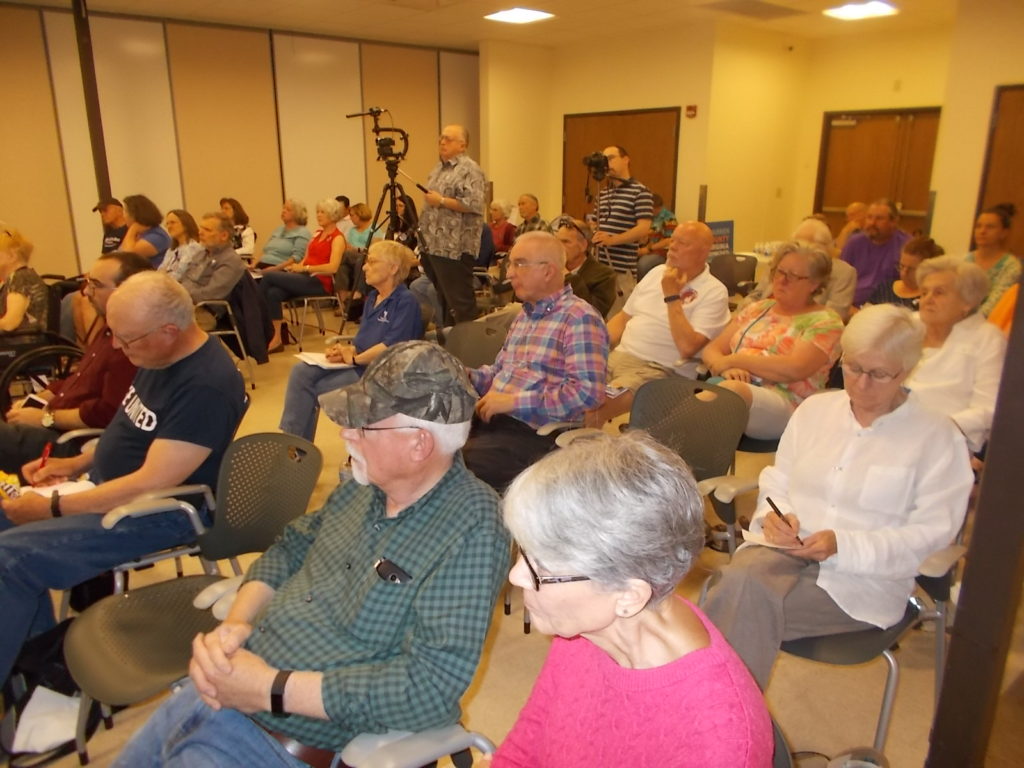
County Democrats weigh their 6th District options as the media records the May 5 Candidates Forum at Villa Ave. Community Center.
How to accomplish?
Starting with Moore, the four Democrats did appear united in stressing a campaign on issues that reaches out to all Sixth District constituents, regardless of past political persuasion or voting history.
Coppola revisited his belief that sounding more aligned in the political middle was the best way to carry the party’s message forward. However, while stressing dialogue other candidates indicated that if adequately explained, traditional Democratic priorities like affordable health care, environmental and small business protections and sensible gun control laws will not sound so alien to independent or moderate Republican voters.
“We’ve got to go talk to people; find out what their issues are and let them know what our issues are; who we are and how passionate we are about our issues,” Moore said.
“We’ve got to get the organization fired up; get out to see the people of the district and see change on the ground,” Volosin said. He pointed to requests to leave his “Democratic” literature with traditionally conservative voters who have expressed concern with a perceived shift in Republican priorities at the federal level.
“As Charlotte said, we’ve got to get out and meet people, reach out and turn them on issues because voting Republican is what they have done,” Lewis observed of many of the district’s constituents. She pointed to an encounter with an older voter and self-described Goodlatte supporter during which they discussed and agreed on many issues across the legislative spectrum.
“So we talked for awhile and then I said to him, but Bob Goodlatte votes against everything you stand for – and I could see him stop and think. Because maybe in his 70 years that was the first time anyone had said that to him. So we have to be ready and it will take all of us – all of you in this room – to get the message out that we must stop voting against our own best interests,” Lewis said of a Democratic battle plan for coming mid-term elections in traditionally Republican districts.
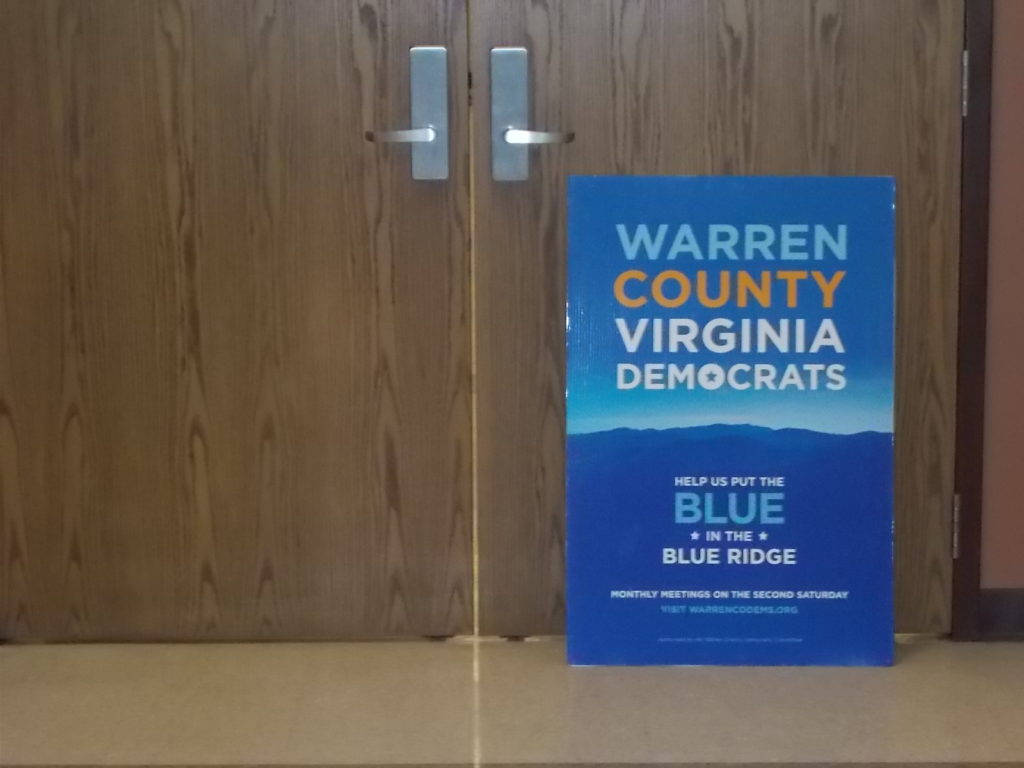
Democrats would like to ‘put the blue back in Blue Ridge’ despite a most-recently-Republican-drawn state electoral district map some might suggest is a tad gerrymandered, not that Democrats haven’t been known to do the same thing. All 4 candidates expressed a preference to end gerrymandering for political gain by any partisan majority.




Barbara Ann Mathews Smelser (1943 – 2026)

Kathleen Frances Elar (1956 – 2026)

Happy Creek Crossing to Hold Vendor Interest Meeting Oct. 8 in Front Royal

If the Car Name Fits, Drive It

Front Royal Begins Smoke Testing Sewer System; Residents May See Smoke Around Homes

Trump Orders Federal Agencies to Replace ‘Artificial Intelligence’ With ‘Super Intelligence’

Town-Wide Weed Spraying Underway in Front Royal Through Oct. 6

Southbound I-81 Lane Closure Near Strasburg Expected to Cause Significant Weekend Delays

Virginia Democrats Warn More Healthcare Strains Loom After November Election

Legislation to Force Virginia Traffic Camera Fine Payments Will Make ‘Nightmarish’ Court Workloads

CDC’s Latest Youth Behavior Report Offers a Narrower Look at Teen Health

News Organizations Banned from White House Accuse Trump of First Amendment Violation

Virginia Education Board Approves New Rules for Local Student Assessments

FCC Halts Automatic Approval of Verizon Plan to End Legacy Landline Service in Virginia

Women in Agriculture Continue to Face Barriers as Their Role Grows

This Week’s Showtimes at Royal Cinemas as of October 1st

Surveillance, Outdoor Dining, and Other Community Concerns at Town Council Meeting

When Elected Officials Cross the Line

Trump Administration Revokes $810M Approved by Congress for Refugee Aid and More

The Signs Offer Quick Cash for Homes. But States Want More Oversight

This Drone Hunts Mosquitoes

William Morgan and the Anti-Mason Party

Luria and Kiggans Rematch in Virginia’s 2nd Congressional District Among Most-Watched Races In Nation

Youth Advocates Warn Higher Marijuana Fine Could Deepen Racial Disparities
