
Local News
‘Coming To The Table’ bucks a trend toward racial divide in America
As the nation marked the one-year anniversary of the fatal confrontation between racist and anti-Semitic neo-fascist demonstrators and counter-demonstrators in Charlottesville, Virginia, there is ongoing debate over a rising tide of open racism tied to public posturing from prominent points in the contemporary American socio-political landscape.
But away from the lead-story headlines about the potential or reality of racially-tinged violence on the national landscape, another racially-generated movement of a very different stripe is building across America.
“Taking America Beyond the Legacy of Enslavement” is the motto of a national effort to bridge the gap of racial separation in America known as “Coming to the Table”, or the acronym CTTT as referenced on the organizational website.
Currently there are 32 local affiliate groups operating in 13 states, according to Judith James. James, along with Ira Chaleff are co-chairs of one of those “Coming to the Table” groups, the Northern Shenandoah Valley Chapter that has been meeting monthly in Front Royal since April.

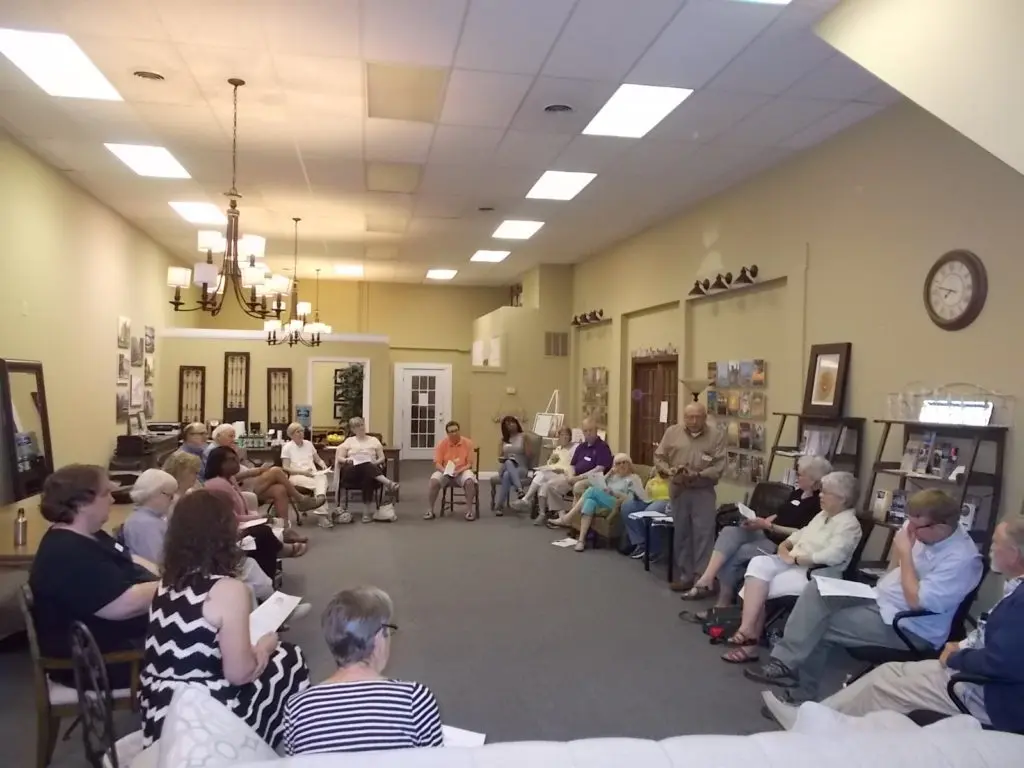
Ira Chaleff, standing to right, starts a ‘Coming to the Table’ circle of introduction at the group’s second meeting here in May. Co-Chairs Chaleff and Judith James have worked successfully to improve the racial mix at subsequent meetings. Photos/Roger Bianchini
Coming 2018 meetings of “Coming to the Table” in Front Royal are slated for August 30, September 27, November 1 and November 29. Meeting times have been pushed back to 6 p.m. to allow more time for the type of in-depth discussion and interaction they have encountered since beginning “Coming to the Table” meetings here.
We first met James and Chaleff prior to their May 2018 meeting at an appropriately-named location, the “What Matters Open Space” at 213 East Main Street. For what could matter more than bucking a trend toward divisive political rhetoric centered on racial, ethnic and religious differences within American society?
And that is what “Coming to the Table” chapters across America aim to do – unite us through familiarity and healing.

“Coming to the Table” offers a platform for Americans to reach across the artificially-imposed social and psychological barriers of centuries, toward each other and the common humanity we all share regardless of race, faith, economic class or national heritage.

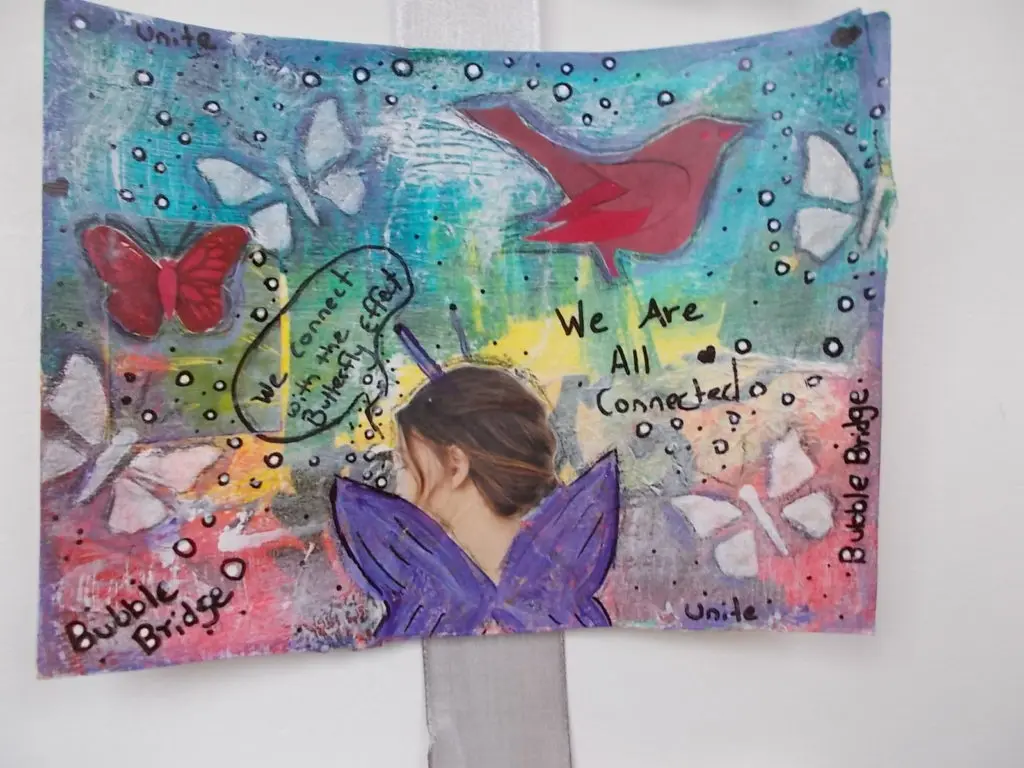
We share more than we might know across racial, ethnic and whatever other boundaries some would create to keep us from realizing our common humanity. (art Selah Bridge Project)
We asked James and Chaleff about their involvement with “Coming to the Table”.
Chaleff, coming from a Jewish background and a current member of the Unitarian Universalists of the Blue Ridge in Rappahannock, said a personal goal is to help “create bridges between Rappahannock and Warren County, especially regarding racial history, connection and healing.” Pointing to the diverse membership of the Northern Valley Chapter, Chaleff believes “Coming to the Table” is the perfect vehicle for that mission.
In addition to his Unitarian ties, he notes membership in the Northern Shenandoah Valley group ranging from a rabbi from Winchester to several pastors from largely African-American churches in Rappahannock and Warren Counties. We also noted secular humanists welcomed with open arms this spring.
James points to a 2014 invitation from Phoebe Kilby, whose family name is certainly familiar in Warren County’s history of racial relations, to attend a planning meeting at Eastern Mennonite University to discuss establishing a “Coming to the Table” Chapter in the Shenandoah Valley. The Eastern Mennonite University campus in Harrisonburg is a pivotal site in the creation of “Coming to the Table”.
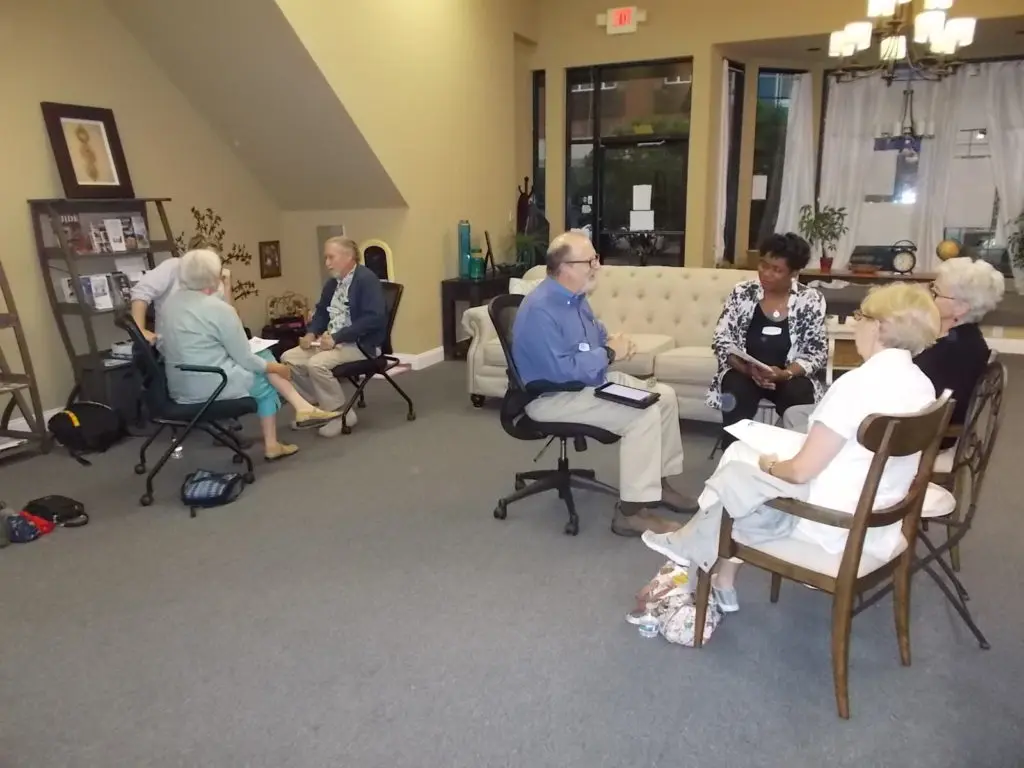
Judith James, black and white patterned shirt at right, leads one of the smaller target-interest groups meetings often break into.
Bridging the gap

The organization dates its inception from a meeting of two people, Will Hairston and Susan Hutchison in 2003, and a consequent retreat held in January 2006 in Harrisonburg, Virginia, on the campus of Eastern Mennonite University. However, the connection between Hairston and Hutchison that led to the creation of “Coming to the Table” goes much deeper into the fabric of American life and history. Both Hairston and Hutchison are descendants of prominent slave-owning families who had life-transforming experiences 23 years apart.
Those experiences, in 1980 for Hairston and 2003 for Hutchison, were attendance at family reunions. – BUT the family members these two white Americans mingled with were black, 800 strong in Will Hairston’s case when he was an 18-year-old boy accompanying his father, Waller Staples Hairston, invited as guest speaker at the black Hairston family event at the Hyatt Regency Hotel in Washington, D.C.
From the CTTT website:
“Waller Hairston descended from a dynasty that, at its height, controlled nine plantations – encompassing upwards of forty farms – stretching from the tidewaters of Virginia to the backwoods of Mississippi. Many thousands of African American people worked their lands as slaves, making them one of the richest families in the antebellum South. It was only recently that black and white Hairstons would have gathered for such an affair. It is a story that few from the family’s storied past would have ever believed possible.”

But possible it was – and as a consequence of that possibility realized in Washington, D.C. in 1980 by Will Hairston and his father; and again in 2003 when Susan Hutchison gathered with descendants of her grandfather to the sixth degree, Thomas Jefferson, and his black slave and mistress Sally Hemings, it is a possibility spreading into communities from coast to coast.
Susan Hutchison and Will Hairston – Photo/Coming to the Table website
The genesis of “Coming To The Table” began to crystallize after Hutchison met author Henry Wiencek at that 2003 family reunion and asked to meet others like her descended from slave owners, but also willing to cross that racial divide into a common ground. Wieneck had authored the book “The Hairstons: An American Family in Black and White”. Wieneck introduced Hutchison to Will Hairston, and the rest you might say is “history” – being reassembled person by willing person across America’s racial divide.
And fittingly only 70-odd miles northeast of that original 2006 Harrisonburg retreat, the Front Royal-Warren County community is one of those where people are gathering on a monthly basis under the “Coming to the Table” banner. And under that banner you will find black, white, brown, Christian, Jew, Muslim and others trying to learn, grow and reach out across the legacy of division, fear, ignorance and stereotyping that slavery and racism have left us with.
For as some local participants noted in “Coming To The Table” meetings attended by this reporter, whether we realize it or not we are all impacted to some degree by ignorance of, assumptions about, or just unfamiliarity with people who are different from us at some basic level.
Reaching beyond that multi-layered veil to find the common denominator of our shared humanity is the bottom line of “Coming to the Table”.
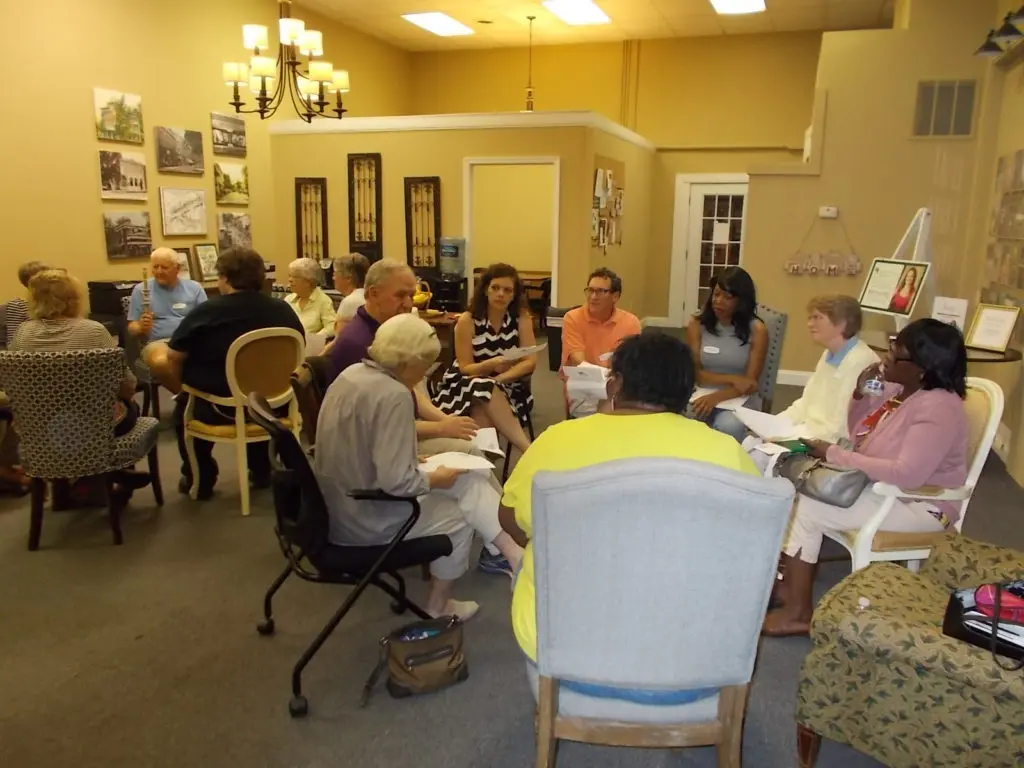
In group to left, one participant in a blue T-shirt can be seen holding the talking stick passed around as members share their experiences, hopes and goals for personal and cultural progress on racial and human understanding levels.
Literature that greets participants notes: “The Northern Shenandoah Valley Chapter of Coming to the Table is a forum for racial connection, healing and action; and provides leadership, resources, and a supportive environment for dialogue. The approach for achieving our vision and mission involves four interrelated practices:
- Uncovering History: researching, acknowledging, and sharing personal, family and community histories of race with openness and honesty
- Making Connections: connecting to others within and across racial lines in order to develop and deepen relationships
- Working Toward Healing: exploring how we can heal together through dialogue, reunion, ritual, the arts, apology and other methods
- Taking Action: actively seeking to heal the wounds of racial inequality and injustice and to support racial reconciliation between individuals, within families, and in communities
“The VALUES upon which Coming to the Table operates are inclusion, respect, tolerance, honesty, truthfulness, transparency, compassion, mercy, forgiveness, love, peace, nonviolence, transformation and reconciliation.”
Building bridges & the arts
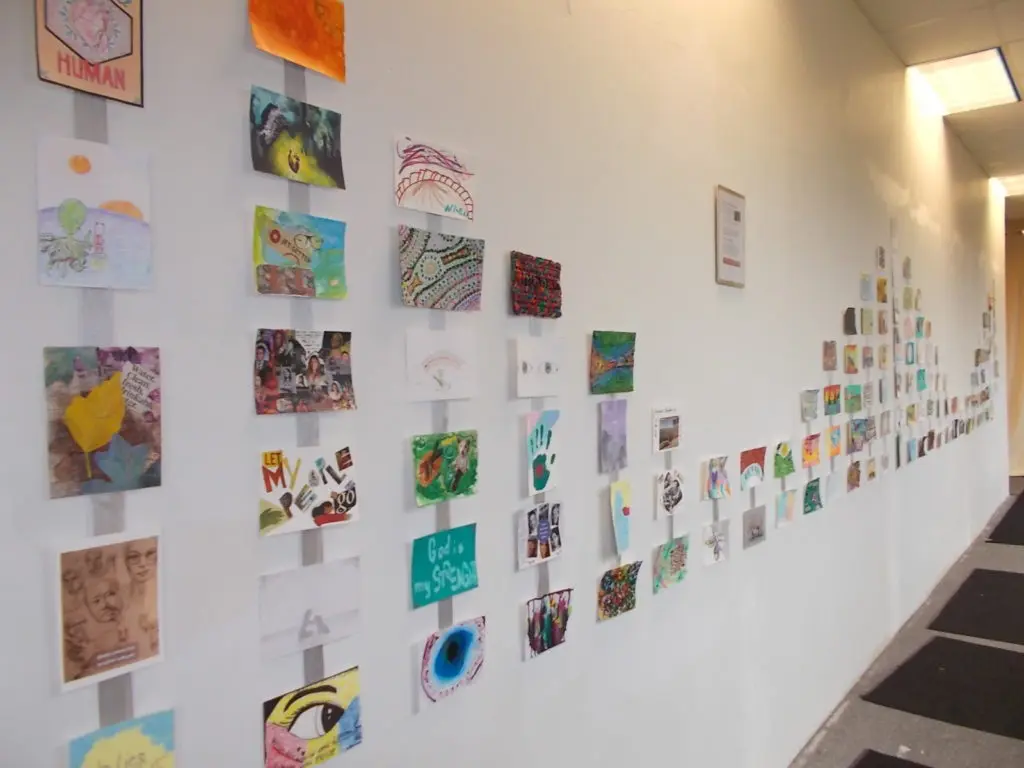
Building bridges with the arts – from the Selah Bridge Project of June 9
As for the working through “the arts” found in that third bullet above, on June 9, Front Royal’s Selah Theater – named 2017 “Non-Profit of the Year” by the Front Royal-Warren County Chamber of Commerce – hosted an event in collaboration with the United Shenandoah Valley Artists.
“The Bridge Project” featured over 120 pieces of art with the theme “Connecting across Differences”. The art pieces were assembled into the shape of a bridge. The event at which we saw several people we have also seen at “Coming to the Table” meetings also featured music, poetry and supplies for making more pieces to add to the bridge, as well as a reception.
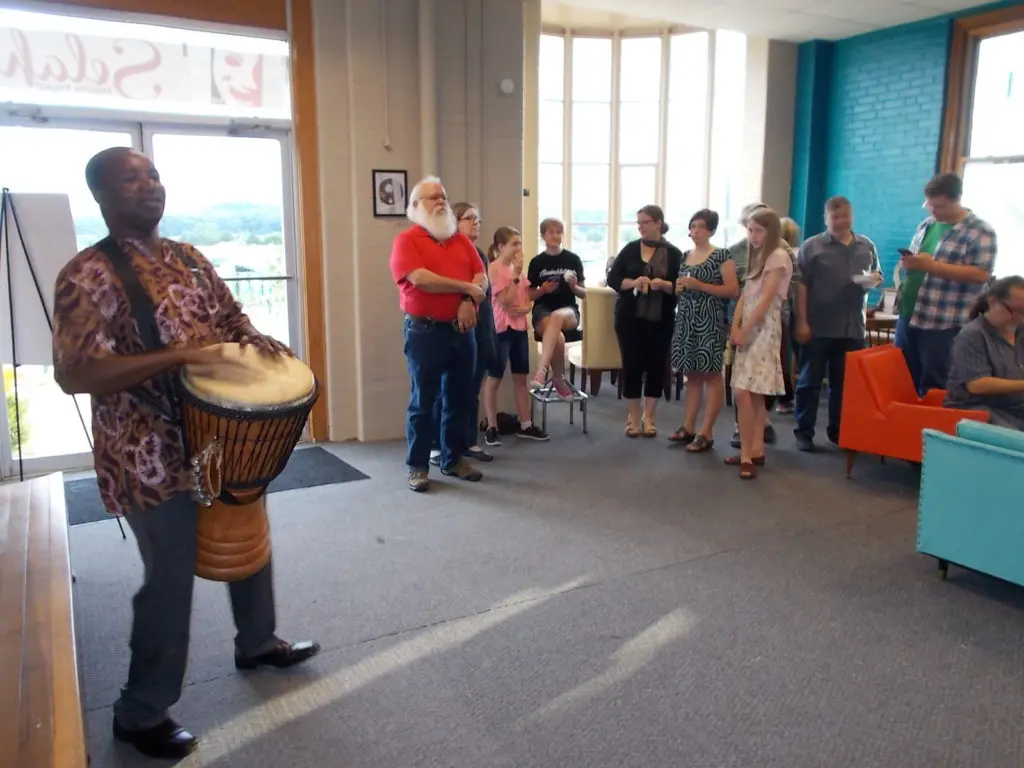
Beating the drum to get the Selah Theater Bridge Project underway
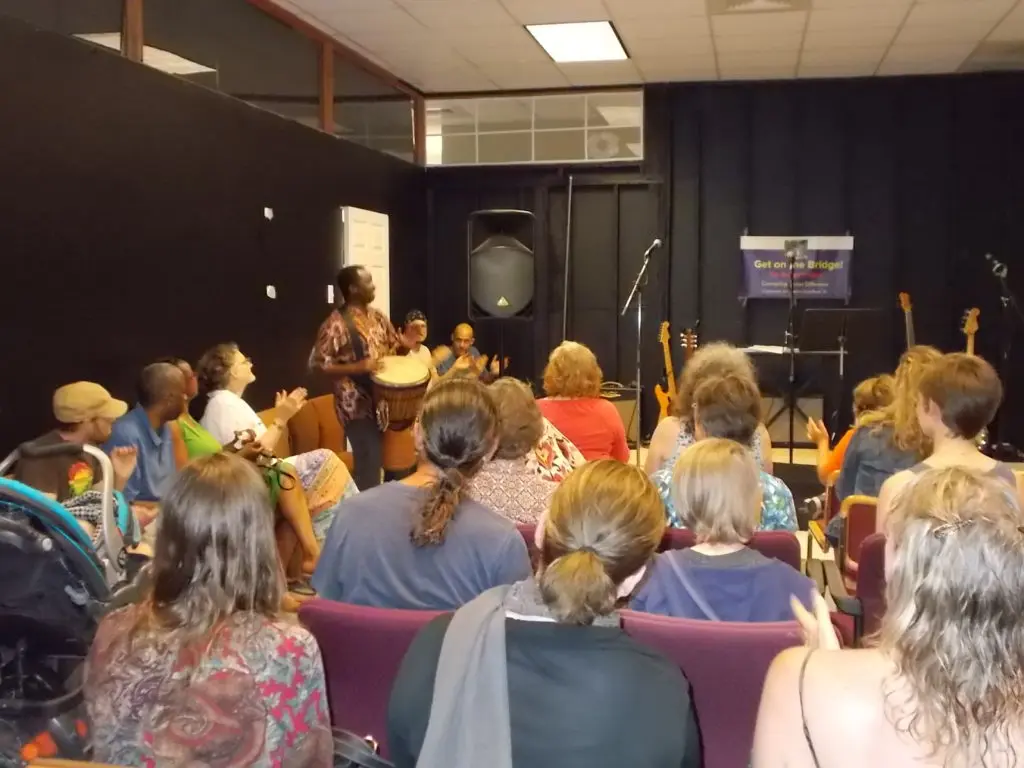
Selah Theater pre-event publicity for the well-attended event noted: “The idea is to get people thinking about how they connect across differences of race, class, gender, age, religion, culture, etc. EVERYONE IS INVITED!!!!!!”
On that June day in 2018 Selah Theater and Coming to the Table seemed like a cultural marriage made in heaven.
So, if on the one hand national headlines remind us that racism and its consequences of division, ethnic and religious hatred remain a part of the American landscape, there are signs of hope.
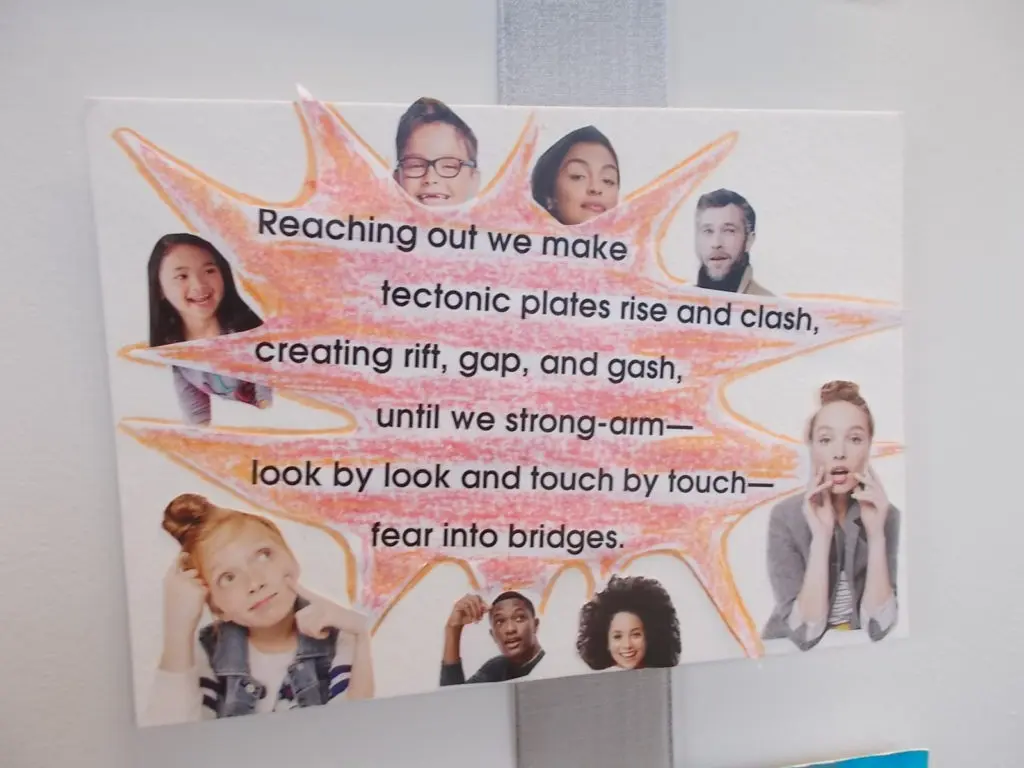
More art from the Selah Theater ‘bridge’ to our collective interconnectivity
A rise in interest of the “Coming to the Table” mission is one of those signs. In addition to an increase in the number of chapters in states as diverse as Virginia, New York, South Carolina, Delaware, Georgia, New Mexico, California, North Carolina, Maryland, Colorado, Connecticut, New Jersey, Washington state and Washington, D.C., James points to other signs of growth.
“Monthly visitors to the website has increased from 3,500 per month to an average today of more than 12,000. Subscriptions to the monthly newsletter have grown from a few hundred to 2,300. The Facebook group has more than doubled to 4,400 members,” she says.
And there are plans for publication of two books recounting the “Coming to the Table” experience, James noted.
“In 2019, two books will be published, an anthology of stories by 2 dozen CTTT members, ‘Shared Legacies: Narratives of Race and Reconciliation by Descendants of Enslavers and the Enslaved’ by Rutgers University Press in May, and ‘The Little Book of Racial Healing: Coming to the Table for Truth-Telling, Liberation, and Transformation’ by Tom DeWolf and Jodie Geddes.”
So, if on the one hand national headlines remind us that racism and its consequences of division, ethnic and religious hatred remain a part of the American landscape and even at the forefront of contemporary political discussion, there is hope.
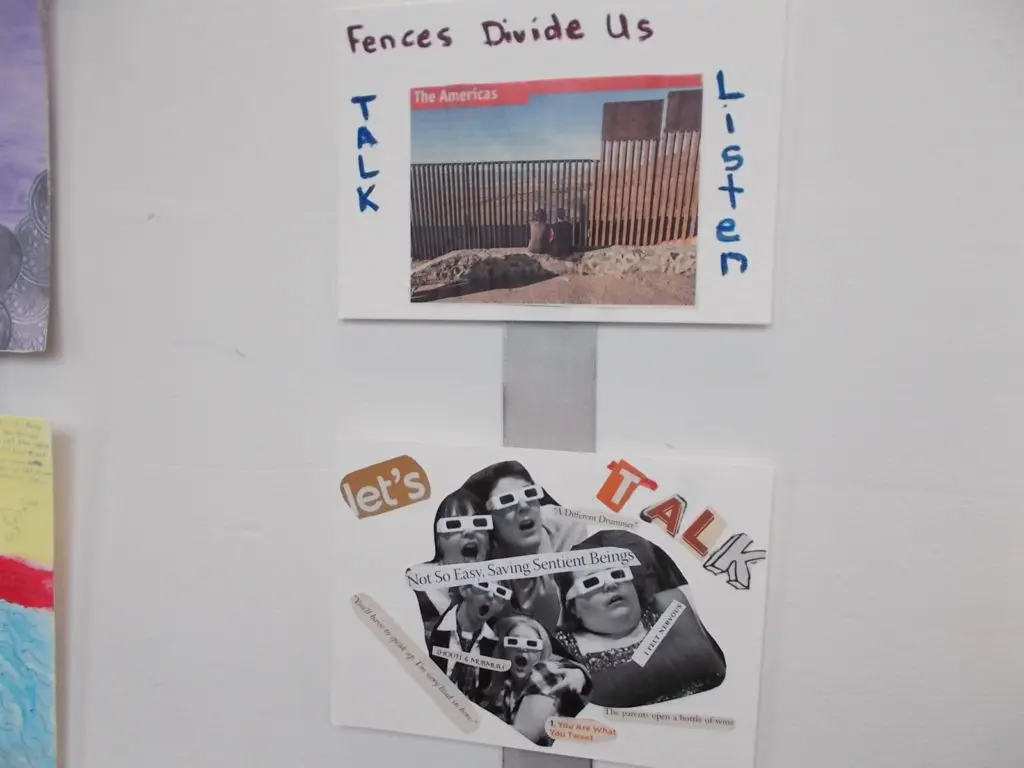
A rise in interest of the “Coming to the Table” mission is one of those signs. And perhaps another is the number of white supremacist demonstrators versus counter-demonstrators that did show up in Washington, D.C. on Sunday, August 12, 2018, to revisit their relative perspectives on events a year earlier in Charlottesville, Virginia.
Organizers of the “Unite the Right” demonstration sympathetic to last year’s white nationalist Charlottesville demonstration had anticipated a turnout of about 400 according to national media reports. What they got was reported as “about two dozen” of what was described as “thousands of demonstrators” who gathered in D.C. on Sunday, August 12.
But one small victory in numbers, and non-violence in the nation’s capital on one weekend day in the summer of 2018 does not mean victory in the ongoing battle for compassion, equality and understanding at the heart of the American soul.
“Coming to the Table” offers an ongoing and substantial effort to improve each of us as people, and collectively as a nation. And what could matter more than that as we approach the end of the second decade of the 21st Century?




Mayor Lori Athey Cockrell Looks to Water, Economic Development and Rail Trail in Another Term

WCHS vs. Brentsville HS – Girls Volleyball – October 6, 2026

BMI Is Only One Piece of the Health Picture

The Eye Surgery Factory That Could Not Expand

Ancient Ownership of Israel

VDOT: Warren County Traffic Alert for October 5 – 9, 2026

Reaching Out Now Expands Programs and Opportunities for Warren County Youth

Dance and Arts VA Finds New Home, New Opportunities on Water Street

Ann L. Shuman (1933 – 2026)

Wendy Lee Whitacre-Stout (1966 – 2026)

Spanberger’s Energy Plan Keys in on Clean Energy to Meet Growing Demand and VCEA Goals

Jean Elizabeth Grubbs Fogle (1939 – 2026)

Feds Provide Guidance on New Federal K-12 Scholarship Tax Credit Program

Why Wait Till November? Mid-Term Election Early Voting Processes in Place Now

US Senate Leaves Nation’s Capital in Advance of Midterms With Much Still Undone

Business Growth Series: If You Don’t Control Your Day, It Controls Your Business

The End of a 20-Year Monopoly on the Credit Score
Voltron and Immigration

States OK Solar Panels for Balconies. Safety Guidelines Haven’t Caught Up

Trump TV Ads Paid for with $20M in Homeland Security Funds, Dems Find

Blue Ridge Wildlife Center Patient of the Week: Gray Treefrog

Birthday Twins: See Which Famous Face Shares Your Big Day

Meet-and-Greet Set Sunday for Republican-Endorsed Front Royal Candidates

Barbara Ann Mathews Smelser (1943 – 2026)
