
Local Government
Auxiliary Dwelling Units Revisited at Town Planning Commission Meeting
A fifteen-minute regular meeting of the Town Planning Commission was followed by a lengthy work session on the evening of Wednesday, October 15. The single item of business transacted in the initial meeting pertained to auxiliary dwelling units. This item was being revisited as the Town Council sent it back to the commission with requests for substantive changes. In the work session that followed, the commission had hoped to review zoning ordinances pertaining to several zones, but because of the extremely thorough approach that commissioners took, the bulk of the discussion focused on completing a review of the R-1A zone and all the related concerns. The remainder will be addressed fully or in part at their November work session.
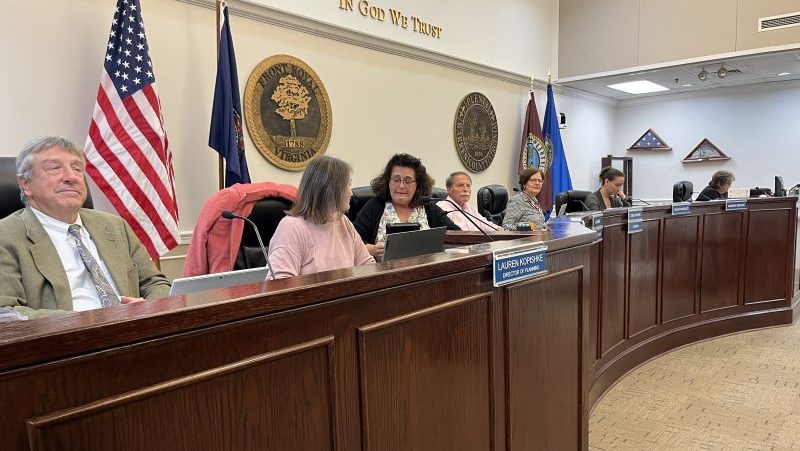
The Town Planning Commission sits for a brief regular meeting, followed by a work session, on the evening of Wednesday, September 15. Royal Examiner Photo Credits: Brenden McHugh.
An auxiliary dwelling unit, also known as an in-law unit, backyard cottage, or granny flat, is defined in the proposed ordinance as “a secondary, self-contained residential unit located on the same lot as a primary single-family dwelling. It includes independent living facilities such as a kitchen, bathroom, sleeping area, and separate entrance.” It is juxtaposed to an accessory building, which is defined as “a building or structure that is subordinate to, and located on the same lot as the principal permitted use of the property, of which, the accessory building or accessory structure is used for purposes that are clearly incidental to that of the principal permitted use of the property, and which is not attached by any part of a common wall or roof to the main building, or buildings, if any. No residential occupancy is permitted.”
Related performance standards include the requirement that the property be owner-occupied, that only one ADU be permitted per residential lot, and that the ADU be located on the same lot as a single-family detached dwelling, existing or proposed. The council’s request for substantive changes related to square footage requirements. The revision establishes a minimum of six hundred square feet for both internal and detached ADUs. A detached ADU is not to exceed one thousand square feet or eighty percent of the gross floor area of the principal dwelling, whichever is less. However, an internal ADU, though not to exceed the footprint of the primary structure, may, in some cases, exceed one thousand square feet, such as when a basement, not exceeding the footprint, happens to be larger than one thousand square feet. Chairman Connie Marshner made the astute observation that someone could expand their dwelling, thus exceeding the footprint, and at some point, in the future, incorporate that expanded section into an ADU. At any rate, the commission forwarded the item to the council with a unanimous recommendation for approval.
During the work session that followed, the commission focused on issues relevant to the R-1A zone during their review of the zoning ordinance. Commissioner Megan Marrazzo reflected preparedness and keen insight as her questions and concerns informed much of the discussion. Is it possible that by introducing uses common to the R-2 zone into the R-1A, a redundancy could occur? Planning Director Lauren Kopishke responded that the R-1A would still be unique, as it is driven by the dense clustering of various uses.
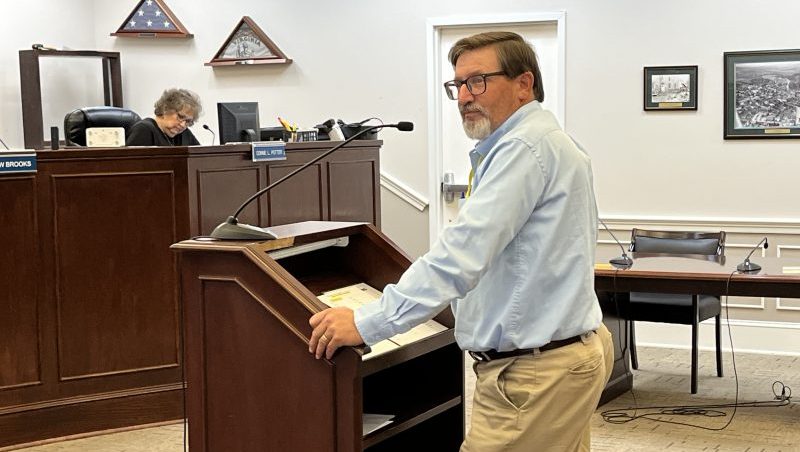
Deputy Zoning Administrator John Ware presents an item pertaining to auxiliary dwelling units to the commission.
In a subsequent discussion at the work session, Deputy Zoning Administrator John Ware explained to the commission the mechanics of a setback requirement, and setbacks became the focus of how best to facilitate the construction of off-street parking. Another significant point of discussion was the issue of Town easements and the construction of items such as fences and sheds on them, which can create problems if the Town needs to access, for example, a sewer line that is obstructed by the fence or shed. The commission will need to adopt language that offsets such a situation going forward, not only to protect the Town’s interest, but to protect the homeowner’s investment.
Click here to watch the Front Royal Planning Commission Meeting of October 15, 2025.

4 Stimulating Activities for a Healthy Brain After 50

The First Amendment: America’s Unique Foundation of Freedom

How to Tackle Credit Card Debt

Summer Enrichment Camp Gives Teens Hands-On Learning Opportunities

VDOT: Warren County Traffic Alert for April 6 – 10, 2026

David Silek to Remain in Chairman’s Seat of WC Republican Committee Pending 6th District Appeal Decision

Sales Set to Bloom Like Daffodils This Spring

America 250: The Bookseller Who Helped Save the Revolution

Business Growth Series: Why Good Businesses Still Struggle to Grow

Brownies with Mini Chocolate Easter Eggs

Shenandoah Downs Opens 11th Season April 11 with Tribute to Roger Hammer

We Don’t Know Everything About DNA

How PAAS Came to Dominate the Easter Egg Dye Tradition

Spanberger Signs Bipartisan School-Safety, Student Support Bills Into Law

Melanie J. Pomeroy (1958 – 2026)

David Benjamin Heller (1990 – 2026)
1776 Wasn’t Just About Independence

Three-Tiered System for Urban Agriculture Based on Lot Size Takes Shape at Town Planning Commission Work Session

Child Abuse Awareness Month Brings Focus to Reporting, Prevention in Warren County

National Dental Hygienists Week: Is Your Oral Care Routine Optimal?

The Coin That Traveled Through Time and Space

One “What If?” Question Is Changing the Future of Farming

AA Speaker to Explain Recovery Program at United Methodist Men’s Dinner
Jeannette M. Hyland (1944 – 2026)
