
Local News
Blue Ridge Wildlife Center Patient of the Week: American Goldfinch
Please clean your bird feeders!
This American Goldfinch came to the Center due to conjunctivitis which prevented it from flying and finding food. This issue is most commonly caused by the bacterium Mycoplasma gallisepticum – also known as “Finch Eye Disease”. We have also treated many other patients with feeder-borne diseases this year such as trichomoniasis, avian poxvirus, salmonellosis, mycotoxicosis, and others.
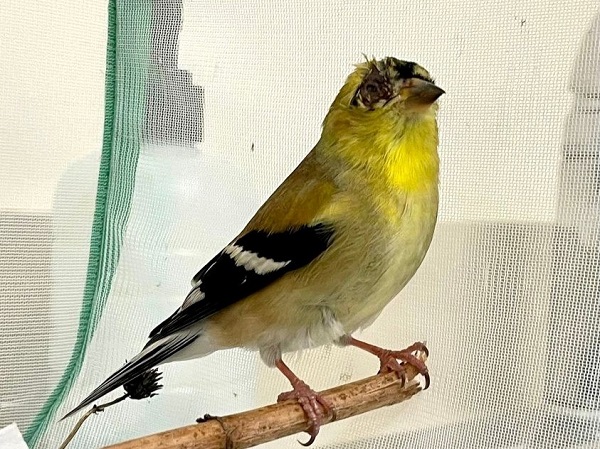
Photos / Blue Ridge Wildlife Center
People feed birds because they love having them around, but please remember that feeding is not an inherently safe activity. The safest way to attract birds to your yard is by planting native plants. To find which plants are native to your area and will attract birds, use Audubon’s Native Plants Database.
If you have bird feeders (especially platform feeders where birds can eat and poop in the same spot), be sure to clean them every 1-2 weeks by following these simple steps:
- Completely empty the feeder and toss any remaining food.
- Take the feeder apart and scrub each part clean.
- Disinfect each part by spraying or soaking in a 10% bleach solution for 15 minutes.
- Rinse and allow it to dry completely before refilling.

Be sure to clean your bird baths too, as these water sources can also harbor dangerous diseases.
Never feed on the ground as dirt is impossible to disinfect. Sweep up well under your feeders daily to remove any fallen seed. Try to use feeders that are made of non-porous materials (avoid wood) so that you can truly disinfect them.
Birds do not need supplemental food to survive – they would be just fine without our feeders. This is done for the enjoyment of humans, so we must make every effort to make the activity as safe as possible for our avian friends!
Looking for an easy way to help native wildlife? Become a monthly BRWC donor! For as little as $5/month, you can provide year-round, sustainable support that helps us fulfill our mission.

Virginia State Police Urge Sober Plans for Saint Patrick’s Day Celebrations

In a One-Party County, Internal Party Decisions Affect Us All

Virginia State Police Seize Nearly 100 Pounds of Narcotics, Recover Firearms in Weekly Crime Suppression Effort

Barton Charles “Bart” Haller (1940 – 2026)

Dawn Lee Dodson (1970 – 2026)

Mary Helen “Nanny” Spires Johnt (1954 – 2026)

Another Round of ‘Momnibus’ Bills Are Headed Towards the Governor This Year

Virginia Joins States Challenging Trump Admin Regulations That Limit Free Birth Control Access

Update: Charlotte Swanson Smith (1951 – 2025)
Why We are Challenging the Republican Mass Meeting

Bruce Norman Showman (1954 – 2026)

EDA Relaunches Small Business Loan Program to Help Warren County Entrepreneurs Access Capital

Targeted Exercises to Improve Your Putting

The Hidden Risks of House Hunting Solely Online

Choosing the Right Cleaner for Every Surface in Your Home

New Church Among Consent Items at County Planning Commission Meeting

Warren County GOP Mass Meeting Results Challenged After Allegations of Voting Irregularities

‘This Is About Equity’: In Richmond, Virginia Workers, Lawmakers Push for Inclusive Labor Rights for All

After Five Years of Attempts, Virginia On Track to Set Up a Prescription Drug Affordability Board

New Drug Take-Back Box at Warren County Sheriff’s Office Offers Safe Way to Dispose of Medications

‘Feeding Our Neighbors’ Continues Local Effort to Provide Free Meals in Front Royal

Blair David Eller (1963 – 2026)

Writing Workshop at Samuels Public Library Aims to Help Community Communicate More Clearly

Simple Steps to Reduce Wildfire Risk Around Your Home
