
Local News
Blue Ridge Wildlife Center Patient of the Week: Bald Eagle
Lead Poisoning Claims Another Bald Eagle.
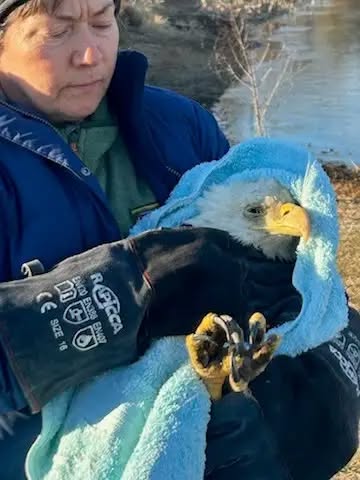
This adult Bald Eagle was found grounded and unable to fly. Our friends at Loudoun Valley Raptor Center, Inc. rescued (pictured) the bird and transported them to our Center for evaluation and care.
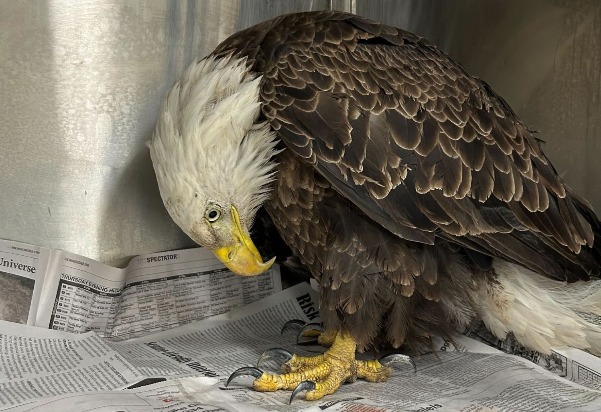
During the exam, our veterinary team found that the tip of the eagle’s right wing was severely swollen.
The tissue was also cold to the touch, which can indicate poor blood flow.
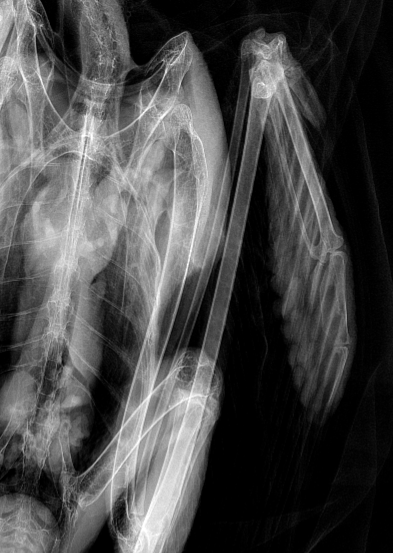
Because the swelling made it difficult to feel the bones, radiographs (X-rays) were taken. These images showed a dislocation at the metacarpophalangeal joint, the joint where the “finger” of the wing connects to the hand bones.
We also discovered that the eagle’s right eye had a lens luxation, meaning the lens inside the eye had shifted out of place. This often causes pain and serious vision loss.
Blood testing revealed a lead level of 47.2 micrograms per deciliter. Any detectable lead in a bald eagle is dangerous, and levels this high are considered life-threatening.
The eagle was also extremely thin, showing that they had likely been struggling with these injuries and lead poisoning for quite some time before rescue.
Because of the severity of these findings, the prognosis was extremely guarded.
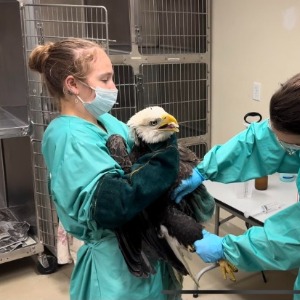
Our team began intensive supportive care and closely monitored the wing to see whether blood flow would return to the swollen tissue or if the damage was too severe to heal.
Despite two days of treatment, this eagle passed away in care after approximately 48 hours, likely due to organ failure caused by lead poisoning.
We are thankful to the many people who helped get this eagle to us, ensuring they did not suffer longer in snowy conditions and freezing temperatures.
Sadly, this case is far too common. At BRWC, more than 90 percent of adult bald eagles admitted have elevated lead levels. Eagles and other scavenging species are often exposed when they ingest fragments of lead ammunition left in carcasses or lead fishing tackle lost in the environment.
How you can help:
Choosing non-lead ammunition when hunting and non-lead sinkers when fishing prevents slow, painful deaths and helps protect our native wildlife.
Looking for a wild New Year’s resolution?
This winter, turn your curiosity into action by joining BRWC’s Winter Webinar Series!
These engaging presentations break down real threats facing wildlife and explain practical ways you can help.
Topics include wildlife diseases, window strikes, the impacts of cats on wildlife, and other everyday issues that affect native species.
Webinars are just $5 for individuals or $10 for a group, and your registration directly supports the care of patients like this bald eagle.
Looking for an easy way to help native wildlife? Become a monthly BRWC donor! For as little as $5/month, you can provide year-round, sustainable support that helps us fulfill our mission.

Virginia Joins Multi-State Lawsuit Challenging Trump’s Election Order

Trump Budget Seeks 43% Boost in Defense Spending, Cuts in Many Domestic Programs

Virginia Sees 33,000 ACA Enrollment Drop Since Subsidies Expired, More Likely on the Way

Annual Dental Checkups and Cleanings: Essential Appointments

4 Stimulating Activities for a Healthy Brain After 50

The First Amendment: America’s Unique Foundation of Freedom

How to Tackle Credit Card Debt

Summer Enrichment Camp Gives Teens Hands-On Learning Opportunities

VDOT: Warren County Traffic Alert for April 6 – 10, 2026

David Silek to Remain in Chairman’s Seat of WC Republican Committee Pending 6th District Appeal Decision

Sales Set to Bloom Like Daffodils This Spring

America 250: The Bookseller Who Helped Save the Revolution

Business Growth Series: Why Good Businesses Still Struggle to Grow

Brownies with Mini Chocolate Easter Eggs

Shenandoah Downs Opens 11th Season April 11 with Tribute to Roger Hammer

We Don’t Know Everything About DNA

How PAAS Came to Dominate the Easter Egg Dye Tradition

Spanberger Signs Bipartisan School-Safety, Student Support Bills Into Law

Melanie J. Pomeroy (1958 – 2026)

David Benjamin Heller (1990 – 2026)
1776 Wasn’t Just About Independence

Three-Tiered System for Urban Agriculture Based on Lot Size Takes Shape at Town Planning Commission Work Session

Child Abuse Awareness Month Brings Focus to Reporting, Prevention in Warren County

National Dental Hygienists Week: Is Your Oral Care Routine Optimal?
