
Local News
Blue Ridge Wildlife Center Patient of the Week: Great Horned Owl
This Great-horned owl came into our center with blood in the mouth and with bruising on parts of his body. This patient’s mucous membranes were very pale and the owl was in very poor body condition.
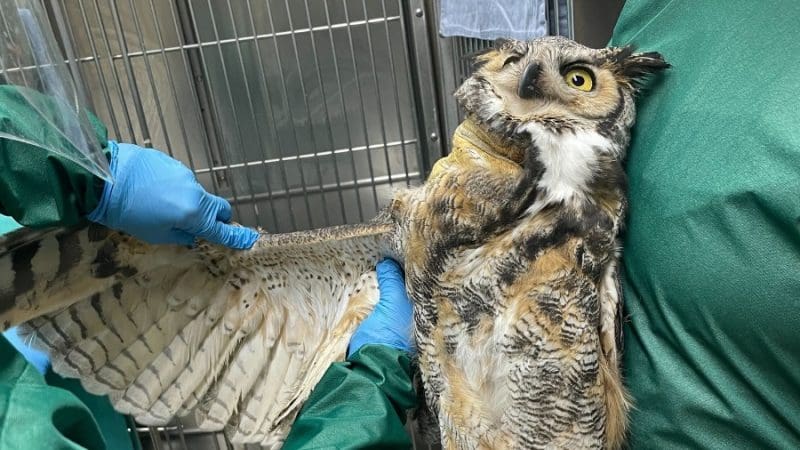
When we took a blood sample, the blood did not clot for over ten minutes!
The pale membranes, ongoing bleeding, and excessive bruising are all signs we see commonly in cases of anticoagulant rodenticide (AR) toxicity.
As the name implies, ARs kill by preventing the normal clotting of blood.
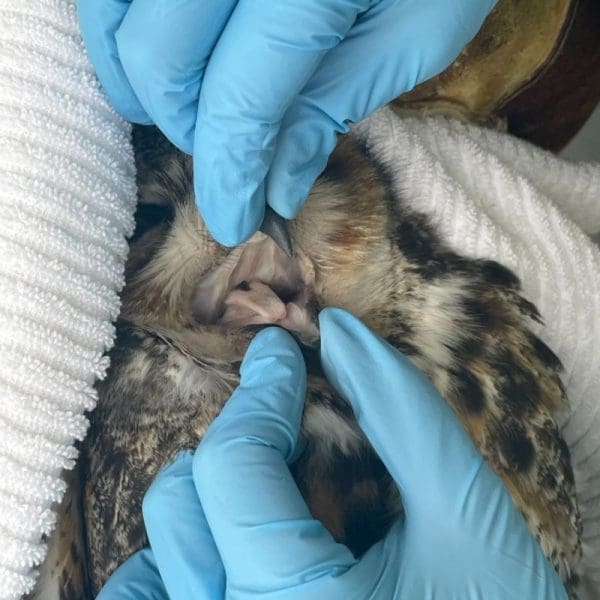
This means small injuries that might normally lead to a bruise (or less) can now cause an animal to bleed to death.
It is not a humane way to die for the intended targets nor for the predators that eat those victims.
AR toxicity is not uncommon in wildlife. In fact, studies on multiple species of raptors have shown that nearly 100% have subclinical levels of these poisons in their blood and tissues. In 2021, a study on over 200 bald eagles revealed that 83% of those samples had detectable AR levels.
Although rodenticide toxicity is considered the primary cause of death in only 4% of these cases, the impacts of subclinical levels are not well studied.
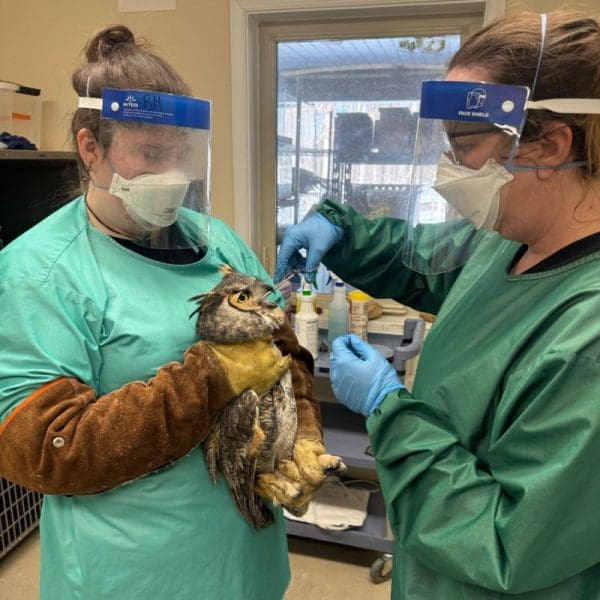
As we commonly see in individuals with subclinical lead levels, who almost all come to us as trauma cases, we highly suspect that these subclinical levels of AR toxicity predispose many of these animals to potentially fatal injury.
Studies that have specifically looked for rodenticides in non-target wildlife have found it with alarming frequency – over 70% of animals tested in multiple studies. A study from Cummings School of Veterinary Medicine at Tufts University showed 100% of the Red-tailed Hawks tested between 2017-2019 had detectable levels of anticoagulant rodenticides with 91% of these hawks having two or more types of rodenticide detected.

Sadly, these poisons are sold over-the-counter and advertised as a way to rid your home of unwanted rodents.
What sellers don’t tell you is that this is a horrible way to die for the intended victims and it will harm or kill unintended targets, including your pets and wildlife.
To make matters worse, they don’t tell you that killing the individual pests will not solve your problem. Until you figure out how those pests are entering and make corrections/repairs to close off those entry ways and secure food sources, more rodents will continue to use that space.
The wildlife in your area will continue to find the rodents as they are dying (which makes them very easy and desirable prey). It is an endless cycle of death that you can spend money on forever and it still does not keep rodents out of your home.
There are many humane pest control methods. Non-specific traps (such as glue traps) and poisons are never the best answer, nor is live trapping and relocating (which is illegal in Virginia and many other states as it is inhumane).
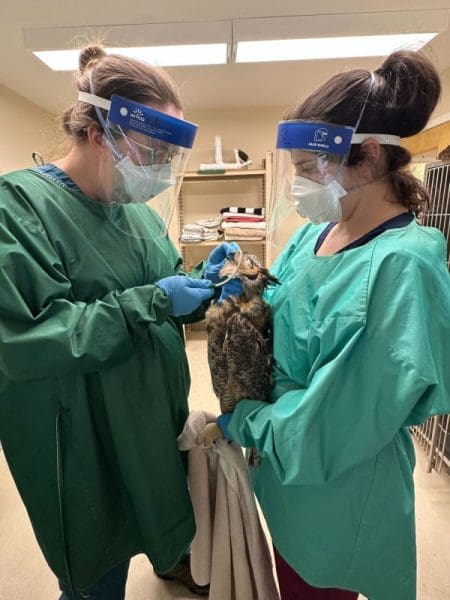
If you are having issues with rodents or other nuisance wildlife in your home, please contact local humane pest control professionals who can offer advice and help to evict animals humanely and seal up entryways.
Thankfully, this Great-horned owl has had a good response to the first few days of therapy.
We are administering higher doses of vitamin K to help support clotting, and providing fluid and nutritional support.
Due to the emaciation, this bird was started on an easily-digestible liquid diet and has since been upgraded to eating whole prey.
It is our responsibility as good stewards of environmental health to make sure we are reducing our negative impacts on wildlife.

Although we know that pest species can cause significant damage, using humane alternatives in our homes is imperative if we want their predators and a healthy natural food web to continue to help manage wild rodent populations!
Looking for an easy way to help native wildlife? Become a monthly BRWC donor! For as little as $5/month, you can provide year-round, sustainable support that helps us fulfill our mission.




Cars Changing Lives Car Show Returns November 7 as Organization Nears 100th Vehicle Giveaway

Virginia Senator Louise Lucas, Six Others Indicted In Federal Cannabis Corruption Case

Elections Chief Says Virginia Is Ready for Midterms, Potential Federal Interference

Virginia’s 2026 Report Calls for Expanded College Access, Improved Postsecondary Planning

Lawmakers Pitch Reforms for Virginia’s Building Code Update to Boost Supply, Affordability

US Supreme Court Allows Gender-Affirming Care for Trans People in Federal Prisons

Sammy Wines (1952 – 2026)

Warren County School Board Unveils New E. Wilson Morrison Relocation Plan, Questions $170,150 Building Stabilization Proposal

Warren County Schools Face $3.2 Million in Capital Needs as Declining Enrollment, Aging Buildings, and Rising Costs Threaten Budget

Ask The Expert: We Filed Chapter 7 Bankruptcy. How Long Do We Have to Wait Before We Can Get a Mortgage?

An AI Homework Game That Makes Students Find The Mistakes

This Week’s Showtimes at Royal Cinemas as of October 22nd

Debbie’s Lighthouse Combats Food Insecurity While Helping Small Businesses Grow in Front Royal

Decision on ‘EagleView’ Contractual Oversight of Photographic Assessment Technology Delayed to November 17

Blue Ridge Wildlife Center Patient of the Week: Great Horned Owl

Dominion-NextEra Merger Hits Turbulence, Faces Opposition from Virginia Leaders, SCC Staff

Cheaper Manufactured Homes Could Be Having a Moment, If Only States Can Catch Up

POLICE: 7 Day FRPD Arrest Report 10/19/2026

Sight & Sound’s JOSHUA LIVE! Comes to Royal Cinemas — Limited Run, October 29 – November 4

You Are Not Wasting the AI’s Time

The ‘Beer Belly’ Isn’t Really About Beer

Virginia State Police Launch Two-Day Interstate 81 Safety Enforcement Campaign October 21–22

Everybody Is a Leader Somewhere

Warren County Wildcats Host Meridian in Girls Volleyball Match Tuesday Night – October 20
