
Local News
Blue Ridge Wildlife Center Patient of the Week: Northern Watersnake
Although we primarily see aquatic turtles accidentally hooked by anglers, other aquatic reptiles are at risk too!
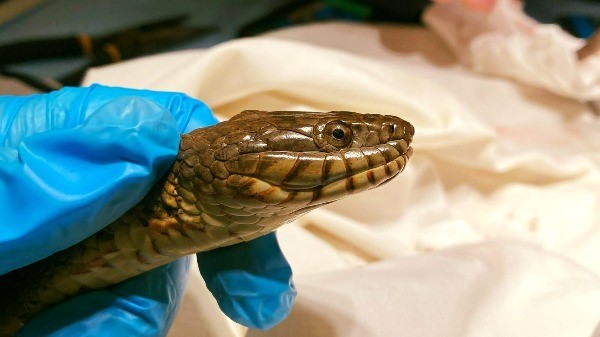
This Northern Watersnake was brought into care after catching a hook in the upper jaw. During the patient’s full exam, it was also noticed that the tail tip was broken, necrotic, and in need of amputation. Other than these small injuries, this snake was bright, alert, and feisty.
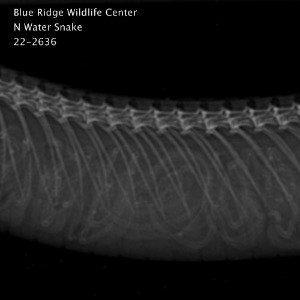
Radiographs taken to assess tail damage also revealed that this snake will soon be a mom! Northern water snakes are viviparous, meaning that they give birth to live young rather than laying eggs. This species gives birth this time of year and can have litters of up to 50! We are hopeful that we will be able to release this snake before she gives birth so that her babies can be born in the wild.

Believed to be a venomous Cottonmouth by the finder, this water snake is actually entirely harmless. In fact, we don’t even have Cottonmouths in our area—they are only found in the southeastern portion of the state.

There are many myths and misunderstandings surrounding venomous snake ID, so the best way to stay safe is to keep your distance, snap a photo from a distance, and allow the snake to continue on its way safely!
The Virginia Herpetological Society’s website has great information on how to identify different species of snakes. Always use caution when containing any snake species for care, especially if you are not confident in the species identification.
Looking for an easy way to help native wildlife? Become a monthly BRWC donor! For as little as $5/month, you can provide year-round, sustainable support that helps us fulfill our mission.

Blue Ridge Wildlife Center Acknowledges a Quarter of a Century of Work in Wildlife Preservation & Human Education

What Does A ‘Fair Share’ Really Mean?

South Warren Ruritan Club Hosts 20th Annual Spaghetti Dinner Fuels Scholarships for Local Teens

Trees Take Root as Virginia’s Frontline Defense Against Urban Heat

Virginia Set to Rejoin RGGI as Utilities Prepare to Pass the Cost Back to Ratepayers

Virginia Joins Multi-State Lawsuit Challenging Trump’s Election Order

Trump Budget Seeks 43% Boost in Defense Spending, Cuts in Many Domestic Programs

Virginia Sees 33,000 ACA Enrollment Drop Since Subsidies Expired, More Likely on the Way

Annual Dental Checkups and Cleanings: Essential Appointments

4 Stimulating Activities for a Healthy Brain After 50
The First Amendment: America’s Unique Foundation of Freedom

How to Tackle Credit Card Debt

Summer Enrichment Camp Gives Teens Hands-On Learning Opportunities

VDOT: Warren County Traffic Alert for April 6 – 10, 2026

David Silek to Remain in Chairman’s Seat of WC Republican Committee Pending 6th District Appeal Decision

Sales Set to Bloom Like Daffodils This Spring

America 250: The Bookseller Who Helped Save the Revolution

Business Growth Series: Why Good Businesses Still Struggle to Grow

Brownies with Mini Chocolate Easter Eggs

Shenandoah Downs Opens 11th Season April 11 with Tribute to Roger Hammer

We Don’t Know Everything About DNA

How PAAS Came to Dominate the Easter Egg Dye Tradition

Spanberger Signs Bipartisan School-Safety, Student Support Bills Into Law

Melanie J. Pomeroy (1958 – 2026)
