
Local News
Blue Ridge Wildlife Center Patient of the Week: Striped Skunk
The skunk(let)s have arrived!
That’s right, a baby skunk is called a skunklet!
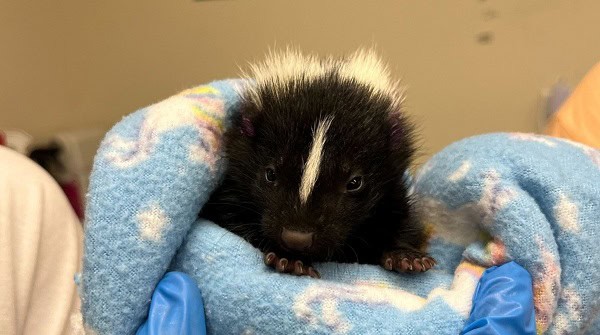
Unfortunately, the majority of these skunklets were brought to us due to people relocating or killing the mother, leaving them orphaned and starving.
Many people mistakenly believe that if they don’t want wildlife on their property, the kindest option is to trap them and take them somewhere better. However, relocation is not kind OR humane. Studies show that animals relocated outside of their territories end up spending more time and energy trying to get back to where they came from.
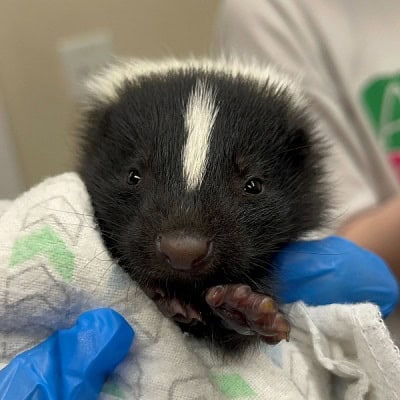
With no familiar landscapes or smells, they often end up in more danger crossing more roadways, or encroaching on already-occupied territories and being attacked when trespassing.
Sometimes animals are so stressed that they spend less time foraging or finding food, making them emaciated, weak and vulnerable to any issues they might’ve been dealing with, like mange mites or a low-grade infection.
If you have unwanted skunks denning near your home, please call us first. We can advise you best on how to get wildlife to move out safely and make sure babies are not left behind.
And please do not intervene until AFTER baby season is over in the early fall to prevent creating orphans.

These skunklets may be super stinkin’ cute, but they will always have a better chance with mom than being raised by humans.
Stinky but Significant!
Striped skunks may have the bad reputation of being stinky neighbors, but they also offer significant ecological benefits! They help control rodent and insect populations which not only reduces damage to crops and gardens but also helps maintain a healthy balance within ecosystems. Skunks are also an important food source for various predators.
Fun Fact: The most common predator of skunks are Great horned owls because they lack of a keen sense of smell. While the stench might send other predators running, these owls are unfazed.
Looking for an easy way to help native wildlife? Become a monthly BRWC donor! For as little as $5/month, you can provide year-round, sustainable support that helps us fulfill our mission.

Why Trump’s Election Rhetoric Is So Dangerous

Road Rage Incident on February 20 Results in Shots Fired, Arrest

2026 Congressional Art Competition Opens for Virginia’s Sixth District Students

VDOT: Warren County Traffic Alert for February 23 – 27, 2026

Virginia State Police Recover 68 Firearms, Seize 36 Pounds of Narcotics in Weekly Operation

What Happens When We Don’t Trust Anything?

Oates Warns Against “Unconstitutional Legislation” as General Assembly Reaches Crossover

Adding a Floor Above the Garage: What You Need to Know

Trump Vows New Tariffs, Attacks Supreme Court Justices After Ruling

House Bill Gives Sex Trafficked Minors Immunity, Provides Social Services

Virginia Lawmakers Consider Civil Suits, Penalties for Masked Law Enforcement

US Supreme Court Rules Against Trump’s Tariffs in 6-3 Opinion, Dealing Blow to Trade Agenda

Ready to Unplug? Warren Coalition Challenges Community to Put Down the Phone

Other Matters of County Interest Tackled on February 17th by the Warren County Board of Supervisors

Bill to Ensure Lab Test Results Are Delivered With Maximum ‘Compassion and Humanity’ Clears House

Commentary: Halfway Through the 2026 Legislative Session, There’s Still No Consensus on Data Center Bills

Board of Zoning Appeals Sets Cap on Agricultural Pursuit in Residential Zone

Virginia Governor Spanberger to Deliver Democratic Response to Trump’s State of the Union Address

Court Halts April 21 Redistricting Vote, Siding with RNC and GOP Lawmakers

No Tax on Social Security: How It Could Affect Retirees

Richard Allen McInturff (1954 – 2026)

Barbara Ann Dotson (1942 – 2026)

The Iconic Blue FFA Jacket: A Symbol of Pride in Agriculture

Commentary: When Civic Rituals Fade, What Fills the Space?
