
Crime/Court
Court upholds life sentence in Funk-Curtis murder conviction
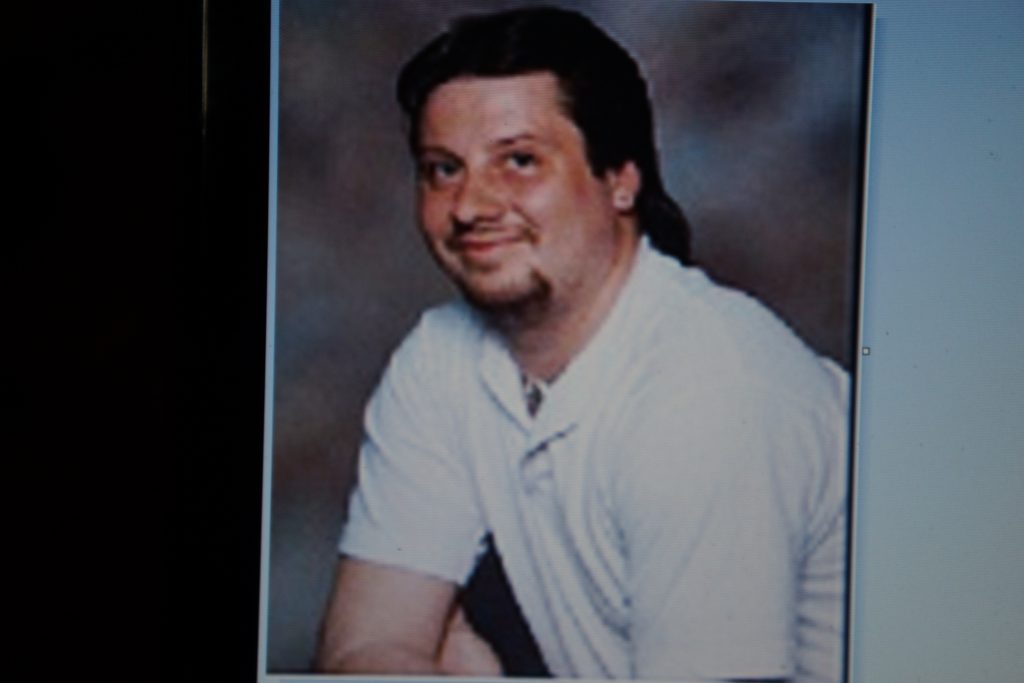
Simon Funk, Jr., whose body was discovered in a remote area of Shenandoah Farms on Dec. 10, 2014. Courtesy Photo
“I’m glad it’s over – and that he finally more or less admitted he murdered my son.” – Those were the words of the mother of Simon Funk Jr. shortly after Judge Clifford L. “Clay” Athey upheld the jury recommendations of life in prison and the maximum $100,000 fine on the First Degree Murder conviction of Clay Marshall Curtis.
On June 29, the 64-year-old Curtis was convicted of the murder of the Front Royal Yellow Cab driver he had befriended three months earlier. Over an hour-and-a-half of argument and deliberation, the defense team of David Hensley and John Bell first argued to overturn the verdict against their client based on some evidentiary objections; then to ease the sentence to give their client some hope of parole before he dies.
However, Athey upheld his trial rulings on admissibility of both evidence and testimony, in denying those motions. Following the court’s rulings, the now-convicted murderer of 42-year-old Simon Funk spoke for the first time in the courtroom when asked if he had anything to say.
“Although I don’t agree with the verdict I want to express my sadness and sorrow to the mother and sister and family and friends – I feel very sorry for them to have to go through all this pain and suffering and aggravation,” Curtis said as Funk’s mother, Connie Clatterbuck, sister Theresa Jenkins and stepfather William Clatterbuck listened from the courtroom’s front row behind the prosecution table.

Convicted murderer Clay Marshall Curtis will spend the rest of his life in prison. Cour-tesy Photo
Curtis then turned his attention to his own future, asking the court to order him placed “in a single cell by myself” after his arrival at the prison that will be his home for the rest of his life.
While not dismissive of the request, Athey also denied it, explaining he felt that the Department of Corrections officials would be in the best position to make the judgment on Curtis’s place in the penal system. Citing pre-sentencing testimony by a forensic psychologist called by the defense concerning Curtis’s history of childhood abuse in his family setting, and further institutional abuse over 30 years of his adult life spent in prison, the judge observed, “Considering your past history you may be in a position for that (requested isolation).”
Athey also upheld the mandatory minimum sentence of three years for the use of a firearm in the commission of a felony, the sentences to run consecutively.
Following his rulings on Curtis’s convictions, Athey agreed to waive prosecution on a separate, related charge of possession of a firearm by a convicted felon. A second trial had been scheduled on that charge, which was separated from the other cases due to the prejudicial nature of introducing Curtis’s past criminal history into the murder, attempted murder and use of a firearm charges he faced initially. The jury acquitted Curtis of the attempted murder of a neighbor who confronted him in Faye Curtis’s yard. The man, a trained martial arts expert believed Curtis tried to run him down as he fled the scene in Funk’s van.
The court also granted a motion for $4,587 of additional funds to compensate the private investigator assisting the defense team in preparing its case; and indicated it would entertain motions for additional attorneys’ fees related to the case.
Following the resolution of all the motions to be heard during the Monday, September 18 hearing, Hensley agreed to serve as Curtis’s court-appointed counsel in a planned appeal of the convictions. The court also allowed Bell to withdraw from further representation due to his past representation of a prosecution witness upon which some of the defense motions to overturn were based.
Background
It was that witness, inmate Michael Turner’s testimony that provided much of the basis for the defense motions to overturn the conviction. At one point Turner mentioned Curtis’s comment on his previous incarceration in federal prison, which the defense objected to at the time as potential cause to declare a mistrial.
Turner also seemed to confirm Simon Funk’s girlfriend Carla Elliott’s response to a defense question as to whether she had ever had sexual relations with the man accused of murdering her boyfriend after she introduced him into their lives.
“Did you have sexual relations with Clay Curtis?” defense co-counsel Hensley asked Elliott.
“He’s gay – absolutely NOT,” Elliott replied.
Turner, Curtis’s fellow inmate at RSW Regional Jail, testified that having overheard his earlier discussion with another inmate about his wife’s betrayal, Curtis told him about problems in an earlier marriage, observing, “You can’t trust women.” Commenting of Turner’s current predicament of being jailed after a betrayal by his wife, Turner reported Curtis telling him, “I’m sort of in a situation like that now. I care about him and do things for him but he don’t want to deal with me no more. But I care about him; so, I shot him and wrapped him in a blanket.”
Funk’s body was found in a shallow grave, covered by sticks, wrapped in a comforter-blanket matching bedding found in the Relax Inn room Curtis was in the process of moving out of. Funk was shot twice, once in the stomach and once in the back of the head. Investigators testified one comforter was missing from the Relax Inn room when it was searched following the discovery of Funk’s body; and receipt of information he was last seen giving Curtis a ride to pick additional possessions up from the room.
The day Funk was murdered, December 9-10, 2014, Curtis had attempted to move in with Funk and Elliott after leaving his most recent motel room at the Relax Inn. Turned away, testimony indicated Curtis solicited a ride from Funk into the remote Shenandoah Farms neighborhood where his sister, Faye Curtis lived. It was near Faye Curtis’s property where Funk’s body was discovered, and where a neighbor placed Curtis in Funk’s van the night Funk disappeared, the night before his body was discovered.
Following Curtis’s June 29 conviction, the sentencing phase saw each side present one witness. The prosecution called the victim’s mother, who sobbed through a painful recounting of her son and what his life and loss meant to her. The defense presented a Forensic Psychologist who had studied the defendant’s mental and criminal history.
It was a history that saw the short and slightly-built Clay Curtis spend 30 of his 64 years – most of his adult life – in prison, often dealing with physical and sexual abuse. Despite that history, Doctor Sara Boyd testified Curtis appeared to feel more comfortable in prison than in an outside world “that moved too fast” and uncertainly for him.
Testimony indicated that after befriending Curtis through her job cleaning rooms at the Front Royal Motel, Carla Elliott’s introduction of Curtis into the couple’s life led to an increasingly symbiotic relationship. According to Elliott that relationship included Curtis buying her a car for $3,000 and spending another $2,100 on repairs in exchange for rides when he needed them, among other favors. Elliott also testified she signed on to Curtis’s move into the Relax Inn when he did not have proper ID. Eventually, Curtis was locked out of that motel leading to a December 9, 2014 attempt to move in with the couple.
Forensic psychologist Sara Boyd’s defense pre-sentencing testimony indicated that perhaps Simon Funk and Elliott’s rejection of Curtis’s request to move in with them after he was locked out of the most recent of a series of motel rooms he lived in may have factored into Funk’s murder – and Curtis’s return to the more predictable, if also threatening, confines of prison.

Virginia State Police Urge Sober Plans for Saint Patrick’s Day Celebrations

In a One-Party County, Internal Party Decisions Affect Us All

Virginia State Police Seize Nearly 100 Pounds of Narcotics, Recover Firearms in Weekly Crime Suppression Effort

Barton Charles “Bart” Haller (1940 – 2026)

Dawn Lee Dodson (1970 – 2026)

Mary Helen “Nanny” Spires Johnt (1954 – 2026)

Another Round of ‘Momnibus’ Bills Are Headed Towards the Governor This Year

Virginia Joins States Challenging Trump Admin Regulations That Limit Free Birth Control Access

Update: Charlotte Swanson Smith (1951 – 2025)
Why We are Challenging the Republican Mass Meeting

Bruce Norman Showman (1954 – 2026)

EDA Relaunches Small Business Loan Program to Help Warren County Entrepreneurs Access Capital

Targeted Exercises to Improve Your Putting

The Hidden Risks of House Hunting Solely Online

Choosing the Right Cleaner for Every Surface in Your Home

New Church Among Consent Items at County Planning Commission Meeting

Warren County GOP Mass Meeting Results Challenged After Allegations of Voting Irregularities

‘This Is About Equity’: In Richmond, Virginia Workers, Lawmakers Push for Inclusive Labor Rights for All

After Five Years of Attempts, Virginia On Track to Set Up a Prescription Drug Affordability Board

New Drug Take-Back Box at Warren County Sheriff’s Office Offers Safe Way to Dispose of Medications

‘Feeding Our Neighbors’ Continues Local Effort to Provide Free Meals in Front Royal

Blair David Eller (1963 – 2026)

Writing Workshop at Samuels Public Library Aims to Help Community Communicate More Clearly

Simple Steps to Reduce Wildfire Risk Around Your Home
