
State News
In Effort to Reduce Animal-Vehicle Crashes, Wildlife Corridor Fund Bill Advances to the Senate
While driving on Virginia roadways, it’s common to see deceased deer, squashed turtles, and other wildlife that weren’t able to make it across the road safely. A bill working through the General Assembly would create a new fund for wildlife corridors, special road crossings designed to help animals stay out of harm’s way and reduce crashes.
The Virginia Department of Wildlife Resources estimates that deer and car collisions cost drivers around $553 million annually.
“The return on investment for wildlife corridor projects is incredibly high, and we need everyone, from state planners to VDOT contractors, to be thinking about how we can reduce vehicle wildlife collisions,” House Bill 597 sponsor Del. Shelly Simonds, D-Newport News, said in a release. “Just one underpass combined with fencing can reduce crashes by 96%.”
The measure sets up the Wildlife Corridor Grant Fund, which the general public may donate to when they conduct Department of Motor Vehicles transactions, such as renewing car registrations or filing title replacements. Residents may also donate to the fund when filing their income tax returns. The bill does not ask for dollars from the state’s general fund.
“We realize that it’s a tight budget year per the state budget, and so we just really wanted to focus on ways to push this grant fund forward,” said Trapper Fowler, Habitat Connectivity Program Director for Wild Virginia, which supported the measure. “Looking to other states, there are great examples of the public just really being interested in and supporting the donations of wildlife crossings specifically.”
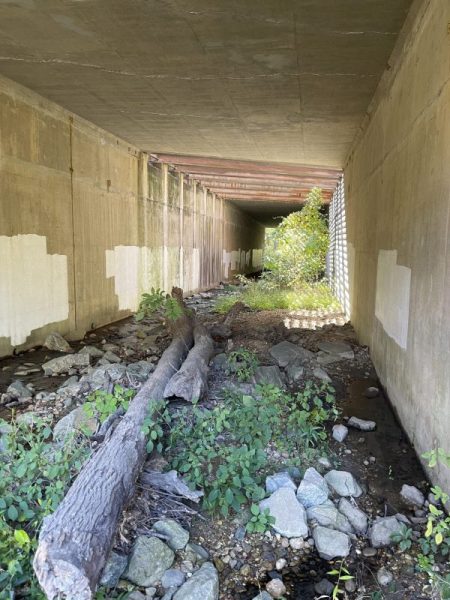
Wildlife crossing in Ft. Belvoir, VA. (Photo courtesy Jessica Roberts)
Other states, including neighboring Maryland, have a similar donation process for wildlife crossings programs; Maryland’s has raised over $85,000 since the summer of 2025. Wyoming started a fund through a wildlife conservation license plate in 2019 and has raised $1.6 million.
The private donations would be used to match federal grants to build infrastructure such as culvert expansions, wildlife under- and overpasses, and fencing, and will fund training for wildlife protection programs. Advocates for the bill said that having a pot of funds to use as grant matches will make Virginia more attractive during federal grant applications.
The legislature has already created a wildlife corridor action plan to find ways to reduce damage to drivers and help wildlife cross major roadways. Simond’s bill, if successful, will put money towards the plan’s priorities that have been identified through studies and agency collaboration.
The bill now heads to the Senate for further debate.
by Shannon Heckt, Virginia Mercury
Virginia Mercury is part of States Newsroom, a nonprofit news network supported by grants and a coalition of donors as a 501c(3) public charity. Virginia Mercury maintains editorial independence. Contact Editor Samantha Willis for questions: info@virginiamercury.com.

Disappointed In Our Olympic Spirit

How St. Patrick’s Day Became America’s Biggest Irish Party

Virginia State Police Urge Sober Plans for Saint Patrick’s Day Celebrations

In a One-Party County, Internal Party Decisions Affect Us All

Virginia State Police Seize Nearly 100 Pounds of Narcotics, Recover Firearms in Weekly Crime Suppression Effort

Barton Charles “Bart” Haller (1940 – 2026)

Dawn Lee Dodson (1970 – 2026)

Mary Helen “Nanny” Spires Johnt (1954 – 2026)

Another Round of ‘Momnibus’ Bills Are Headed Towards the Governor This Year

Virginia Joins States Challenging Trump Admin Regulations That Limit Free Birth Control Access

Update: Charlotte Swanson Smith (1951 – 2025)
Why We are Challenging the Republican Mass Meeting

Bruce Norman Showman (1954 – 2026)

EDA Relaunches Small Business Loan Program to Help Warren County Entrepreneurs Access Capital

Targeted Exercises to Improve Your Putting

The Hidden Risks of House Hunting Solely Online

Choosing the Right Cleaner for Every Surface in Your Home

New Church Among Consent Items at County Planning Commission Meeting

Warren County GOP Mass Meeting Results Challenged After Allegations of Voting Irregularities

‘This Is About Equity’: In Richmond, Virginia Workers, Lawmakers Push for Inclusive Labor Rights for All

After Five Years of Attempts, Virginia On Track to Set Up a Prescription Drug Affordability Board

New Drug Take-Back Box at Warren County Sheriff’s Office Offers Safe Way to Dispose of Medications

‘Feeding Our Neighbors’ Continues Local Effort to Provide Free Meals in Front Royal

Blair David Eller (1963 – 2026)
