
Local Government
RSW board authorizes ongoing negotiations on short-term ICE detentions
The Rappahannock-Shenandoah-Warren County (RSW) Regional Jail is being considered as a short-term – up to 72 hours – holding facility for people detained in Northern Virginia on immigration violations by Immigration and Customs Enforcement (ICE).
ICE has increasingly found itself under national scrutiny as the federal enforcement agency of tightening Trump Administration policies discouraging legal immigration and refugee entry into the country at the nation’s southern border. There was no mention of that national debate at the Thursday, July 26, meetings of the RSW Authority Board and Finance and Personnel Committee.
At those meetings RSW Superintendent Russ Gilkison told the Jail Authority Board that the current proposal received last week differs from an initial inquiry by ICE forwarded through the Virginia State Sheriff’s Association in late June. That inquiry was seeking longer term jail space for ICE detainees.
After an initial inquiry into the ICE proposal forwarded through the sheriff’s association Gilkison said RSW was rejected because it did not have existing contracts with either ICE or the U.S. Marshall’s Office. Both federal agencies have specific facility requirements built into those contracts that RSW would not currently meet. The new inquiry for short-term detention would not require those physical adjustments to the facility.
Following discussion at both the Finance and Personnel Committee and full jail authority board meetings, Gilkison was given unanimous approval to continue negotiations on the short-term ICE detention proposal.
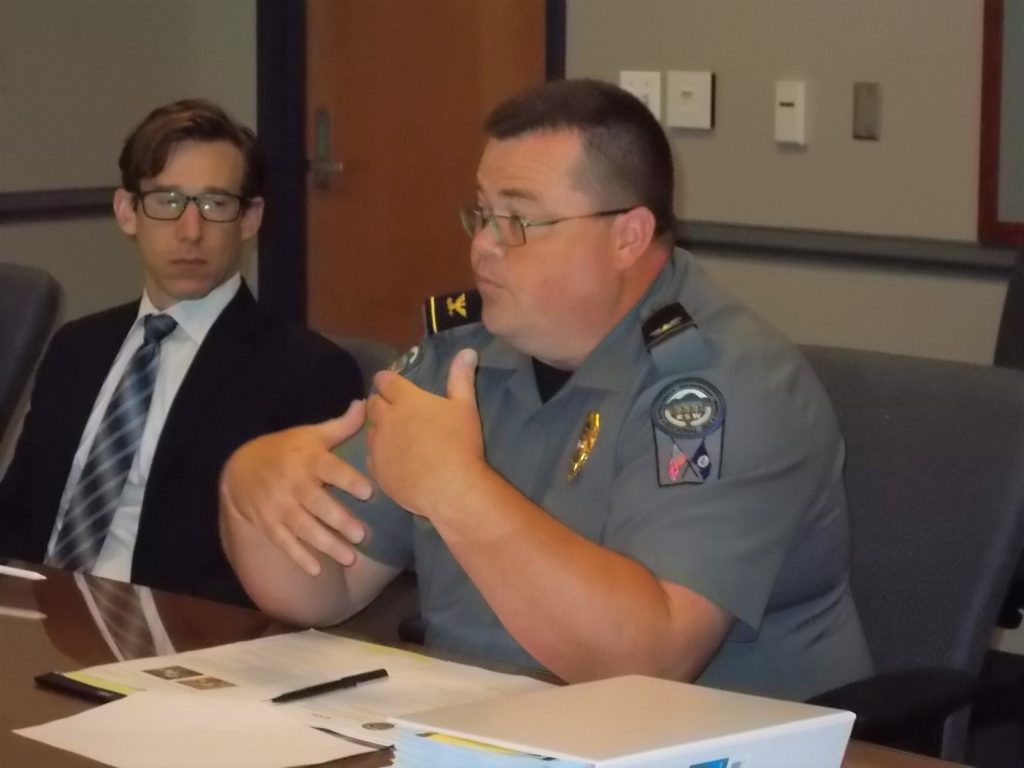
RSW Superintendent Russ Gilkison explains the current, and past, ICE proposals on housing immigration detainees. Photos/Roger Bianchini
Gilkison said ICE was excited about the prospect of using RSW for initial, short-term detention because of its proximity to both Northern Virginia – Prince William, Arlington, Fairfax and Loudoun Counties were specifically cited – where the involved immigration detainees are expected to come from and transportation infrastructure like Interstate-66 and 81 or even Dulles Airport. The one to three days detainees would be housed at RSW would give ICE time to arrange for longer term housing with ICE or ICE-contracted facilities.
“They’re definitely excited because of our location – 66 and 81; especially coming from the east they don’t have any place they can take them to there. Most of their ICE facilities are hours away. So they’re just looking for some place to hold them till they can get a big transport together and take them on out,” Gilkison told the jail authority.
Due to average daily inmate occupancy from RSW’s member counties (334 last month) versus the jail’s bed capacity (initially 375 but raised to 560 with double bunking), RSW officials have sought to fill empty bed space with inmates from other jurisdictions facing overflow in local facilities.
The impetus is revenue generation. RSW is compensated at $33 per inmate per day by the locality and $12 per day per inmate by the state corrections department on qualifying inmates.
Gilkison observed that some local facilities contracted with ICE were dropping out of the arrangement with the federal immigration enforcement agency because they have found it to be “cost prohibitive because of the standards they have to put in place.”
Finance and Personnel Committee Chair Mary Beth Price (Shenandoah County Administrator) asked Gilkison how much revenue the federal immigration detainee housing would generate. The RSW superintendent said that was a matter to be negotiated.
ICE has offered $70 per day per immigration detainee. However, Gilkison said he feels the compensation will have to be “substantially higher” to make the arrangement viable financially for RSW. In addition to intake, medical screening and other processing costs, Gilkison explained that the short turnaround on ICE detainees eliminates revenue generation from things like inmate phone calls or commissary purchases.
Gilkison said during discussion of the initial proposal as facility requirements had surfaced he had wondered, “Do we really want to become an ICE facility?” With things at a stalemate on the initial proposal, the second one not requiring facility adjustments came in last week.
Committee Chair Price suggested suspending the conversation until the full authority board meeting when input could be gathered from the RSW sheriffs.
Told the proposal was for intake of 7 to 10 immigration detainees on a constantly rotating basis for up to three day holds, Shenandoah County Sheriff Tim Carter and Warren County Sheriff Daniel McEathron expressed no opposition from logistical standpoints. The Rappahannock County sheriff was absent.

The full RSW Authority Board ponders the logistics of assisting ICE with short-term detention.
“I think it’s important that we in law enforcement do our due diligence to assist our partners in this if we can financially do it. We have the location, the means and the ability. So, I would recommend Russ look into it more, get a dollar figure and come back to the board with a possible recommendation,” Sheriff McEathron said.
Asked if there was a timeframe in place as far as a decision from RSW on the proposal, Gilkison responded, “The people I’m speaking to, it’s very urgent for them. Of course it’s the federal government, a lot of bureaucracy there, so they’re going back and trying to expedite any go-ahead from their higher ups. It could be two weeks or it could be two months, I don’t know.”
Board discussion indicated that if time became a problem, Gilkison be given the authority to approve the proposal under circumstances he felt were adequate to RSW’s interests.
“I think we can give Russ the leeway … if the numbers work out and he can handle it, you’re talking about a three-day hold and that’s nothing. This other thing (long-term detention) was a big deal, but this, again I think we owe it to them if we can do it,” McEathron said.
Shenandoah Sheriff Tim Carter concurred.
Gilkison explained that he had already told ICE officials that any medical costs or additional guard duty would be above the negotiated daily fee.
Gilkison also told the authority board that he felt there had to be parameters in place including the ability to reject a larger number of detainees. McEathron agreed, observing, “If they want to put 50 out here on a weekend you have to be able to refuse.”
Chairing the meeting for Warren County Administrator Doug Stanley who was called out early after convening the meeting, Shenandoah County Supervisor Conrad Hensley observed that an ability to terminate the contract should be included.
“If for some reason they’re sending us people we can’t handle for whatever reason, yea, we need to figure a way to get out of that. We’ll work with the attorney to see that we have the ability to stop the contract at any time,” Gilkison said.
“Do you know the experience of any other facilities that do (ICE) intake,” Shenandoah County Administrator Mary Beth Price asked.
“What they’re asking, I’m not sure they’ve got any other places that have done this before. I think this is all new territory for them,” Gilkison replied.
Following the unanimous vote approving continued negotiations, Gilkison was told to bring a progress report back to the finance and personnel committee next month.
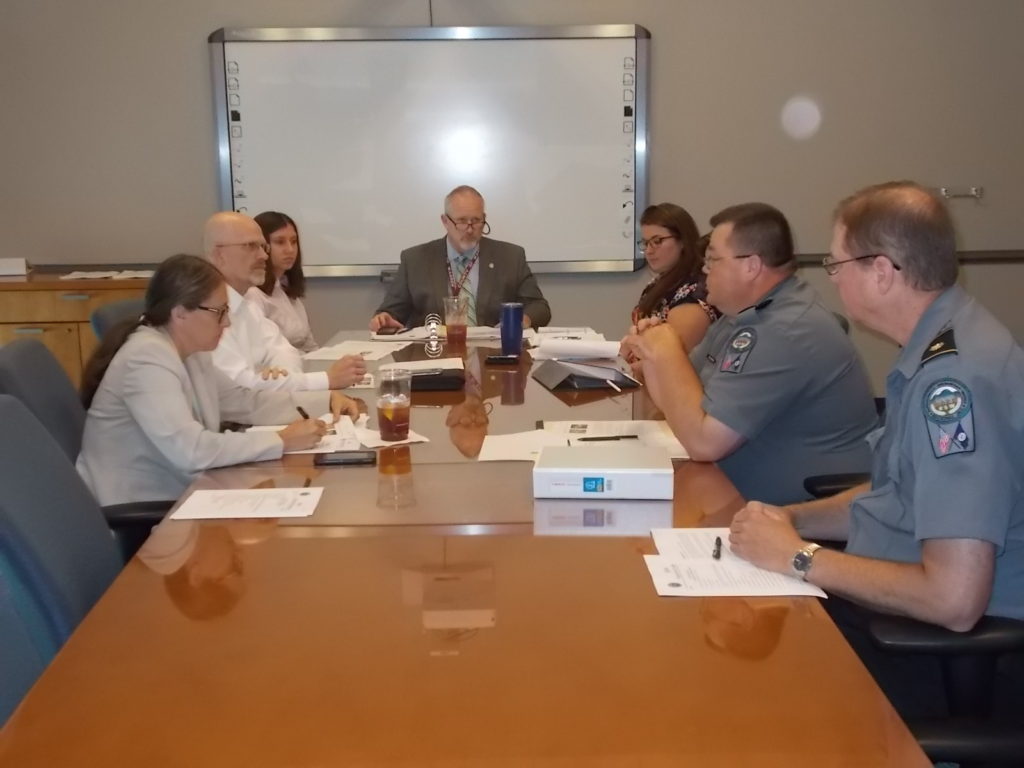
The RSW Finance and Personnel Committee will get an update on progress toward an arrangement with ICE next month.

In a One-Party County, Internal Party Decisions Affect Us All

Virginia State Police Seize Nearly 100 Pounds of Narcotics, Recover Firearms in Weekly Crime Suppression Effort

Barton Charles “Bart” Haller (1940 – 2026)

Dawn Lee Dodson (1970 – 2026)

Mary Helen “Nanny” Spires Johnt (1954 – 2026)

Another Round of ‘Momnibus’ Bills Are Headed Towards the Governor This Year

Virginia Joins States Challenging Trump Admin Regulations That Limit Free Birth Control Access

Update: Charlotte Swanson Smith (1951 – 2025)
Why We are Challenging the Republican Mass Meeting

Bruce Norman Showman (1954 – 2026)

EDA Relaunches Small Business Loan Program to Help Warren County Entrepreneurs Access Capital

Targeted Exercises to Improve Your Putting

The Hidden Risks of House Hunting Solely Online

Choosing the Right Cleaner for Every Surface in Your Home

New Church Among Consent Items at County Planning Commission Meeting

Warren County GOP Mass Meeting Results Challenged After Allegations of Voting Irregularities

‘This Is About Equity’: In Richmond, Virginia Workers, Lawmakers Push for Inclusive Labor Rights for All

After Five Years of Attempts, Virginia On Track to Set Up a Prescription Drug Affordability Board

New Drug Take-Back Box at Warren County Sheriff’s Office Offers Safe Way to Dispose of Medications

‘Feeding Our Neighbors’ Continues Local Effort to Provide Free Meals in Front Royal

Blair David Eller (1963 – 2026)

Writing Workshop at Samuels Public Library Aims to Help Community Communicate More Clearly

Simple Steps to Reduce Wildfire Risk Around Your Home

Lyme Disease Cases Continue to Rise as Tick Season Returns
