
Local News
Teachers Speak Out on Low Pay, Rising Costs, and Lack of Communication at School Board Meeting
Two Warren County educators delivered passionate and pointed remarks at the May 7 Warren County School Board meeting, raising serious concerns about teacher morale, pay, and district leadership’s lack of consistent communication.
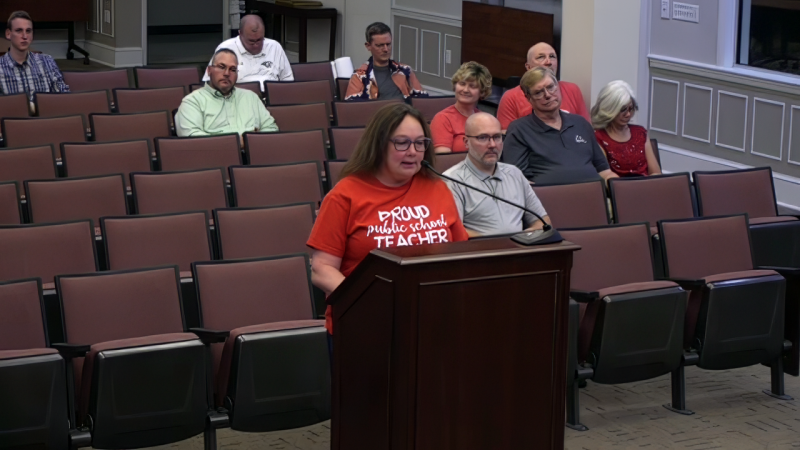
Elisa Bradford
Elisa Bradford, a Warren County Public Schools teacher and President of Secondary Education for the Warren County Education Association (WCEA), spoke first. She addressed the board as a representative of fellow educators who, while dedicated to their students, are increasingly discouraged by working conditions and limited support.
“We are proud to serve the children of Warren County,” Bradford began. “They are our number one priority. But the truth is, our educators are feeling defeated.”
Bradford highlighted several systemic issues that she says are causing teachers to leave the district, including stagnant salaries, increased insurance costs, and a lack of basic classroom resources. “We are being asked to do more with less — less support, fewer resources, and growing burdens that weigh heavily on our ability to teach effectively and care for our own families,” she said.
The audience listened as Bradford made it clear that her concerns go beyond her own experience. “This is not just about teachers. It’s about the future of public education in Warren County,” she stated, calling for equitable access to quality instruction, updated textbooks, technology, and fully staffed classrooms across all schools.
Bradford warned that the current conditions are unsustainable:
“Teachers and support staff are being faced with absorbing most of the health insurance increase with no offsetting relief. Unfortunately, this will have Warren County Public Schools losing some teachers to surrounding counties.”
Her message to the board was a call to act — not just express appreciation. “We need a plan that actively works to retain the professionals who build the very foundation of our community’s future — our teachers.”
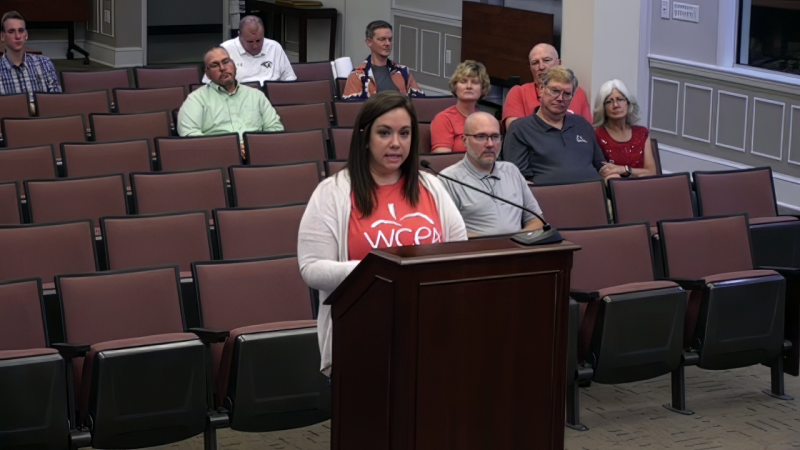
Jenny Bryant
Jenny Bryant, a teacher, mother, and resident of Fork District, followed with equally impassioned remarks. Speaking frankly, she admitted she hadn’t planned to speak — not out of lack of concern, but out of exhaustion.
“I’m tired,” Bryant began. “I’m tired of constantly promoting this community that helped shape me into the person, the teacher, and the mom that I am today.”
Bryant, who said she has encouraged colleagues to “hang in there” for the past 14 years, expressed frustration with what she sees as ongoing silence from district leadership and a lack of basic professional respect — including transparent communication.
“I find myself reading a motion to extend the last day of school not through an email or a faculty meeting… but buried in BoardDocs on a Saturday morning — the day before Teacher Appreciation Week,” she said.
Bryant called attention to the timing of the board’s actions, which she said contradicted the spirit of teacher appreciation. “The irony is not lost on me,” she said. “This week falls during one of the most stressful times of our year: SOL testing, final exams, graduation prep, and packing up classrooms.”
But her greatest concern was the exodus of educators from the district. “We are losing our teachers quietly and consistently and in increasing numbers,” Bryant said, adding that she had counted 38 job openings posted just since Monday. “They’re not leaving because they don’t like our students. They’re leaving because they’re unheard, unsupported, underpaid, and exhausted.”
Bryant pushed back on the notion that minor gestures, like casual dress days or thank-you emails, are meaningful enough to retain teachers. Instead, she called for tangible changes:
“Teacher retention is about competitive salaries, reasonable workloads, consistent support, and being included in decisions that directly impact our classrooms.”
She ended her comments with a challenge to the board:
“If we want strong schools, we need strong teachers. And as we watch them walk away, the question becomes: What are you willing to do — besides listen to the same five people say the same thing every month?”
As is standard during public comments, the board did not offer a response following the speakers’ remarks. The public comment portion concluded with no additional speakers.

Virginia State Police Urge Sober Plans for Saint Patrick’s Day Celebrations

In a One-Party County, Internal Party Decisions Affect Us All

Virginia State Police Seize Nearly 100 Pounds of Narcotics, Recover Firearms in Weekly Crime Suppression Effort

Barton Charles “Bart” Haller (1940 – 2026)

Dawn Lee Dodson (1970 – 2026)

Mary Helen “Nanny” Spires Johnt (1954 – 2026)

Another Round of ‘Momnibus’ Bills Are Headed Towards the Governor This Year

Virginia Joins States Challenging Trump Admin Regulations That Limit Free Birth Control Access

Update: Charlotte Swanson Smith (1951 – 2025)
Why We are Challenging the Republican Mass Meeting

Bruce Norman Showman (1954 – 2026)

EDA Relaunches Small Business Loan Program to Help Warren County Entrepreneurs Access Capital

Targeted Exercises to Improve Your Putting

The Hidden Risks of House Hunting Solely Online

Choosing the Right Cleaner for Every Surface in Your Home

New Church Among Consent Items at County Planning Commission Meeting

Warren County GOP Mass Meeting Results Challenged After Allegations of Voting Irregularities

‘This Is About Equity’: In Richmond, Virginia Workers, Lawmakers Push for Inclusive Labor Rights for All

After Five Years of Attempts, Virginia On Track to Set Up a Prescription Drug Affordability Board

New Drug Take-Back Box at Warren County Sheriff’s Office Offers Safe Way to Dispose of Medications

‘Feeding Our Neighbors’ Continues Local Effort to Provide Free Meals in Front Royal

Blair David Eller (1963 – 2026)

Writing Workshop at Samuels Public Library Aims to Help Community Communicate More Clearly

Simple Steps to Reduce Wildfire Risk Around Your Home
