
The Cracked Acorn
The Cracked Acorn: Crosses

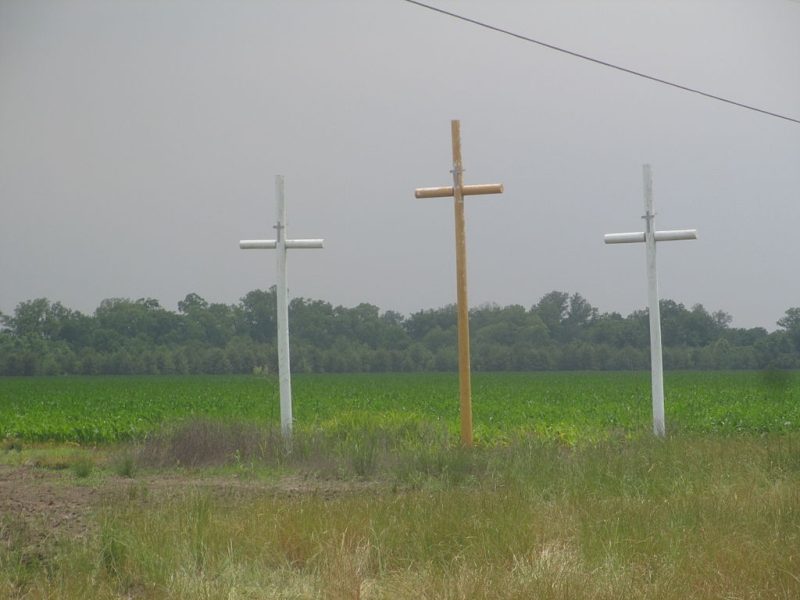
Three crosses off U.S. Highway 65 in Madison Parish, LABilly Hathorn, CC BY 3.0 <https://creativecommons.org/licenses/by/3.0>, via Wikimedia Commons
One of the remaining Cross Clusters south of Culpeper is still there; some history of this landmark.
On October 6, 1993, Bernard Coffindaffer died. He was 68. This was the end of an ambitious project that came out of “a genuine, marvelous, glorious vision” to plant crosses throughout the world. He obediently spent 2 million dollars in the last years of his life, putting these clusters in 29 states, the District of Columbia, Zambia, and The Philippines. There are at least 1,864, and may be more since he listed their locations on small pieces of paper.
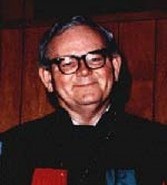
Bernard Coffindaffer
The Cross Clusters represent the two thieves and Christ. Coffindaffer said that the crosses infer, “Not for saints or for sinners but for everyone that Jesus died for our sins and He’s coming again.” These California Douglas Firs stand at 20 and 25 feet. The outside ones are angel blue, and the center is Jerusalem gold. At the erection of each Cross Cluster, a service was held. He said unto the people and His disciples, “Whoever desires to come after Me, let him deny himself, and take up his cross, and follow Me.” (Mark 8:34)-was often quoted. Prayers for repentance and forgiveness of sins were offered. Coffindaffer once said, “The Crosses speak peace within as we struggle without.”
Mr. Coffindaffer was born in West Virginia and was left an orphan at an early age. He graduated from high school at fourteen, spent six years in the Marine Corps in the Pacific theater, and was at Iwo Jima and Nagasaki, Japan. He graduated with a business degree from the University of Charleston. He amassed a fortune in the oil and coal businesses. At the age of forty-two, he declared himself a minister and served seven small churches in West Virginia. The Cross Clusters have been the subject of a documentary, “Point Man for God,” and part of a public television series, “Different Drummer.”
On one foggy morning, I took several pictures and thought about what it would be like to be crucified and lifted 25 feet up in plain view for anyone to see. Like all plans of “mice and men,” the crosses are being lost now in the hustle and bustle of our world. This cluster is fighting to stay visible among commercial motels and restaurant signs. I saw how hard it must be to appreciate it at 55 mph. You can easily miss this one set in a low valley. The center cross is gold, while the outside ones are white. All three are peeling. Christ’s cross is wrapped in strings of small lights that may have been on during Christmas. If you mention crosses today to someone, they will talk of the recently made roadside memorials where fatal accidents have occurred. The original statement of the Clusters was to remind travelers never to forget the OLD RUGGED CROSS. Our society’s problems have attempted to “fog over” the Crosses, but if you know where to look, there’s still hope, and the ONE who hangs there still loves you and really cares. It will always be the first thing you will see when the dew and fog have gone away for a new day.
I TRAVELED DOWN A LONELY ROAD, AND NO ONE SEEMED TO CARE, THE BURDEN ON MY BACK HAD BOWED ME TO DESPAIR, I OFT COMPLAINED TO JESUS HOW FOLKS WERE TREATING ME, AND THEN I HEARD HIM SAY SO TENDERLY, “My feet were also weary, Upon the Calv’ry road; The cross became so heavy, I fell beneath the load, (from Sacred Selections)

AA Speaker to Explain Recovery Program at United Methodist Men’s Dinner

Jeannette M. Hyland (1944 – 2026)

Allen William Derflinger II (1959 – 2026)

Warehouse Clerk: A High-Demand Job—Even With Robots

FDA Cracking Down on Compounded GLP-1 Drugs

“Christmas in April” or Overspending? Budget Draws Criticism

Court Ruling Voids Prince William Data Center Rezoning, Raising Stakes for Local Debate

Spanberger Signs First Bills Targeting Healthcare, Housing and Energy Costs

Blue Ridge Singers Spring Concerts to Showcase Powerful Blend of Voices and Brass
What Counts as “Good Policy” Depends on Who’s in Power

Planned Parenthood Presses Virginia to Restore State Funding for Contraception Program

Weapon Offenses Rise on Virginia University Campuses

Trump Steps In to Pay TSA Workers as Congress Remains Stalled

Escaping the ‘Captivity of Activity’ by Making Time to Rest

Why Wearing a Bike Helmet Matters

Wilma J. Martin (1927 – 2026)
Michael Fanning (1957 – 2026)

Spanberger Order, RNC Lawsuit Highlight Divide Over Virginia Voter Roll Maintenance

DNC Kicks Off Voter Registration Blitz, Unveils New Campaign Playbook Ahead of Midterms

Republican State Lawmakers Propose Three-Month Gas Tax Holiday in Virginia

April Star Birthdays: Famous Faces Celebrating This Month

Time to Strengthen Those Hips Again

Supervisors Discuss Evolving FY-26/27 Budget Priorities and Revenue Sources, Including Real Estate Tax Hike & Cigarette Tax

From Students to Leaders: Mountain Vista Governor’s School Hall of Fame Honors Two Graduates
