
Crime/Court
Virginia Beer Museum and Town Headed to Court on One Remaining Count in Parking Rights Dispute
Following a motions hearing on Friday, February 27, the Virginia Beer Museum and Town of Front Royal are headed to court on a remaining count in a civil action brought by Beer Museum Trustee David Downes regarding parking rights adjacent to the Beer Museum property, which borders the Town’s Peyton Street Parking Lot. That trial on a Town counter-suit motion is slated to begin October 19, 2026, and is expected to run for a day, possibly into a second day on the Warren County Circuit Court civil action agenda.
Following the hearing and rulings against the Beer Museum’s civil claims by substitute Judge Randy Bellows, semi-retired from the Fairfax County legal system, we asked Beer Museum Trustee and local attorney David Downes for a perspective on the Court’s actions. Downes began with a somewhat long historical perspective, as illustrated below, before delving into specific legal circumstances being argued today.

The Warren County Courthouse will host another legal dispute between the Virginia Beer Museum and the Town of Front Royal over parking easement issues, but not till October 19. – Royal Examiner Photos Roger Bianchini unless otherwise noted
“In 1900, fewer than 100 automobiles were registered in Virginia. That same year, the stately Board House — now home to the Virginia Beer Museum — was constructed long before parking ordinances and municipal zoning battles became tools of modern governance,” Downes observed, adding: “By 2000, Virginia had grown to nearly 3.8 million registered vehicles.
“With that growth came parking regulations, and in downtown Front Royal, the Town sought to ‘fairly distribute’ off-street parking requirements among businesses. But fairness, critics argue, came with exceptions,” Downes, one of those critics, asserts: “All downtown businesses were exempted from off-street parking requirements — except two: the Board House and the Garrison House,” Downes notes of the latter directly across Chester Street from the Board House and Beer Museum. The Garrison House would later receive a newly requested exemption, while the Museum would not.
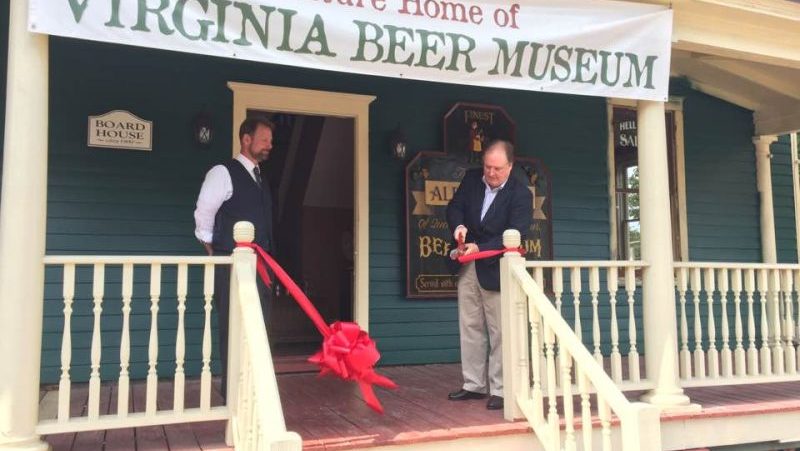
Just over a decade ago, the Virginia Beer Museum, with nods to Founding Fathers and brewmasters George Washington and Thomas Jefferson, opened for business. Here, Museum Trustee David Downes, watching at left, sees a ribbon cutting announcing the pending opening (Courtesy Photo VBM). Below are the parking places currently at issue between the Town and the Museum. The white tent to the right, behind the wooden, gated fence, marks the site of the Museum’s Biergarten, adjacent to the Town’s Peyton St. parking lot.

“To ease parking demands, the Town approached the Museum’s owner about expanding the Peyton Street Parking Lot onto land owned by the Museum. The owner agreed. In 2003, an easement was executed guaranteeing that the Town would not alter the Museum’s parking use. It appeared to be a collaborative solution,” Museum principal and trustee Downes observed, adding, “That cooperation would later unravel.”
That unraveling from the Beer Museum Trustee’s perspective involved “unequal granting of off-street parking exceptions,” he asserts, observing that, “In 2019, the Museum’s owner petitioned Town Council for the same exemption granted to other downtown businesses. The response was emphatic: ‘Absolutely not.’ What followed escalated into federal litigation, transforming what began as a zoning dispute into a protracted legal conflict.
“Three years later, in 2022, former councilman Scott Lloyd requested that the Garrison House — located directly across the street from the Museum and Peyton Street parking lot — be exempted from off-street parking requirements as a law firm located there. This time, the answer was equally emphatic — but reversed: ‘Absolutely yes’.
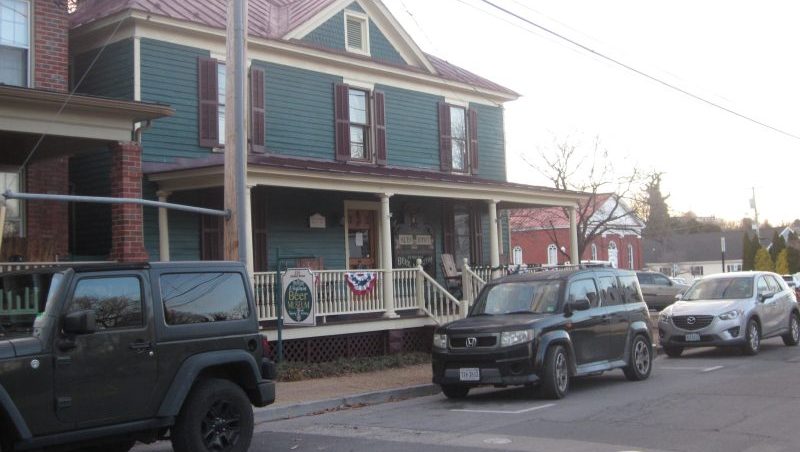
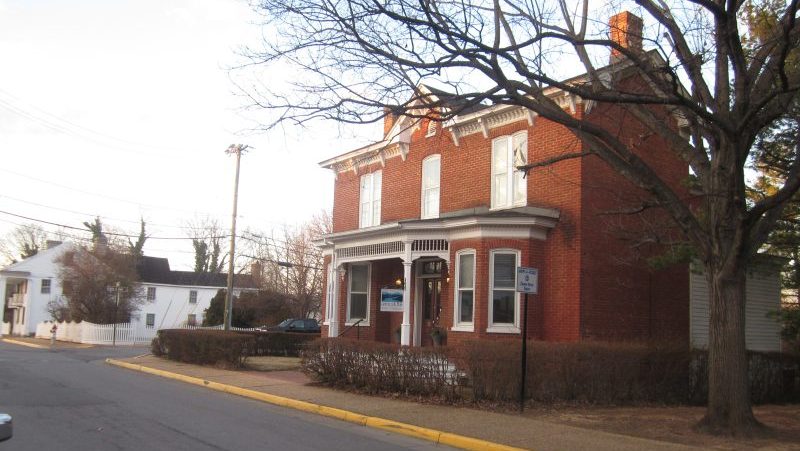
The Board House, housing the Virginia Beer Museum, and below the Garrison House, directly across Chester St., now housing a legal firm. The two businesses have had contrasting results in seeking off-street parking exemptions. Of course, that yellow-painted Chester St. curb won’t give you an exemption.
“Tensions deepened in 2024 when the Museum sought permission from the Town Attorney to post parking signage. Months passed without a response. Nearly a year later, instead of guidance, the Museum received a threat of legal action,” Museum Trustee Downes said of what appears to be the root of his current legal battle with the town government.
“By 2025, the dispute moved to court. The Museum asked a judge to clarify its rights under the 2003 easement agreement,” Downes noted. The Town countered, arguing that the purpose of the easement had ceased and announcing plans to landscape around the property — “effectively cutting off vehicle access to the Museum’s Biergarten,” Downes notes.
He added that from his plaintiff, and now counter defendant’s, perspective, the Town’s “sole basis” for claiming “cessation of purpose” is that the property used by the Museum easement “no longer serves its intended purpose of better serving visitors and merchants in downtown Front Royal.”
Downes wonders why the Town ignores that the Virginia Beer Museum “has visitors and is a downtown merchant” with, he believes, an overall positive impact on the Historic Downtown Front Royal business community.
To expand upon the Court’s action of February 27, 2026, substitute Judge Randy Bellows ruled that the Town was not bound in the way the Museum claimed and allowed the Town’s counterclaim to proceed. So, barring an out-of-court settlement, as noted above that trial is scheduled for October 19, 2026.
For Museum Trustee Downes, the initial rulings cast a long shadow over his Virginia Beer Museum’s future: “We’re grateful there may be one more Oktoberfest before foreclosure,” he said, reflecting on a decade of events celebrating several cultural traditions related to the brewing and consumption of beer. Those include Robert Burns Night, St. Patrick’s Day, Oktoberfest, Guy Fawkes Day — that the Museum Trustee asserts, “Have drawn visitors to Front Royal’s Historic Downtown.”

A Museum crowd gathered to celebrate Scottish poet and lyricist Robert Burns Day. That is one of several costume- and musically-themed annual Museum events, including Saint Patrick’s Day. Courtesy Photo VBM
But for one Historic Downtown Business owner, Virginia Beer Museum Trustee Downes, a question emerges from his recent legal interactions with the town government:
“The broader question now facing the community is whether municipal policy is protecting downtown vitality — or undermining it,” Downes asserts, observing that, “Horse-drawn carriages may be relics of the past, but modern economic survival depends on access, tourism, and predictable governance. Critics argue that reducing parking access to a destination venue while signaling that longstanding agreements can be revisited at will sends a troubling message to business owners.
“As the October trial approaches, the dispute is no longer just about parking spaces. It is about trust — between a town and one of its historic institutions — and about whether Front Royal’s downtown future will be shaped by collaboration or confrontation,” the Beer Museum Trustee states from his legally embattled perspective.
Town Perspective
Royal Examiner was unable to contact attorney Heather Bardot, representing the Town of Front Royal in the dueling legal actions, prior to publication. However, we note from the court records of the dueling motions and counter-motions that, in arguing against the Museum Trustee’s original filings, the town’s legal side prepared these justifications for its defense and counter-filings.
“The Trustee’s latest filings fail to address the Town’s Demurrer and Plea in Bar directly or meaningfully,” Town legal staff asserted. “The filings avoid any argument countering the points raised by the Town, especially as it pertains to the fact that it is legally impossible for the Trustee to adversely possess the Parking Spaces (Count II). Instead, the Trustee has submitted to the court a Lease Agreement (“Lease”) between itself and Dr. Timothy S. Harlan, purportedly entered into on January 22, 2026, long after the Complaint was filed. Based on that Lease, which is not mentioned in the Complaint or appended thereto, the Trustee argues that the Town’s Demurrer and Plea and Bar should be overruled. The Town disagrees, and asks that the court sustain both and dismiss this case with prejudice.”
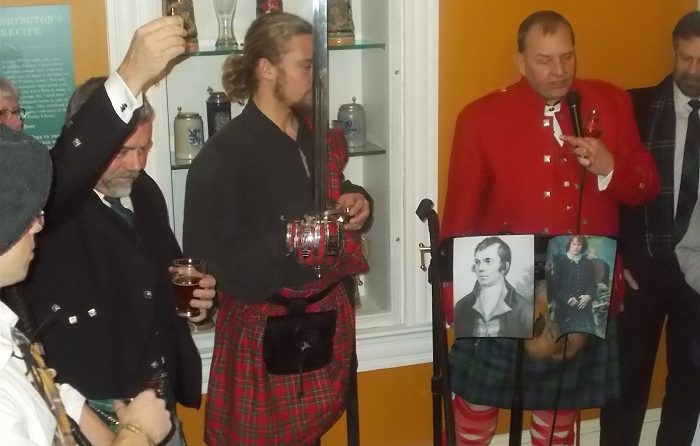
An author-themed party has moved indoors, where passages from their works were read to the crowd. And below, it appears to be the Museum’s nod to the American Revolution’s successful rebellion against British empire building. Courtesy Photos Virginia Beer Museum (VBM)

The Town argues that the easement has outlived its purpose and limits its ability to improve public parking. However, Downes argues the easement is still in use, still benefiting downtown, and represents a binding property right that cannot be erased simply because “priorities change”. To him, the fight represents something deeper. “If agreements with the Town can be undone when convenient,” he said, “what message does that send to every small business owner downtown?”
In another section of the Town’s response to the original Museum Trustee filing, this is written: “The Trustee further maintains that ‘Virginia law is clear that an easement cannot be extinguished for ‘cessation of purpose’ while it is actively relied upon by an identified beneficiary. Trustee Br., 2/3/26, p. 3. It maintains that the Lease establishes this factor. Again, the Lease may not be considered in ruling on the Town’s counter-claim,” Town legal staff asserted, adding, “The Trustee also argues — without citing any legal authority — that the Town does not possess common-law authority to vacate easements by litigation. Trustee Br., 2/3/26, p. 4. The Town does not seek to ‘vacate’ the easement ‘by litigation.’ It seeks to extinguish it by ‘cessation of purpose’. The Town is aware of no legal authority that prohibits this, nor has the Trustee cited any,” Town legal staff concludes.
Final Thoughts
It would seem that municipal-business relations may have been simpler in those earlier times cited by the Beer Museum Trustee when horse and buggies significantly outnumbered motor vehicles on the streets of Front Royal, and registered cars in the entire Commonwealth of Virginia hadn’t yet hit triple figures.
Or maybe not — but I’ll bet there were some legal disputes circa 1900 and therabouts over who was responsible for disposing of the horse waste accumulated during downtown horse or horse-and-buggy business visits 126 years ago.

Virginia Beer Museum and Town Headed to Court on One Remaining Count in Parking Rights Dispute

Snow’s Gone — Now It’s Time to Pick Up the Litter

As Conflict With Iran Widens, Virginia Lawmakers Navigate Political Fallout

Virginia Lawmakers Reach Agreement for First Steps to Monitor PFAS in Biosolids

Virginia Lawmakers Propose Guardrails for Artificial Intelligence Use In Education

Virginia’s New Public Health Leaders Take the Helm as State Agencies Weather Uncharted Waters

French Earl Tolliver Jr. (1960 – 2026)
Richard “Eddie” Edward Henderson (1965 – 2026)

Elizabeth Anne “Libby” Fox (1948 – 2026)
David Lee Corbin (1969 – 2026)

Manassas Young Marines Named Division 1 Unit of the Year

Virginia to Honor Women Veterans During Statewide Recognition Week

From One Footrace to Fierce Combat: How the Olympics Began

Children Activities by Samuels Public Library for the Month of March

Will Hackman: Why the Climate Fight Is Failing — and How to Turn It Around

Coldest Night of the Year Fundraiser Walk Raises $35,000 By Time of Departure

Blue Ridge Technical Center Students of Criminal Justice Present Their Projects to be Graded by the Sheriff and Her Deputy

South River Leaders to Host Community Forum Focused on District Issues

Delegate Delores Oates Highlights Budget Debate, Tax Policy Dispute, and Upcoming Referendum

Sharing the Spotlight: Celebrities Born on Your Birthday

Warren Heritage Society Reopens March 4 with Expanded Access and New Ways to Explore Local History

Saks Collapses, But Luxury Shopping Isn’t Going Away

Webb Space Telescope Spots a Supermassive Black Hole on the Run

Do You Suffer From Premenstrual Syndrome?
