
Local News
Warren County included in ‘No Kid Hungry’ funding to Combat Summer Hunger in Virginia Rural Communities
As schools close for the summer, school districts, and nonprofits are beginning to launch summer meal programs to connect kids with nutritious meals outside of the classroom.
This year, more school districts and nonprofits serving rural communities have a new tool to reach kids this summer: Non-congregate summer meal options. New federal policy changes allow organizations to provide flexible options like multi-day meal distribution and deliveries to reach kids in more remote areas of the state.
To support and expand non-congregate programs in the Northern Virginia and Shenandoah Valley areas, No Kid Hungry Virginia recently distributed $15,500 to Warren County Public Schools. The funding is part of a larger grant initiative by No Kid Hungry totaling $284,000 across 14 school districts and non-profits to combat summer hunger. Funds will support organizations with staffing, meal delivery, updated equipment, transportation costs, and expanding outreach.
The following organizations received grants this year: Accomack County Public Schools, Alleghany County Public Schools, Caroline County Public Schools, Dinwiddie County Public Schools, Feeding Southwest Virginia, Fredericksburg Regional Food Bank, Halifax County Public Schools, Henry County Public Schools, Orange County Public Schools, Page County Public Schools, Pulaski County Public Schools, Richmond County Public Schools, Scott County Public Schools, Warren County Public Schools.

Sarah Steely, Director of No Kid Hungry Virginia
“Summer should be full of sunshine and playtime, not worrying about empty pantries,” said Sarah Steely, Director of No Kid Hungry Virginia. “These summer meal flexibilities offer a tremendous opportunity to reach more children in rural communities, who have traditionally had a harder time accessing summer meal sites. These grants will help strengthen programs, enabling teams to provide summer meals in the way they know works best for their community.”
Approximately 1 in 7 kids face food insecurity in Virginia, and summer can be one of the hungriest times of year for the thousands of kids who receive free and reduced-price meals during the school year.
Summer meal programs help fill the gap but have historically only reached a fraction of the kids who rely on them due to barriers like transportation, fuel costs, extreme weather, and parent work schedules. Challenges are especially pronounced in rural areas, where children often live far from the nearest meal site.
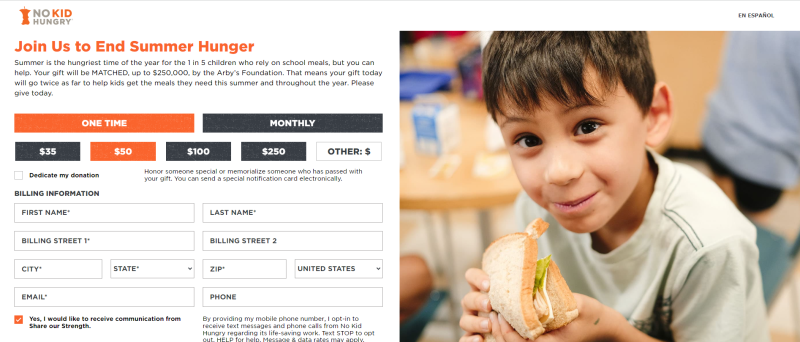
A fundraising graphic on the No Kid Hungry national website.
According to No Kid Hungry, the latest non-congregate flexibilities are an exciting opportunity to expand the reach of summer meals and provide more children with much-needed nutrition during the summer months. To learn more, visit https://state.nokidhungry.org/virginia
From a release by No Kid Hungry Virginia.
(About No Kid Hungry: No child should go hungry in America. But millions of kids in the United States live with hunger. No Kid Hungry is working to end childhood hunger by helping launch and improve programs that give all kids the healthy food they need to thrive. This is a problem we know how to solve. No Kid Hungry is a Share Our Strength campaign committed to ending hunger and poverty.

Virginia State Police Urge Sober Plans for Saint Patrick’s Day Celebrations

In a One-Party County, Internal Party Decisions Affect Us All

Virginia State Police Seize Nearly 100 Pounds of Narcotics, Recover Firearms in Weekly Crime Suppression Effort

Barton Charles “Bart” Haller (1940 – 2026)

Dawn Lee Dodson (1970 – 2026)

Mary Helen “Nanny” Spires Johnt (1954 – 2026)

Another Round of ‘Momnibus’ Bills Are Headed Towards the Governor This Year

Virginia Joins States Challenging Trump Admin Regulations That Limit Free Birth Control Access

Update: Charlotte Swanson Smith (1951 – 2025)
Why We are Challenging the Republican Mass Meeting

Bruce Norman Showman (1954 – 2026)

EDA Relaunches Small Business Loan Program to Help Warren County Entrepreneurs Access Capital

Targeted Exercises to Improve Your Putting

The Hidden Risks of House Hunting Solely Online

Choosing the Right Cleaner for Every Surface in Your Home

New Church Among Consent Items at County Planning Commission Meeting

Warren County GOP Mass Meeting Results Challenged After Allegations of Voting Irregularities

‘This Is About Equity’: In Richmond, Virginia Workers, Lawmakers Push for Inclusive Labor Rights for All

After Five Years of Attempts, Virginia On Track to Set Up a Prescription Drug Affordability Board

New Drug Take-Back Box at Warren County Sheriff’s Office Offers Safe Way to Dispose of Medications

‘Feeding Our Neighbors’ Continues Local Effort to Provide Free Meals in Front Royal

Blair David Eller (1963 – 2026)

Writing Workshop at Samuels Public Library Aims to Help Community Communicate More Clearly

Simple Steps to Reduce Wildfire Risk Around Your Home
