
Automotive
A history of roads in Virginia: Administrative belt-tightening
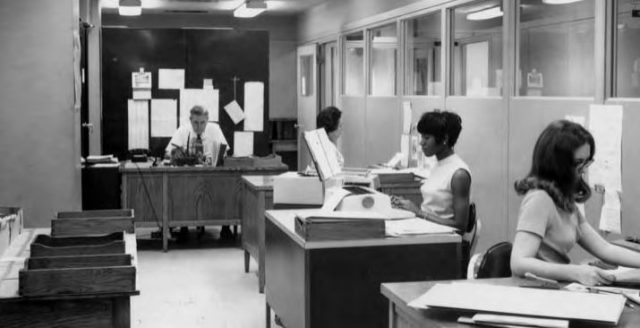
VDOT employees in the Negotiation Processing Center, Right of Way Division, prepare letters to landowners and attorneys.
In 1980, the General Assembly ordered the Joint Legislative Audit and Review Committee (JLARC) to review the department’s operations and finances and recommend changes to make the best use of the resources available. Between July 1, 1978, and Nov. 1, 1981, employment in the department statewide was cut from 12,865 to 11,030, a reduction of more than 14 percent. The cutbacks were partly the result of the JLARC evaluation, which recommended reductions in manpower.
While most of the decline was accomplished by attrition, some employees were laid off from their jobs. The lower payroll costs cut approximately $15 million from the budget each year.
The employment decline reflected a determination to streamline the organization, but to a greater degree it was a reflection of the shrinking highway program.

Despite cutbacks in personnel and efforts to save money, the funding situation became increasingly severe, prompting the Department of Highways and Transportation to reassess the status and public use of substandard roads and bridges throughout the state.
Local governments were asked in 1981 to identify what they regarded as their most serious highway needs. The result of that request was the development of the SixYear Improvement Program for the highway system. The program was adopted on July 1, 1982, and it established a schedule of construction and reconstruction projects for the interstate, primary, and urban road systems in Virginia on a priority basis.
Produced by the
Virginia Department of Transportation
Office of Public Affairs
1401 E. Broad Street
Richmond, VA 23219
VirginiaDOT.org




White House Highlights Crime, Economy, Foreign Policy in Weekly Briefing

Heroes on the River: Combat Veterans Skydive at Front Royal Warren County Airport

Declaration of Independence Was Mostly Signed in August, Not July

August Celebrity Birthdays: Do You Share a Birthday?

Helping Students Make a Smooth Transition to High School

Spanberger Restores Voting Rights to More Than 60,000 Virginians

Virginia Senators Request Special Session to Act on ’Deeply Alarming’ Groundwater Report

VDOT: Warren County Traffic Alert for August 3 – 7, 2026

Spanberger Administration Seeks Public Input on New Energy Plan

String of Outbreaks Tests US Public Health System Amid Funding Cuts, Vaccine Resistance

A Call for Kindness, Respect, and Community

1856 Election Demonstrates Strengths, Weaknesses of Our Democracy

Court Rulings on Treece Defense Motions Lead to Appeals, Forward Action to Circuit Court
Warren County is Not for Sale: Oppose David Silek’s Vote-Buying Scheme

Scott Lloyd Makes His Case for Warren GOP Chairman Ahead of Aug. 5 Revote

David Silek Makes Case for Warren GOP Chairmanship Ahead of Aug. 5 Vote

Police Seek Video After Cadillac Found Burning in Front Royal Alley
What the Power to Prohibit Actually Requires

Anthony Dale “Tony” Pullen

Coolidge’s Vision of Prosperity Through Free Trade

ORDER OF PUBLICATION: In the Circuit Court for Warren County, Virginia

Business Growth Series: If You’re Burned Out, Your Business Shows It
Support Scott Lloyd in Warren GOP Leadership Vote

Mexican-Style Grilled Corn on the Cob Adds Bold Flavor to Summer Cookouts
