
Local News
STEAM Night Launches Students Into Space at A.S. Rhodes Elementary School
Rockets blasted off, robots zipped across the floor, and young engineers designed everything from moon bases to model satellites as A.S. Rhodes Elementary School hosted its annual STEAM Night on February 18, 2026.
This year’s theme? Space.
With the help of the Shenandoah Valley Discovery Museum in Winchester and the school’s PTO, the Family Engagement Team transformed the school into a hands-on learning lab featuring 12 interactive stations focused on science, technology, engineering, art, and math, better known as STEAM.
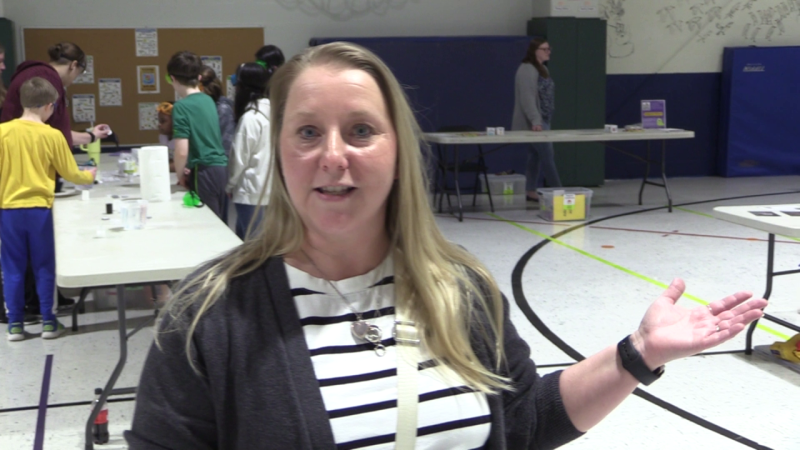
Debra Curtis, fifth-grade science teacher at A.S. Rhodes Elementary School, shares her excitement during STEAM Night as she explains the hands-on space-themed activities designed to spark curiosity and inspire young learners.

“We have the Discovery Museum here from Winchester bringing all kinds of awesome space-related STEM activities,” said fifth-grade teacher Debra Curtis, a member of the school’s Family Engagement Team. “It’s science, technology, engineering, art, and math, and it’s all hands-on.”
Curtis, who teaches science to fifth graders at A.S. Rhodes, said the event reinforces classroom lessons on the solar system, density, light, and sound.
“All those things are playing into what we’re doing this evening,” she said. “My goal is to spark interest, so maybe one day these kids will go into a science, technology, engineering, art, or math career. Being a scientist is a lot of fun, and you get to do cool stuff.”
Learning by Doing

The evening featured a dozen stations designed to engage students in creative problem-solving and experimentation, all aligned with Virginia Standards of Learning.
At the Rocket Reactions station, one of the night’s most popular stops, students combined baking soda, citric acid, and water in small film canisters. The chemical reaction built pressure until the canisters popped into the air, to the delight of the crowd.
“Anything that explodes, overflows, or makes a mess, the kids love it,” joked Sherri Anlauf, an aide who helped run the station. “We’re about that life here at the STEAM program.”
Across the room, students coded Bee Bots to navigate through a space-themed course in Bee Bots in Space, strengthening problem-solving skills and learning solar system vocabulary along the way.

At Magnet Madness, participants used magnets to guide spaceships across a course while exploring magnetic fields.
The Gravity Well station offered a marble model demonstrating how gravity keeps planets in orbit. Nearby, students built miniature models of the solar system in the Pocket Solar System activity, learning about scale, measurement, and planetary order.
In Build a Moon Base Camp, children used blocks and loose materials to design habitats that would allow astronauts to survive on the moon, complete with exercise areas, hygiene stations, and even pets. (One student suggested bringing a cockroach because “they survive everywhere.”)
Other stations included:

- Design, Build, Test Satellites – constructing foam satellite models and launching them to see if they held together.
- Straw Rockets – coloring and launching paper rockets powered by breath.
- Temperature Mapping – using light and thermal sheets to explore how different surfaces absorb heat.
- Adapted Aliens – designing imaginary lifeforms suited to strange planetary environments.
- Build a Space Elevator – experimenting with engineering and simple machines.
- Nebula Spin Art – creating galaxy-inspired artwork using paint and salad spinners.
Second-grade teacher Stephanie Good said the key is that students are learning without even realizing it.
“They’re learning without us telling them,” she said. “Which is the best way.”
Family Engagement at the Core
The event was organized by A.S. Rhodes’ Family Engagement Team, which includes Debra Curtis, Cheri Morris, and Nikki Lewis. Their mission is to create opportunities that bring families into the school in meaningful ways.

“Being part of the Family Engagement Team has really helped me broaden my horizons on getting families into the building and seeing what we do here,” Curtis said. “It’s important to support us. It truly is a team effort.”
The PTO also played a major role, with parents volunteering at stations and helping guide activities. Logan Arnold, the school’s volunteer coordinator, said hands-on events are always a hit.
“They love this,” Arnold said. “They always enjoy hands-on stuff.”
In total, 36 students and 62 people overall attended the event, including teachers, parents, grandparents, and even high school and college student volunteers.
Discovery Museum Brings Learning to Life
Sara Hartfiel-Carr, Education Site Manager from the Shenandoah Valley Discovery Museum, said events like STEAM Night help extend the museum’s mission beyond its Winchester location.
“Our mission is to discover through hands-on and creative play and exploration,” she said. “With our STEAM Nights, we bring a little bit of the museum to you. If you can’t get to us, we’ll come to you.”
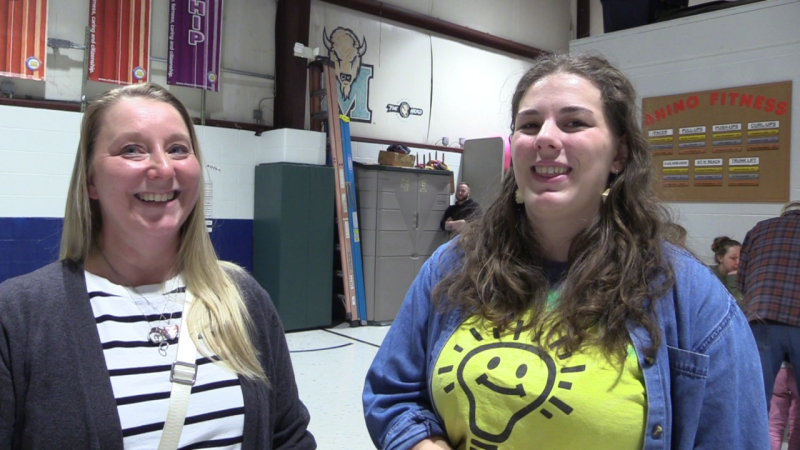
Debra Curtis, fifth-grade science teacher at A.S. Rhodes Elementary School, stands with Sara Hartfiel-Carr of the Shenandoah Valley Discovery Museum in Winchester as they share details about the museum’s hands-on exhibits and the exciting activities brought to STEAM Night.
Founded in 1996, the Shenandoah Valley Discovery Museum moved in 2014 to a renovated 1950s furniture building in downtown Winchester. The 19,200-square-foot museum now features 14 exhibitions and serves more than 70,000 visitors annually.
“We’re all about hands-on, play-based learning, imagination, building, trial and error,” Sara said.
Sparking Lifelong Curiosity
Throughout the evening, the energy inside A.S. Rhodes was unmistakable, laughter, countdowns before rocket launches, and students eagerly explaining their creations.
For Curtis, that excitement is exactly the point.
“Learning is a lifetime experience,” she said. “It doesn’t stop when you leave elementary school, that’s just the beginning.”
If STEAM Night was any indication, A.S. Rhodes students are off to a strong start and perhaps one step closer to becoming the scientists, engineers, and explorers of tomorrow.



Warren County Draft Plan Targets Six Industries for Future Economic Growth

Warren County Volleyball Set to Host Sherando Wednesday Night – September 16

Century-Old Law Gives Virginia Legislator-Lawyers Broad Power to Delay Court Cases

Virginia Lawmakers Move Closer to Regulating Self-Driving Vehicles

Remembering 9/11 25 Years Later

Loudoun to Consider Data Center Pause, Removing By-Right Grandfather Clause

From Field to Glass: Brew Farms Put Agriculture at the Heart of Beer Making

ORDER OF PUBLICATION: In the Circuit Court for Warren County, Virginia

Preparedness Includes Your Wallet

Grandparents’ Day Celebrates the Bonds That Connect Generations

Update: Two Killed in Fiery I-81 Crash Near Exit 310 in Frederick County

Front Royal Hosts 5th Annual NAACP ‘Hope & Holiness Gospel Fest’

Mediterranean Diet Offers Variety With a Focus on Healthy Choices

The Woman Who Helped Save a Forest — and Its Species

Invested Retirees Need an Emergency Fund, Too

Patricia Ann “Patty” Vaught Brown (1961 – 2026)

Warren County Fire and Rescue to Kick Off Fire Prevention Week Oct. 4

Literacy Volunteers Students Earn Publication in Statewide Magazine

Virginia Transportation Board Schedules Fall Meetings, Including Stops in Weyers Cave and Culpeper

VDOT: Warren County Traffic Alert for September 14 – 18, 2026

Shenandoah River State Park Packs September With Fishing, Night Hikes, Pawpaws and More

How 9/11 Changed the Way America Surveils Its Citizens

Virginia General Fund Revenues Up 5.4% Through August

Virginia State Police Report More Than $580,000 in Drug Seizures During Weeklong Operations
