
Local News
Blue Ridge Wildlife Center Patient of the Week: Eastern Meadow Vole
Is it a vole? A mole? A shrew?
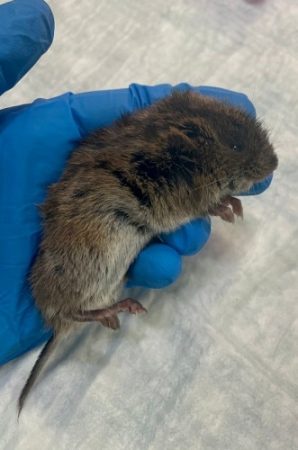
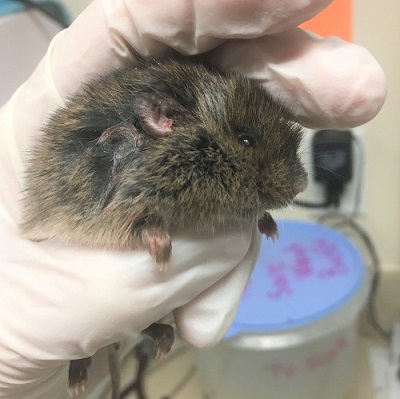
This Eastern Meadow Vole was admitted after a dog attack, which left her with a small laceration near the left ear.

Photos / Blue Ridge Wildlife Center
Though very quiet on intake, which was shortly after the attack, this patient is now alert, eating, and moving around her enclosure well just 24 hours after admission. She is on antibiotics and pain medications, and we are hopeful for a full recovery!
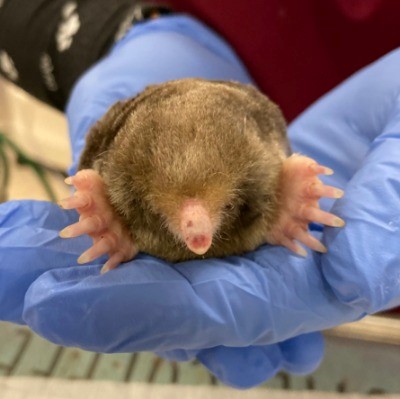
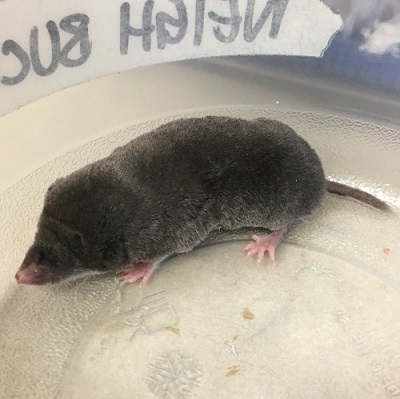
Many people have trouble identifying moles, voles, and shrews, but these are very different species! Voles are most similar in appearance to mice, but have shorter tails and snouts. Like mice, they eat a lot of grains and seeds. Moles and shrews eat insects and invertebrates. Moles have comically large forepaws for digging and barely-visible eyes and ears. Shrews have a long, pointed nose and small eyes and feet. Scroll down to learn more about each of these animals and how to identify them.

Whatever the species, if a wild animal has been handled by a cat or dog, that animal should be evaluated by a rehabilitator or wildlife veterinarian – even if it looks fine to you.
Please keep all dogs and cats leashed and supervised when outdoors to help prevent many of these wildlife casualties. If your pet gets a hold of wildlife, please give us (or your closest permitted rehabber) a call!
Mole
MOLES
- Eats insects and other invertebrates
- Aerates soil and creates good growth media for plants
- Food source for other wildlife
- Large forepaws for digging, long nose, eyes and ears are barely visible
Vole

VOLES
- Eats plants and grains
- Most similar in appearance to mice, but have shorter and rounder snouts and short tails
- Important food source for many wild animals
Shrew
SHREWS
- Eats insects and other invertebrates
- Pointed nose with small eyes and small feet
- Though technically venomous, shrew saliva will not kill a human but can cause pain and swelling
Looking for an easy way to help native wildlife? Become a monthly BRWC donor! For as little as $5/month, you can provide year-round, sustainable support that helps us fulfill our mission.



Commentary: A Pesticide-Free Farm Can Have Worse Soil Than One Sprayed With Roundup

Warren County Sheriff’s Office Foundation Expands Community Programs, Plans Fall Events

New Proposal from Grid Operator PJM Would Require Data Centers to Gring Their Own Power

Apple Wallet Adds Driver’s Licenses and IDs for Virginia Residents

Samuels Library Sets September Lineup With SamiCon, Community Programs and Family Activities

Virginia to Receive $353 Million in Landmark Meta Child-Safety Settlement

Trump’s Second-Term Immigration Agenda Extends Beyond Border Enforcement

Reverend Michael Duesterhaus (1965 – 2026)

Groovy for a Good Cause: Vintage Fashion Show Supports Bridge of Hope

Why More Robots Can Mean More Workplace Injuries

American Legion Post 53 Builds New Pavilion for Veterans and Community

Missing Bricks Led to Discovery of Structural Concerns at E. Wilson Morrison

Spanberger Orders State Agencies to Prepare for Medicaid, SNAP Changes

Amazon Changes Course on Water Use for King George Data Center Campus

Tree Stewards Prepare for 30th Anniversary While Offering Community Tree Care Class

Challenges and Future Uncertainties

Our Young People Are a Reflection of Our Community

America 250: The Battle of Long Island

Pasta e Ceci: An Ancient Roman Comfort Dish Made Simple
How Soon Until We Have A Chinese-Style Surveillance State?

Cline Accepts Three Debate Invitations in Sixth District Race

Lloyd, Silek Spar Over WCRC Membership Payment Methods as August 27 Meeting & Officer Appointments Loom

Warren County Sheriff’s Office Joins Saturation Saturday Ahead of Labor Day Weekend

A More Permanent Closure of a Portion of Church Street Denied at Town Council Meeting
