
Local News
A look into the process of stained glass restoration, and creation
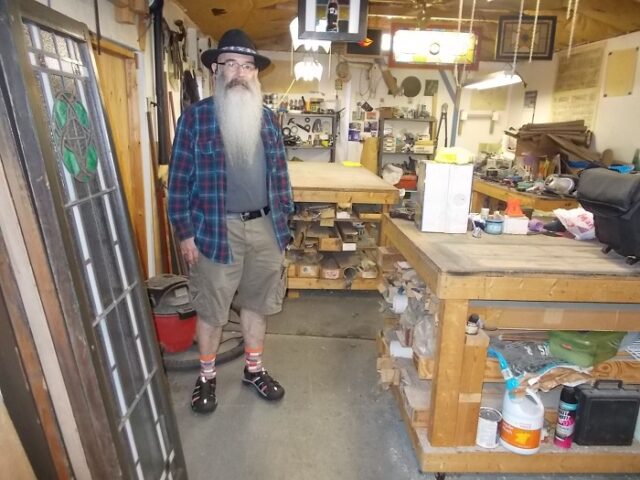
The tools of his trade: William ‘Dubby’ White in his stained glass workshop – Royal Examiner Photo/Roger Bianchini
Adjusting to the modern world of technology and social media can sometimes pay off for old-schoolers of the Baby Boomer generation. Local stained glass artist William “Dubby” White, 67, attributes his Facebook page and positive online reviews of his work as pivotal in landing a recent job involving the repair and restoration of 18 stained glass windows from a historic theater building in Altoona, Pennsylvania.
“The job from Altoona came about from word of mouth from friends that run Old Towne Stained Glass in Winchester, VA. Then the theatre looked up my “Dubby’s Stained Glass” site on Facebook and liked the reviews. They said there was a stained glass studio not far from them but they picked me because I had better ratings than that shop did.” White’s page can be accessed here.
Rather than go to Altoona’s Rowland Theater, The Rowland Theater came to him – at least the 18 stained glass windows did beginning in September 2018. As noted on the theater front, The Rowland was built by Charles H. Rowland in 1916, and was placed on the National Register of Historic Places on October 18, 1979. So cleaning and restoring their distinctive stained glass windows, including the front facade, was not a task to be farmed out haphazardly.
“There were 18 windows in all to be completely restored. They would bring me six at a time. When they were done they would bring me six more until they were all finished,” White said of one of the larger jobs he has handled recently. The Rowland Theater job was completed in February after five months.
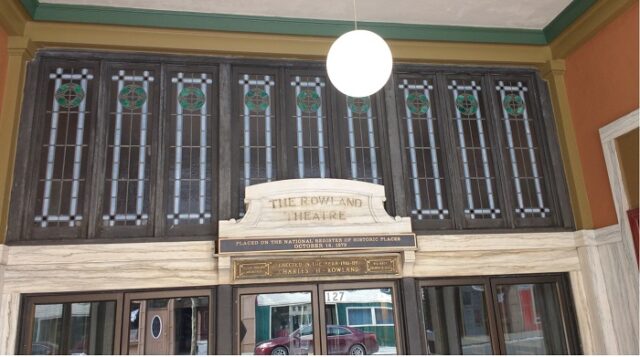
The Front of Altoona’s historic Rowland Theater, sporting nine of its 18 total stained glass windows – Courtesy Photo/Dubby White
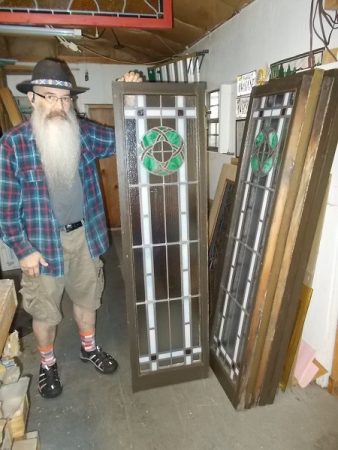
White with some Rowland Theater windows ready to go back to Altoona – Royal Examiner Photo/Roger Bianchini
“The job wouldn’t have taken that long if it wasn’t for the fact I have to put significant time into the care of my wife Mary because of health problems. But Altoona knew this and was in no big rush to get the job done,” White said.
White’s work is on display locally as well. He said he has worked on stained glass windows in a number of locations, including his church, the Virginia Beer Museum on Chester Street, as well as privately-owned items.
“I have done five stained glass windows for my church, First Baptist Church in Front Royal; and I repair many stained glass items from small panels to lamp shades,” he said.
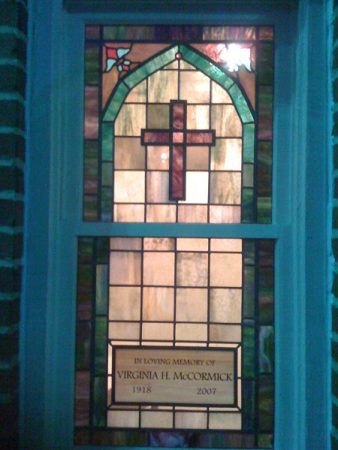
One of the First Baptist Church windows White has worked on – Courtesy Photo/Dubby White
He showed us photos of the original piece he did for the Beer Museum, a “Rest In Peace – John Barleycorn” window on display in the second-floor “Prohibition Room”. As some of us old school “Boomer” music fans – White is also a musician – may recall, the Stevie Winwood-led ‘60’s band Traffic had an album titled “John Barleycorn Must Die”, a reference to the personification of the beer brewing process being laid low by prohibition.

Above, White’s ‘cartoon’ – that’s what stained glass drawings are called he informed us – of the Va. Beer Museum’s ‘RIP John Barleycorn’ stained glass window; below, the completed original product in the Beer Museum’s Prohibition Room. Courtesy Photos/Dubby White
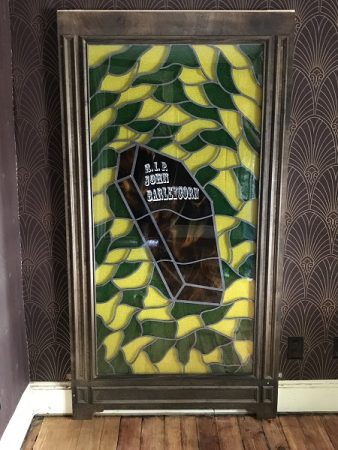
White told us he came to stained glass work out of a combination of bad circumstance and good timing. From 1994 to 1996 White was singing and playing music in the old Feedmill Restaurant dining room on weekends, as well as bartending and waiting tables the rest of the week. When the restaurant closed down in December 1996, White found himself out of work.
“I got into Stained Glass by chance. Three months after the Feedmill closed I was at the gym working out and Dale Waters was there. He asked me how I was doing. I said I would be a lot better if I had a job. That’s how I fell into the stained glass business in March of 1997.
“Dale got a job working on windows at the Naval Academy in Annapolis. While they were working on the stained glass windows from the Naval Academy Chapel I watched the other glazers putting the windows back together. I learned by watching and found out I had a knack for this job. I learned my craft working on two windows in the chapel of Annapolis Naval Academy. One was a Tiffany window, the other was The Admiral Farragut window. Then Dale lost a couple of glazers and that’s how I got my chance to show what I could do.
“And every panel I re-leaded passed inspection before they were put back in the chapel. I also worked on some stained glass windows from Raleigh N.C. while I was with Dale. Then in 1999 I went to work with Shenandoah Stained Glass. I did a restoration job from a church in Maryland. After the job was completed I got a letter from the Senate of Maryland thanking me for my work. In 2000 I subcontracted with a stained glass company in Woodstock, Artisan Stained Glass run by Jim “Moon” Hansen.
Then in 2002 I opened my own shop, which is where I still work today,” White said of the evolution of his work with stained glass – though he added that when you truly enjoy what you do it is less work than a passion.
We asked White if he could explain a little about the process of that passion with stained glass. That question led to the following sequence of photos detailing that process on The Rowland Theater windows.
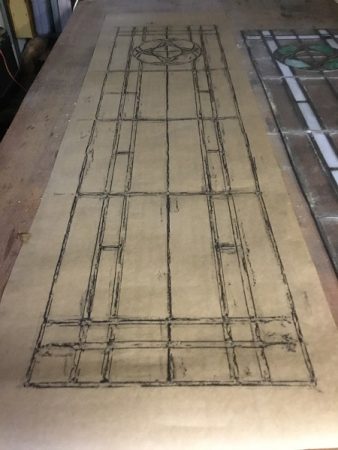
White explained the order of the stained glass restoration process: First take a rubbing so you have a map to put the window back together …
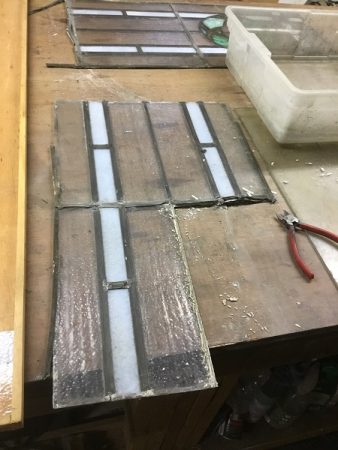
Then take apart the window and clean each piece …
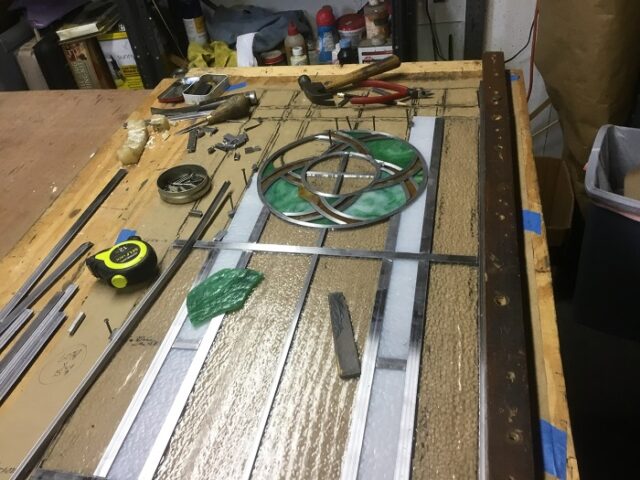
Replace any broken pieces …
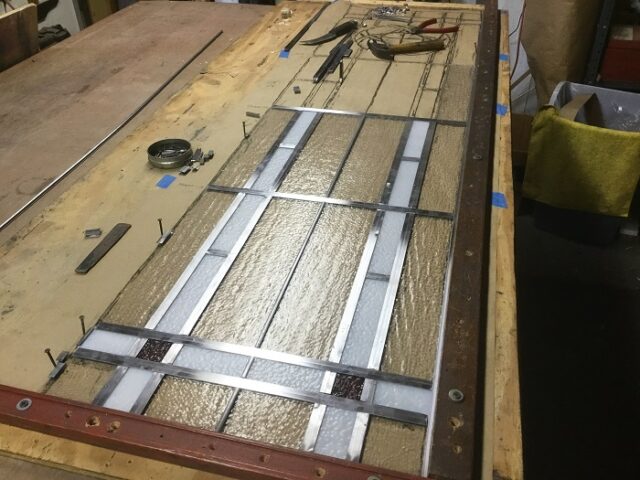
Re-lead the window …
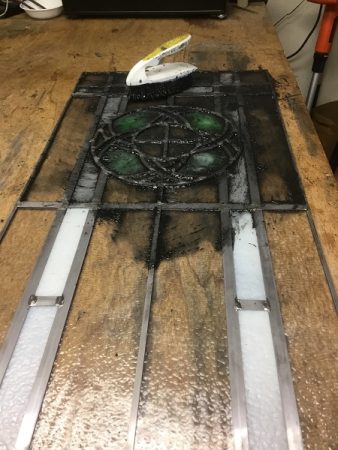
Then mud the window to weatherproof it …

Braces are added as the parts are reassembled toward its renovated state …
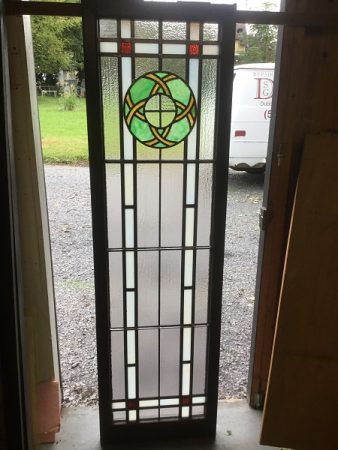
And the finished product

Some of History’s Biggest Discoveries Were the Result of Dumb Luck

Senators Propose Phasing Out Data Center Tax Credit, House Budget Keeps It

Lawmakers Propose Major Investments to Expand Student Aid, Limit Tuition Increases

Funeral Prearrangements: 3 Good Reasons to Plan Ahead

STEAM Night Launches Students Into Space at A.S. Rhodes Elementary School

Virginia Housing Market Sees Surge in Pending Sales to Start 2026

Is Front Royal Destined to Become Another Fairfax?

Here’s What to Know About the DHS Funding Shutdown

Lord Fairfax Health District Updates WIC Services and Expands Schedule

Poll: Virginians Back Tighter Gun Laws, Favor Current Redistricting System

What is ‘Performance-Based Regulation’, and How Can It Lower Utility Bills?

Lawmakers Reshape Youngkin’s Final Budget With Focus on Affordability, No New Taxes

El Salvador Turns to AI to Personalize Learning Nationwide

New Version of Keytruda Speeds Up Cancer Treatment, With Help From Space

Shenandoah Rail Trail Supporters Applaud CTB Move to Purchase Corridor, Launch Public Engagement

Virginia Delegate Eric Phillips Warns of Growing Strain on Power Grid, Calls for In-State Energy Expansion

Welcoming Spring Into Your Home: A Fresh Start for the Season
Government Business Shouldn’t Require a Public Display of Patriotism

March at Shenandoah River State Park: Salamanders, Wildflowers, and Nights in Nature

Blue Ridge Care Marks 45 Years, Highlights PACE Program That Helps Seniors Stay at Home
Why Trump’s Election Rhetoric Is So Dangerous

Road Rage Incident on February 20 Results in Shots Fired, Arrest

2026 Congressional Art Competition Opens for Virginia’s Sixth District Students

VDOT: Warren County Traffic Alert for February 23 – 27, 2026
