
Local News
Blue Ridge Wildlife Center Patient of the Week: American Crow
What should you do when you find a baby bird?
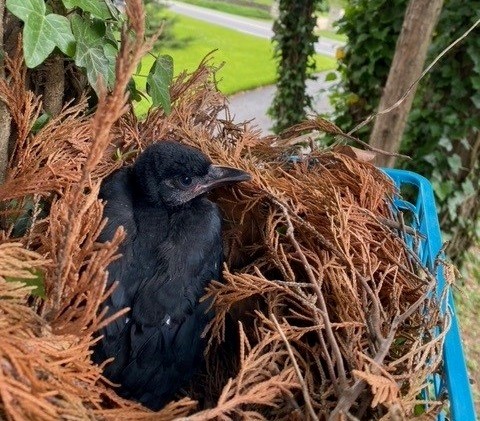
This nestling American Crow was brought to the Center after it was found down, out of the nest, and unable to stand or fly. Upon exam, we found a happy, healthy, and well-cared crow for nestling!

Photos / Blue Ridge Wildlife Center
This young bird had quite a journey to get to us. The finders dropped it off at The LifeCentre in Leesburg, and then it was transported to us by Kristi’s Caring Hands Wildlife Rehabilitation and Education. Luckily we were able to speak with the original finder, and this bird was returned to its original found location and successfully renested in a makeshift nest nearest to where it was found.
It is always best for wild animals to be raised by wild parents. Crows are extremely intelligent and invest a lot of time and resources into raising and teaching their babies how to survive and thrive within their social group. Wild families should always be kept together when possible to allow these birds to learn skills, communication, and cultural differences between family groups.
Nearly every day we have a case where a well-meaning finder brings us “orphaned” babies, only to find that they are healthy and being cared for by parents. In most of these cases, we will recommend renesting.
If you think they may be injured, please contain them (with minimal handling) and keep them warm, dark, and quiet until you hear back from a rehabilitator. Never offer food or water to young birds as this often harms far more than it helps.
Please refer to our flowchart whenever you have concerns about a baby bird. It can help you determine if human intervention is needed:

Always feel free to call us for further assistance and assessment! We are open every day of the year including weekends and holidays.
Looking for an easy way to help native wildlife? Become a monthly BRWC donor! For as little as $5/month, you can provide year-round, sustainable support that helps us fulfill our mission.

ORDER OF PUBLICATION: In the Circuit Court for Warren County, Virginia

Local NAACP Recalls Segregated Criser High/Elementary School During ‘Learn From the Past for a Better Future’ Event

Virginia Revenues Top Forecast, But Economic Concerns Remain

Governor Clarifies: Proposed Tax Changes Never Became Law

Driver Runs After Crash, Caught by Police Moments Later

Debate Continues Over Tax Rate as Supervisor Offers New Option

POLICE: 7 Day FRPD Arrest Report 4/13/2026

Spanberger Joins Other Governors in Push for PJM to Prioritize Ratepayer Protections

Cannabis Testing Challenges Persist as Virginia Retail Market Nears

Quick Quiz on Tooth Decay

The Fat Facts: Busting Common Food Myths

Importance of Chiles v. Salazar and the Protection of Free Speech

MAGA Suicide?

Warnick Posts Natural Hat Trick as Shenandoah Downs Opens Spring Meet

Youngkin Returns to Campaign Trail, Calls for Court to Strike Redistricting Vote

‘We Have To Do Something’: Former U.S. Attorney General Eric Holder Supports Virginia Redistricting

3 Ways to Extend the Life of Your Electric Vehicle Battery

Serious Charges Highlight Warren County Grand Jury Indictments

Ducks, Flowers, and Fun: Redbud Festival Returns to Browntown

Potato-Crust Quiche Makes a Lovely Brunch

Faye Barr Vance (1930 – 2026)

James Christopher “Chris” Sain (1948 – 2026)
Alice “Maybelle” Henson (1938 – 2026)

How Sleep and Stress Affect Cancer Risk
