
Local News
Blue Ridge Wildlife Center Patient of the Week: American Woodcock
Migration is dangerous. Small actions help birds survive.
Although some American Woodcocks remain in Virginia year-round, many are now returning to their overwintering grounds in our region and further south.

This species migrates at night, which makes them especially vulnerable to becoming disoriented by artificial lights. As a result, many of the woodcocks we admit arrive as window-strike victims.
This woodcock may have hit a window or been struck by a vehicle. The trauma was not witnessed, but the injuries told the story.
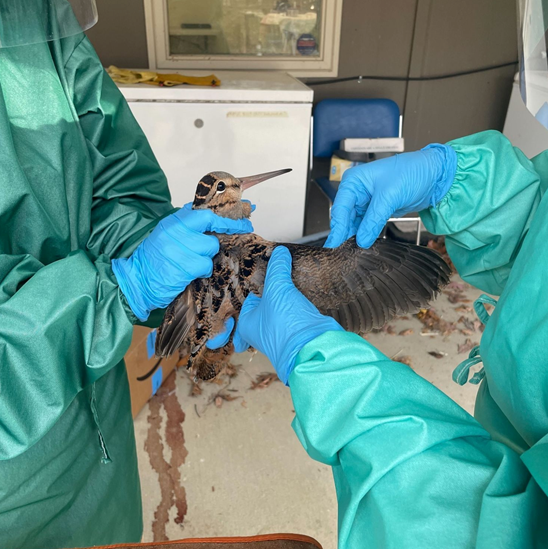
The bird arrived with multiple fractures in the bones that make up the shoulder joint: the clavicle, coracoid, and scapula.
These bones are responsible for supporting the powerful wing movement needed for flight. With damage this severe, the bird would never regain the ability to fly.
Our team made the compassionate decision to humanely euthanize to prevent further suffering.
American Woodcocks are unusual and fascinating birds.
Despite being classified as a shorebird because of their ancestry and bill structure, they live in forests and fields rather than along coastlines. (One of those fun “nature doesn’t care about our categories” situations.)
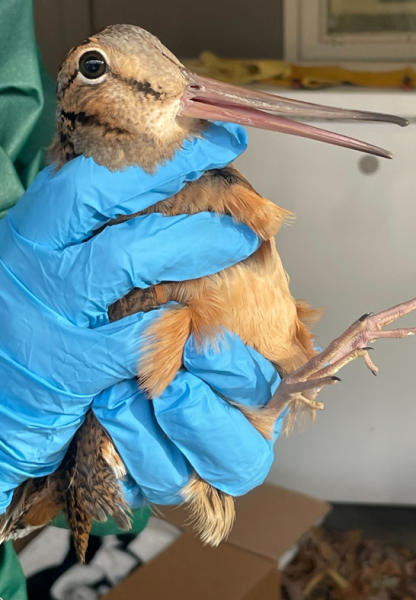
They have large eyes set high and far back on their heads, giving them an impressive 360-degree field of vision to spot predators while they forage.
Their long, flexible bills can open just at the tip, allowing them to grasp earthworms and other invertebrates deep underground.
And in early spring, males perform their famous “sky dance,” spiraling upward before fluttering back down in a zig-zag display.
Most of the woodcocks we admit are found in developed or urban areas. Their excellent camouflage works beautifully on the forest floor, but it does little to protect them from windows, cars, or brightly lit environments during nighttime migration.
Although this case ended sadly, we are grateful to the finders who ensured this bird received prompt care, and we are glad we could prevent further pain.
How You Can Help Migrating Birds Like Woodcocks
- Small changes make a real difference for night-migrating birds.
- Turning off unnecessary outdoor lights at night, especially during migration seasons
- Closing blinds or curtains after dark to reduce window glow
- Applying window decals or patterns to large or reflective windows
These simple steps help birds stay on course and avoid the hazards that bring so many of them to wildlife hospitals each year.
Download our free, printable brochure to share!
Looking for an easy way to help native wildlife? Become a monthly BRWC donor! For as little as $5/month, you can provide year-round, sustainable support that helps us fulfill our mission.

The Sufficiency of a Sworn Affidavit: Town Planning Commission Favors Administrative Enforcement for Auxiliary Dwelling Units

Warren County Girls’ Basketball Team Set to Face Manassas Park This Friday

Battery Storage Bills Make a Return After Previous Vetoes

Virginia Transportation Board Transfers Rail and Trail Project Amid Public Concerns

Shenandoah River State Park Invites Public Input and Launches Expanded Programming for All Ages

Cancer Cluster Ruled Out In Southwest Virginia, Though More Data Collection Is On The Horizon

Plastic Pellets Known as ‘Nurdles’ Are Polluting Beaches and Waterways

Is Industrial Design Training Right for You?

National Bird Day: How to Help Our Fine Feathered Friends

Peanut Allergies Finally Show Signs of Decline After Years of Steady Rise

What’s at Stake Thursday? Is Transparency a Board Priority or a Slogan?

ICE Officer Fatally Shoots Woman During Immigration Enforcement Encounter in Minneapolis

May D. Landes (1958 – 2026)

Ethel Ritter (1929 – 2026)

Categorical Legal Cost Reporting Is Common Sense

Venezuela Strike Sharpens War Powers Debate Among Virginia Lawmakers

As Federal Shifts Bump Up Virginia Social Service Workloads, a Bill Proposing Tech Upgrades Could Help

Report Doesn’t Rule Out Racism or Retaliation at Red Onion, Finds Other Complaints ‘Unsubstantiated’

Visiting a Family Member with Alzheimer’s: What You Should Know

IRS Moves to Tax Foreign Cryptocurrency Accounts Under Global Agreement

Closed Sessions: The Standard We Should Meet

This Week’s Showtimes at Royal Cinemas as of January 8th

Transparency, Meeting Rules, and Library Board Repeal Headline January 8 Supervisors Meeting

The Connector Road That Never Happened: Town Council Lays a Flower on a Grave
