
Local News
Blue Ridge Wildlife Center Patient of the Week: Green Heron
Why is it a GREEN heron?
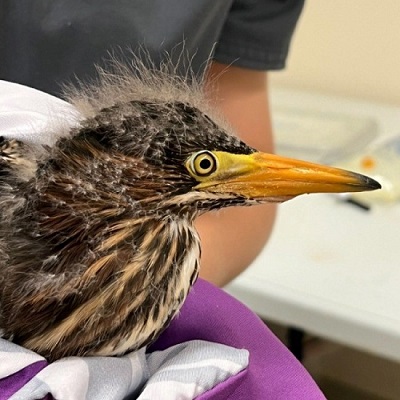
This young Green Heron was brought to us after being found alone on a golf course with a possible limp. Despite a thorough exam, our vet staff found no injuries or health issues. Ideally, this fledgling would have been returned immediately to their parents. We sent one of our staff members to the golf course to attempt to find the nest or rookery that this heron came from, sadly with no luck.
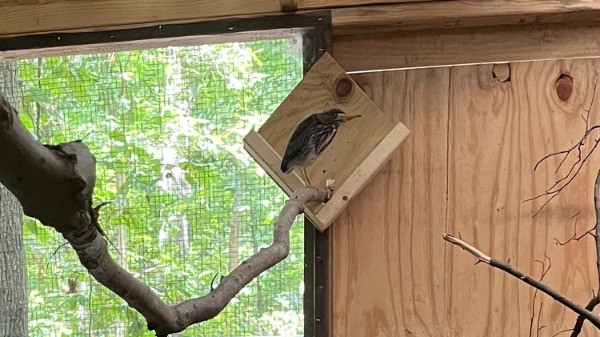
As this bird was still too young to be on its own, and we could not locate parents or nesting sites, keeping the baby at the Center was the best option. Thankfully this bird is doing well and has already been moved to an outdoor enclosure (photo 1) to continue growing up until they’re ready for release. And within just one day this youngster was eating fish on their own!
Green Herons, the hipsters of the bird world!
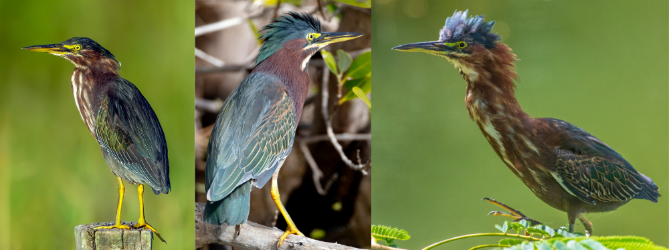
With their short legs and thick necks stylishly drawn up against their bodies, they seem perpetually stuck in “shrug” mode. But when alarmed, they use a classic rock & roll technique of intimidation: the mohawk.
While they may appear all dark from afar, they actually have a deep green back, a chestnut breast and neck, and dark gray wings. They have a shorter and stockier body compared to other herons, resembling the size of a crow.
Green Herons patiently wait at the water’s edge, hunting for fish and amphibians, and they prefer to stand on vegetation or solid ground rather than wading like larger herons. When in flight, their compact bodies may appear unusual, with their necks partially straightened, giving them a front-heavy appearance.
They’ve got the whole awkward yet charming routine down to a science.
Looking for an easy way to help native wildlife? Become a monthly BRWC donor! For as little as $5/month, you can provide year-round, sustainable support that helps us fulfill our mission.

Stephen Paul Sill (1955 – 2026)

Virginia Seeks Public Input for 2026 Statewide Rail Plan

Front Royal Craftsmen Revive Centuries-Old Timber Framing Tradition

Local NewsVDOT: Warren County Traffic Alert for March 16 – 20, 2026

Virginia Lawmakers End Session Without Final Budget

Your Personal Mission Statement: A Guide to Getting What You Want Out of Life

Disappointed In Our Olympic Spirit

How St. Patrick’s Day Became America’s Biggest Irish Party

Virginia State Police Urge Sober Plans for Saint Patrick’s Day Celebrations

In a One-Party County, Internal Party Decisions Affect Us All

Virginia State Police Seize Nearly 100 Pounds of Narcotics, Recover Firearms in Weekly Crime Suppression Effort

Barton Charles “Bart” Haller (1940 – 2026)

Dawn Lee Dodson (1970 – 2026)

Mary Helen “Nanny” Spires Johnt (1954 – 2026)

Another Round of ‘Momnibus’ Bills Are Headed Towards the Governor This Year

Virginia Joins States Challenging Trump Admin Regulations That Limit Free Birth Control Access

Update: Charlotte Swanson Smith (1951 – 2025)
Why We are Challenging the Republican Mass Meeting

Bruce Norman Showman (1954 – 2026)

EDA Relaunches Small Business Loan Program to Help Warren County Entrepreneurs Access Capital

Targeted Exercises to Improve Your Putting

The Hidden Risks of House Hunting Solely Online

Choosing the Right Cleaner for Every Surface in Your Home

New Church Among Consent Items at County Planning Commission Meeting
